
Pruning
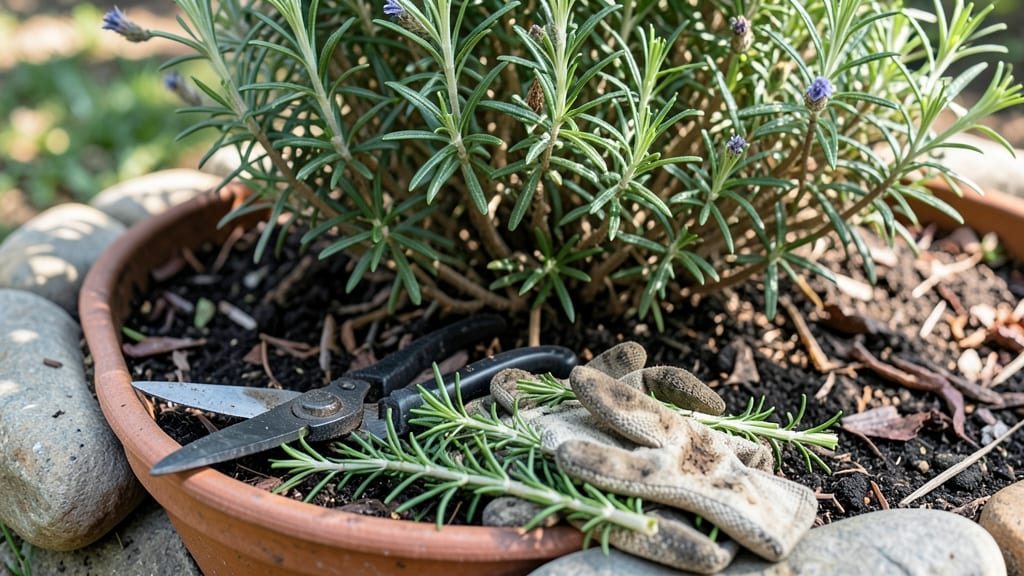
Trimming rosemary shrubs isn't just about keeping them tidy—it's the secret to thicker growth and more fragrant leaves. 🌿 I've learned that skipping this step turns woody stems into bare branches, but the right cuts bring back that lush, bushy shape we love.
The best time to prune is right after flowering, when the plant has stored energy for new growth.
You only need two tools: sharp bypass pruners for clean cuts and a small pair of scissors for trimming individual sprigs. Cut just above a leaf node (where leaves meet the stem) to encourage branching.
Never remove more than one-third of the plant at once—rosemary is tough, but it won't bounce back from harsh pruning.
After trimming, your rosemary will push out fresh, tender growth in just 2-3 weeks. The new shoots smell even more intense than the old wood, and the plant stays compact enough to fit in containers or along fences.
Just avoid pruning in late summer or fall—new growth won't harden off before winter.
Common mistakes? Pruning too late in the season or using dull shears that tear stems. Stick to the right timing and tools, and your rosemary will reward you with years of bushy, productive growth. The key is consistency—just a little trim every year keeps it looking its best.
📚 In This Guide
- What you need
- Instructions
- Tips and common mistakes
- Wrapping up and next steps
What you need
- ● Pruning shears or secateurs: Sharp, clean, and bypass-style (for clean cuts). Quantity: 1 pair (sterilize with rubbing alcohol before use!).
- ● Gloves: Heavy-duty gardening gloves to protect hands from thorns and sap. Recommended: Nitrile-coated for grip and durability.
- ○ Disinfectant (optional but recommended): 70% isopropyl alcohol or a 10% bleach solution (1 part bleach to 9 parts water) to sterilize tools between cuts.
- ● Trash bag or bucket: For clippings (rosemary trimmings can be composted or used in cooking!).
- ● Water source: A hose or watering can to hydrate the plant post-pruning.
- ● Loppers: For larger, overgrown shrubs (18–24" cutting range).
- ● Hand pruners with ratchet: For stubborn branches (great for thick stems).
- ● Plant food or fertilizer: Balanced formula (10-10-10) to nourish the shrub after trimming.
- ● Knee pads or stool: For comfort if your rosemary is tall or ground-level access is tricky.
- ● Notebook & pen: To jot down notes on growth patterns or pruning dates.
Step-by-step guide to trimming rosemary shrubs
Here’s how to prune rosemary for fuller growth without stressing the plant.
✂️ Step 1: Gather Your Tools and Choose the Right Time
Use sharp, clean pruning shears or bypass pruners—dull blades tear stems, inviting disease. I always sanitize my tools with rubbing alcohol before cutting to prevent spreading pathogens. The best time to prune is early spring, just as new growth begins, or late winter before buds swell. Avoid trimming in fall or winter unless you’re shaping for winter interest—rosemary needs time to recover before cold sets in.
Check the weather forecast first. Prune on a mild, dry day—humidity and rain can stress freshly cut stems. You’ll know you’ve picked the right time when you see fresh, vibrant green growth starting at the base of the plant. This signals the rosemary is ready to respond to pruning with bushier, fuller growth.
✂️ Step 2: Identify and Remove Dead or Damaged Wood
Start by inspecting the entire shrub for brown, brittle, or woody stems—these won’t regrow and only take energy from healthy branches. Snip these back to the base or to a healthy bud, cutting at a 45-degree angle just above the bud to encourage water runoff and prevent rot. If a branch is completely dead, remove it entirely—rosemary won’t waste energy trying to revive it.
Next, look for crossing or rubbing branches—these create wounds where pests or disease can enter. Trim one of the two branches at the point where they intersect, leaving the stronger, more vigorous stem. You’ll notice healthy branches have a firm, green texture and grow outward from the center of the plant. Weak or leggy growth usually points inward or stretches toward the sun.
✂️ Step 3: Shape the Shrub for Fullness and Airflow
Step back and assess the plant’s overall shape. Rosemary grows in a rounded, bushy form, so aim to maintain that silhouette. Cut back the longest stems by one-third to encourage branching. Make your cuts just above a set of leaves or a bud—this is where new growth will sprout. Avoid cutting into bare wood; you’ll see this as a woody, leafless stem with no green tissue.
Focus on the outer edges of the shrub first. Trim back any stems that grow too long or sprawl outward, as this keeps the center dense and prevents leggy growth. For a more formal look, you can prune to create a rounded dome shape, but rosemary also thrives with a natural, slightly wild appearance. The key is to never remove more than one-third of the plant’s foliage in a single pruning session—this ensures the rosemary has enough energy to recover.
✂️ Step 4: Encourage New Growth and Maintain Year-Round
After shaping, give the rosemary a light watering at the base to help it recover from the pruning. Avoid wetting the leaves, as this can promote fungal issues. Over the next 4-6 weeks, you’ll see new growth emerging from the buds you left behind. This is your signal that the pruning worked—watch for small, bright green shoots pushing out from the trimmed areas.
To keep rosemary bushy year-round, prune lightly once in mid-summer to maintain shape and harvest sprigs for cooking. Always cut just above a leaf or bud, never into bare wood. If your rosemary starts to look leggy or sparse, it’s a sign it needs more frequent pruning—just trim back the longest stems by one-third again and watch it bounce back. With regular care, your rosemary will stay full, fragrant, and productive for years.
⏰ Step 5: Clean Up and Prevent Common Mistakes
After pruning, collect all the clippings and dispose of them properly. You can compost healthy, disease-free trimmings, but avoid composting if the rosemary had signs of pests or disease. Wipe down your tools with rubbing alcohol again to keep them ready for the next pruning session. Store them in a dry place to prevent rust or mold.
Here’s the thing—don’t over-prune. I’ve seen rosemary shrubs stressed into dormancy from aggressive cutting, and it takes years to recover. If you accidentally trim too much, reduce watering slightly and wait for new growth before pruning again. Also, avoid pruning in hot, dry weather—this stresses the plant and can lead to sunburn on fresh cuts. Stick to mild, overcast days for the best results.
Tips & tricks for perfect rosemary pruning
Here's what nobody tells you about keeping your rosemary thriving after the trim—these details make all the difference.
Tool Prep Matters: I learned this the hard way after ruining three batches of rosemary—always sterilize your pruning shears with rubbing alcohol before AND after cutting. This prevents cross-contamination between healthy plants and any potential pathogens lurking on your tools. For extra peace of mind, wipe down the blades with a clean cloth dampened with rubbing alcohol between cuts on the same plant. This simple step can save your rosemary from fungal infections that often appear weeks after pruning.
The Right Time is Everything: The instructions mention early spring or late winter, but here's the real secret: look for those tiny, bright green growth buds at the base of stems. These signal the plant is ready to respond to pruning. If you see them in late winter, go ahead—if not, wait until early spring. I've pruned in March and seen immediate new growth within weeks, but when I pruned in January without these buds, the plant took months to recover. Trust me on this.
Cutting Technique for Maximum Recovery: When you make those one-third cuts in Step 3, always aim for the spot just above a set of leaves or a bud. This is where new growth will emerge. I used to cut randomly, and my rosemary would grow back unevenly with long gaps. The key is to visualize where you want new branches to form—this is how you create that lush, bushy look. For the 45-degree angle cuts mentioned in Step 2, imagine you're cutting the top off a slice of pizza—this angle helps water runoff and prevents rot.
Post-Pruning Care: That light watering at the base after pruning isn't just a suggestion—it's crucial. I've seen rosemary plants wilt dramatically after pruning when people skip this step. Water deeply but avoid wetting the foliage to prevent fungal issues. Over the next 4-6 weeks, watch for those bright green shoots emerging from the buds you left behind. This is your confirmation that the pruning worked. If you don't see new growth within 6 weeks, you may have pruned too aggressively or at the wrong time.
Pro Tips for Trimming Rosemary Shrubs
- Here's what nobody tells you about keeping your rosemary thriving after the trim—these details make all the difference.
- Tool Prep Matters: I learned this the hard way after ruining three batches of rosemary—always sterilize your pruning ...
- The Right Time is Everything: The instructions mention early spring or late winter, but here's the real secret: look ...
Frequently asked questions
Got questions about trimming your rosemary shrubs?
Here are some of the most common ones—plus quick, practical answers to keep your plants thriving!
When is the best time to trim rosemary shrubs?
Trim rosemary in early spring or late winter (just before new growth starts) for the best results. Avoid heavy pruning in fall—it can stress the plant before winter. Light trimming to shape can happen anytime, but avoid cutting into woody stems.
How much should I cut off when trimming rosemary?
Never remove more than ⅓ of the plant at once. For shaping, trim just above a leaf node (where new growth emerges) to encourage bushier growth. If your rosemary is woody or overgrown, gradually thin out older stems over 2–3 years.
Can I trim rosemary in hot or cold weather?
Avoid trimming during heatwaves or extreme cold (below 40°F or above 90°F). These conditions stress plants, slowing recovery. Early morning or late afternoon on mild days is ideal—just keep an eye on humidity to prevent fungal issues.
What if my rosemary turns brown or dies after trimming?
Brown tips after pruning are usually normal, but large patches of browning could mean over-pruning or stress. If stems die back, check for underwatering, pests, or fungal issues. Reduce future cuts and water consistently (rosemary hates soggy soil!).
Can I use trimmed rosemary stems for cooking?
Freshly trimmed sprigs
are perfect for cooking—just remove woody stems and use the needle-like leaves. For drying, bundle stems and hang upside down in a dark, dry place for 2–3 weeks. Store dried leaves in an airtight container for up to a year.
Wrapping up and next steps
Trimming your rosemary shrubs doesn’t have to be intimidating—with the right techniques, you’ll enjoy lush, fragrant growth that thrives year after year! 🌿 Whether you’re shaping for aesthetics or harvesting fresh sprigs, consistent pruning keeps your plants healthy and productive.
Start small, stay patient, and soon you’ll have a thriving rosemary bush that’s the envy of your garden.
Ready to take the next step? Grab your pruners and give your rosemary a fresh trim today! For extra inspiration, explore seasonal pruning tips or share your progress with fellow gardeners—your green thumb is about to shine brighter than ever!