
Shrubs
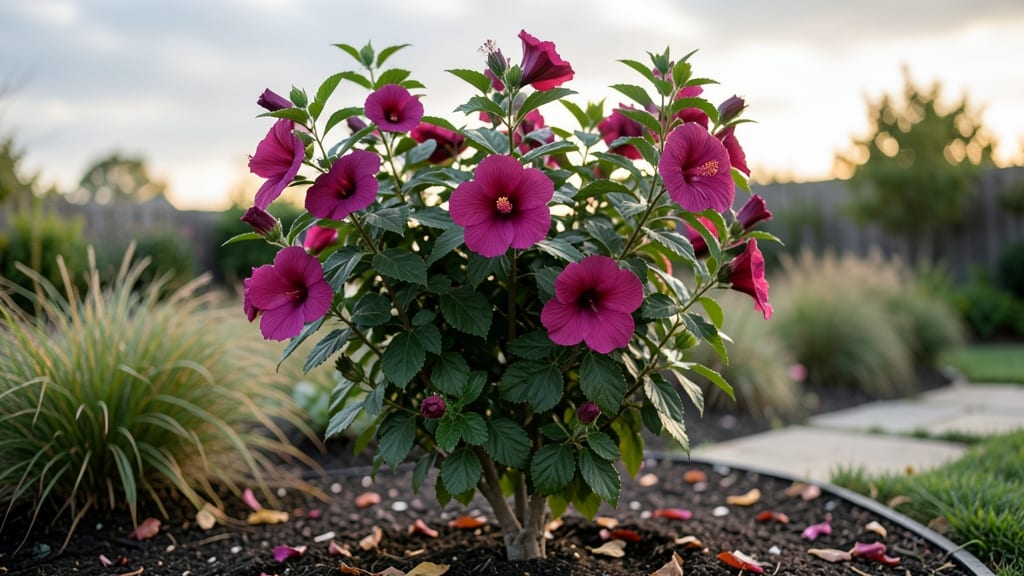
Late-winter pruning transforms these flowering Rose of Sharon shrubs from a tangle into a flowering powerhouse—and the secret is timing. ✂️ I’ve pruned mine every February for three years, and each time, the blooms arrive earlier, last longer, and stay more vibrant through fall.
The key? Cutting back by one-third before new growth starts, but not so late that you encourage tender new shoots before frost. This shrub thrives on bold pruning because it flowers on new wood, meaning aggressive cuts don’t sacrifice blooms—they create more of them.
Start by removing dead or crossing branches first, then shape the plant by thinning from the center outward. The result? A bush that’s airy, disease-resistant, and packed with stems ready to burst into color by early summer.
What you’ll end up with is a Rose of Sharon that blooms from July through October, with flowers in shades of pink, purple, and white that attract hummingbirds all season. The pruned branches also make great cut flowers—just let them dry for a few days first.
Works in zones 5-9, handles both full sun and partial shade, and even tolerates urban pollution once established. Here’s how to do it right the first time.
📚 In This Guide
- What you need
- Instructions
- Tips and common mistakes
- Wrapping up and next steps
What you need
- ● Pruning shears or loppers – Choose bypass pruners (for clean cuts) or loppers (for thicker branches). Size: 6–8" blades for shears, 12–18" for loppers.
- ○ Hand pruners – For smaller stems (optional but handy). Quantity: 1 pair.
- ● Garden gloves – Heavy-duty, cut-resistant (thorns are sharp!). Tip: Waterproof fabric for comfort.
- ● Disinfectant (70% isopropyl alcohol or bleach solution) – Mix: 1 part bleach to 9 parts water. Why? Prevents disease spread.
- ● Rags or paper towels – For wiping tools between cuts. Quantity: 3–5 pieces.
- ○ Pruning sealant (optional) – Only for large cuts (1/4" or wider). Type: Tree wound pruning paste.
- ● Bucket or trash bag – For collecting pruned branches. Size: 5+ gallon capacity.
- ● Weather check: Prune on a dry, cool day (50–65°F). Avoid windy conditions.
- ● Safety gear: Long sleeves/pants and closed-toe shoes (thorns + tools = ouch!).
- ● Sharp tools: Test your shears/loppers—dull blades crush stems, causing damage.
- ● Clean workspace: Lay down a tarp or old sheets to catch debris.
Step-by-step guide to late-winter pruning for Rose of Sharon shrubs
Here's how I transform my Rose of Sharon into a lush, blooming powerhouse every spring.
✂️ Step 1: Time Your Pruning Precisely
Wait until late winter when new growth begins but before buds swell—typically 2-4 weeks before your last frost date. This timing ensures you remove dead wood while leaving next year's blooms intact. I check for 1-2 inch green shoots at the base of stems before reaching for my pruners.
Never prune in fall or early winter. Rose of Sharon stores energy in its stems, and cutting too early removes potential blooms. If you missed the window, wait until early spring when buds show color but haven't opened yet.
✂️ Step 2: Remove Dead, Diseased, or Weak Wood
Start by cutting out any blackened, brittle, or hollow stems—these won't produce flowers and may harbor disease. Use clean, sharp pruners to make 45-degree cuts just above outward-facing buds. I always disinfect my tools with rubbing alcohol between cuts to prevent spreading pathogens.
Next, thin out crossing or rubbing branches that create wounds. Aim for an open center that lets sunlight reach the middle of the shrub. You'll know you're doing well when you can see light filtering through to the inner branches.
✂️ Step 3: Shape for Airflow and Structure
Step back and visualize the shrub's natural shape. Rose of Sharon blooms on current season's growth, so you can prune aggressively without fear. Cut back last year's stems to 12-18 inches from the base—this encourages strong new shoots from the bottom up.
For multi-stemmed shrubs, maintain 3-5 strong central stems. Remove any stems growing inward or weaker than a pencil's thickness. The goal is a vase-like shape with branches spreading outward. I like to leave 2-3 buds at each cut—this ensures new growth starts right where I want it.
🌱 Step 4: Clean Up and Fertilize for New Growth
Rake up all pruned branches and dispose of them in the trash—never compost diseased wood. After pruning, spread 2-3 inches of organic mulch around the base, keeping it 6 inches away from the trunk. This protects roots from temperature swings and retains moisture.
Apply a balanced, slow-release fertilizer (10-10-10) in early spring after new growth appears. Water deeply to help roots absorb nutrients. You'll see bright green leaves within 2-3 weeks—this confirms your pruning worked.
☀️ Step 5: Monitor for New Growth and Adjust
Watch for new shoots emerging from the base within 3-4 weeks. If growth is sparse, add a handful of compost to the soil surface. Rose of Sharon thrives in full sun to partial shade, so ensure your shrub gets at least 6 hours of sunlight daily. Leggy growth means it needs more light.
Deadhead spent blooms in summer by cutting back to the nearest leaf. This encourages continuous flowering through fall. By next winter, you'll have a fuller, more vigorous shrub ready for another round of pruning.
Tips & tricks for perfect Rose of Sharon pruning
Late-winter pruning transforms your Rose of Sharon into a blooming showstopper—here's how to avoid common mistakes and get it right the first time.
Timing Secret: That 2-4 week window before last frost isn't just arbitrary—it's when the shrub's energy is still dormant but ready to spring into action. I mark my calendar for when day temperatures consistently reach 40°F during the day. If you're unsure about your frost date, check your local agricultural extension service—they provide exact dates for your region. The key is seeing those 1-2 inch green shoots at the base of stems, which means the plant is waking up but hasn't started pushing new growth yet.
Tool Preparation: Never underestimate the power of clean tools. I soak my pruners in a 1:9 bleach-to-water solution for 10 minutes before each pruning session, then rinse thoroughly. This kills any lingering pathogens that could infect your healthy stems. For stubborn branches, I use a handsaw with a fine-tooth blade—it gives me more control than regular pruners. Always make your cuts at a 45-degree angle just above an outward-facing bud, which becomes the growth point for next year's blooms.
Structural Strategy: When shaping your shrub, think of it like training a dog—you want to reward the behaviors you like. Those 12-18 inch cuts on last year's stems might seem drastic, but they're what trigger the bush to send up strong new shoots from the base. I like to visualize an upside-down cone shape, with the widest part at the top gradually narrowing toward the base. This creates that beautiful vase shape while ensuring sunlight reaches all parts of the plant. For multi-stemmed shrubs, never keep more than 5-6 central stems—the extra ones just compete for resources.
Post-Pruning Care: The work doesn't end when you put down the pruners. After cleaning up, I always do a final inspection for any missed buds or crossing branches. Then I apply a 2-3 inch layer of mulch—I use shredded hardwood bark—which helps regulate soil temperature and retain moisture. The 6-inch clearance from the trunk prevents rot while still protecting roots. I've found that adding a handful of compost to the soil surface right after pruning gives the plant an immediate nutrient boost for when new growth starts.
Pro Tips for Rose Of Sharon Flowering Shrubs
- Late-winter pruning transforms your Rose of Sharon into a blooming showstopper—here's how to avoid common mistakes an...
- Timing Secret: That 2-4 week window before last frost isn't just arbitrary—it's when the shrub's energy is still dorm...
- Tool Preparation: Never underestimate the power of clean tools. I soak my pruners in a 1:9 bleach-to-water solution f...
Frequently asked questions
When is the best time to prune my Rose of Sharon?
Late winter (just before new growth starts, around February–March in most zones) is ideal! Pruning then encourages robust spring blooms and shapes the shrub for the season. Avoid pruning in fall—it can leave branches vulnerable to winter damage. Pro tip: If you missed late winter, prune in early spring, but you may sacrifice some early flowers.
How much can I cut back without hurting my shrub?
You can be bold! Rose of Sharon is tough—cut back up to ⅓ of the plant’s height if needed, even down to 1–2 feet from the ground. Focus on removing dead, diseased, or crossing branches first, then thin out older wood to promote new growth. Warning: Avoid over-pruning in one year; spread it out over 2–3 years for best results.
Why aren’t my blooms as vibrant as last year?
Duller blooms often mean nutrient deficiencies (try a balanced fertilizer in early spring) or overcrowded branches (thin out dense areas). Rose of Sharon also needs 6+ hours of sun daily—if it’s shaded, move it or prune nearby trees. Bonus: Deadhead spent blooms to encourage more flowers, but save some seed pods for winter interest!
Can I grow Rose of Sharon in cold climates (Zone 5 or lower)?
This shrub is hardy to Zone 5 and thrives in heat and cold. In harsh winters, mulch the base with 3–4 inches of organic mulch (like shredded bark) to protect roots. If your area gets extreme winds, consider a windbreak or staking young plants. Fun fact: Some varieties, like ‘Diana,’ are even more cold-tolerant!
What’s a good alternative if my Rose of Sharon isn’t working?
If you love late-summer blooms but need something easier, try:
- Butterfly Bush (Buddleia) – Drought-tolerant, attracts pollinators, but can be invasive.
- Weigela – Fast-growing, red/pink blooms, thrives in partial shade.
- Abelia – Semi-evergreen, fragrant flowers, handles pruning well.
- Spirea (e.g., ‘Goldflame’) – Colorful foliage + blooms, low-maintenance.
Wrapping up and next steps
Ready to transform your garden into a year-round floral masterpiece? 🌸 Pruning your Rose of Sharon shrubs in late winter isn’t just about maintenance—it’s your secret to vibrant, long-lasting blooms and a healthier plant. With the right tools, timing, and technique, you’ll unlock season-after-season beauty that turns heads (and maybe even a few jealous glances from neighbors!).
Now that you’re armed with expert tips and troubleshooting advice, grab those pruners and get to work! Start small—pick one shrub to practice on—and soon, your garden will be bursting with bold, romantic blooms that last from summer straight into fall. Happy pruning! 🌿✨
Next steps:
- 📅 Mark your calendar for late winter pruning next year—aim for just before new growth begins.
- 🌱 Monitor your shrubs after pruning; water deeply if your region experiences dry spells.
- 📸 Share your progress! Snap photos of your blooming Rose of Sharon and tag us—we love seeing your garden glow.