
Flowers
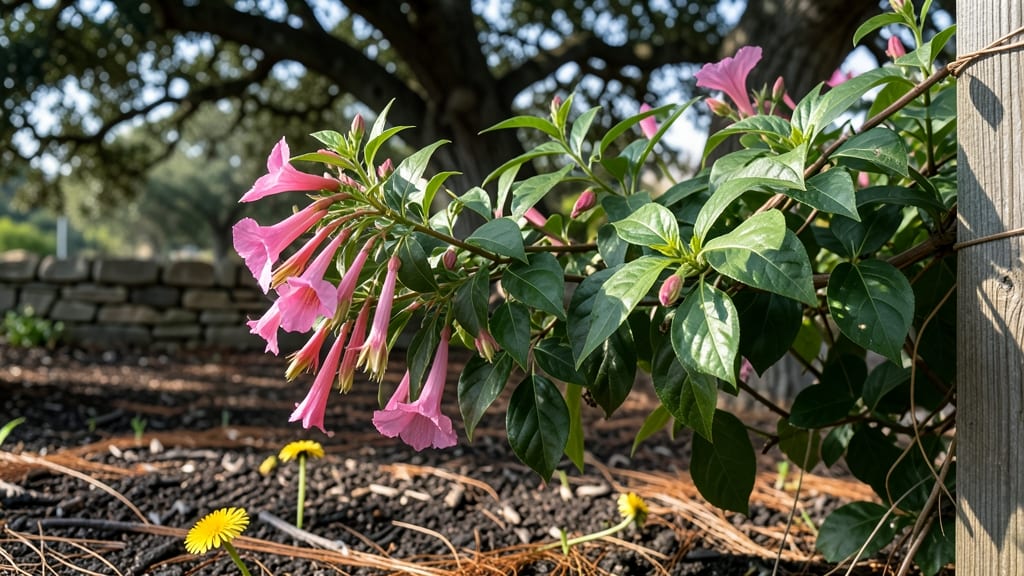
Your fast-growing pink trumpet flower shrub could be the privacy screen you’ve been dreaming of—fragrant, lush, and blooming within a single season. 🌸 I’ve grown these showstoppers for years, and they’ve never failed to deliver that tropical vibe, even in my Zone 7 garden.
The trumpet-shaped blooms aren’t just pretty; they’re packed with a sweet, intoxicating scent that hummingbirds adore. These shrubs thrive in full sun to partial shade and tolerate a range of soil types, though they love well-draining, slightly acidic soil.
If you’re in Zones 8-11, you’ll get year-round blooms; cooler climates may need winter protection. The key to their speedy growth? Plant them in spring after the last frost, spacing them 6-10 feet apart for that dense, impenetrable screen.
Once established, they’re low-maintenance—just water deeply once a week during dry spells and prune back leggy stems in early spring. Fertilize lightly in spring with a balanced formula, and watch those trumpet blooms multiply. Yellowing leaves? Usually a sign of overwatering or poor drainage—fix that, and they’ll bounce back.
For the fastest results, propagate from semi-hardwood cuttings in summer. Varieties like Allamanda cathartica (true pink trumpet) and Campsis radicans (trumpet creeper) both deliver stunning blooms, but Allamanda stays compact while Campsis climbs aggressively. Choose based on your space and style!
📚 In This Guide
- What you need
- Instructions
- Tips and common mistakes
- Wrapping up and next steps
What you need
- ● Pink trumpet flower shrub (Campsis radicans or Campsis grandiflora) – Choose a healthy nursery-grown plant (3–5 feet tall) for faster results, or seeds/cuttings if you’re patient! 🌿
- ● Well-draining potting mix or garden soil – Aim for a blend rich in organic matter (e.g., compost or peat moss). Avoid heavy clay soil unless amended.
- ● Fertilizer – A balanced 10-10-10 or 20-20-20 granular fertilizer (follow package instructions for application rates).
- ○ Mulch (optional but recommended) – 2–3 inches of organic mulch (wood chips, straw, or pine bark) to retain moisture and suppress weeds.
- ● Support structure (for vines) – A trellis, arbor, or fence (6+ feet tall) if growing as a climbing shrub. Not needed for bushier varieties like Campsis grandiflora.
- ● Garden trowel or shovel – For digging holes (wide enough to accommodate roots without crowding).
- ● Pruning shears – To trim dead or overgrown branches (sterilize blades with rubbing alcohol!).
- ● Gloves – Heavy-duty gardening gloves to protect against thorns (common in trumpet vines!).
- ● Watering can or hose with a gentle spray nozzle – 1–2 gallons per plant during the first week post-planting.
- ● Measuring tape or ruler – To ensure proper spacing (6–10 feet apart for shrubs, 3–5 feet for vines).
- ○ Stakes or plant ties (optional) – For young shrubs in windy areas.
- ● Sunlight: Full sun (6+ hours/day) for optimal blooms. Partial shade (4–6 hours) tolerated but may reduce flowers.
- ● Climate: Hardy in USDA Zones 4–9. Mulch heavily in Zone 4 for winter protection.
- ● Water access: Regular watering (especially in first 2 weeks and during droughts). Avoid waterlogging!
- ● Soil pH: Slightly acidic to neutral (6.0–7.0). Test soil with a kit if unsure.
Step-by-Step guide to planting and cultivating pink trumpet flower shrubs
Here’s how to establish a fragrant, fast-growing privacy screen that thrives with minimal fuss.
🌱 Step 1: Select the Perfect Planting Site
Pink trumpet flowers (Brugmansia spp.) love warmth and shelter. Choose a location with partial shade to morning sun—they tolerate 6-8 hours of sunlight daily but avoid harsh afternoon rays, which scorch their large, delicate blooms. The ideal spot is near a fence or building that offers afternoon shade while still allowing morning warmth to stimulate blooming.
Test the soil by digging a 6-inch hole—it should drain well but retain moisture. If your soil drains too quickly, amend it with 3 inches of compost mixed into the top 12 inches of soil. These shrubs hate soggy roots, so avoid low-lying areas where water pools after rain. A slight slope ensures excess moisture drains away naturally.
🪴 Step 2: Prepare the Planting Hole and Amend Soil
Dig a hole twice as wide as the root ball but only as deep—planting too deep can suffocate the roots. Loosen the sides of the hole with a shovel to encourage root spread. If your soil is heavy clay, mix in 1 part perlite or coarse sand to 3 parts native soil within the hole to improve aeration.
Gently remove the shrub from its container and tease the roots outward if they’re circling. Place it in the hole so the top of the root ball sits 1 inch below soil level—this prevents stem rot while allowing roots to establish. Backfill with the amended soil, pressing lightly to remove air pockets but avoiding compaction.
☀️ Step 3: Water Deeply and Mulch for Retention
Water the newly planted shrub deeply until the soil is moist to a depth of 12 inches. Use a garden hose with a slow setting or a watering can to avoid displacing the soil around the roots. Overwatering now can drown the roots, but underwatering stresses the plant before it establishes. Check moisture by sticking your finger 2 inches into the soil—it should feel damp but not soggy.
Apply a 3-inch layer of organic mulch (like shredded bark or pine needles) around the base, keeping it 6 inches away from the stem to prevent rot. Mulch conserves moisture, regulates soil temperature, and suppresses weeds—critical for fast growth. Replenish mulch annually as it breaks down, ensuring the root zone stays cool and hydrated.
✂️ Step 4: Prune for Shape and Encourage Blooms
Light pruning after planting helps shape the shrub and stimulates bushier growth. Trim any dead or damaged branches first, then cut back leggy stems by one-third to encourage branching. Use clean, sharp pruners and make cuts just above a leaf node or bud to promote new growth. Avoid heavy pruning in the first year—let the plant focus on root establishment.
For fragrant blooms, pinch back the tips of new growth in late spring to redirect energy into flower production. Watch for pink trumpet-shaped flowers emerging in summer—they’ll attract hummingbirds and fill your garden with a sweet, intoxicating scent. Deadhead spent blooms regularly to prolong flowering and prevent seed formation, which can weaken the plant.
💧 Step 5: Maintain Watering and Fertilize for Fast Growth
Water deeply 2-3 times per week during the first growing season, ensuring the soil stays consistently moist but not waterlogged. Once established, these shrubs tolerate drought-like conditions but bloom more prolifically with 1 inch of water weekly. Use a soaker hose or drip irrigation to deliver water directly to the root zone, reducing evaporation and fungal risks.
Feed with a balanced, slow-release fertilizer (10-10-10) in early spring and again after the first flush of blooms. Avoid high-nitrogen fertilizers—they promote leafy growth at the expense of flowers. A monthly dose of compost tea in the growing season provides micronutrients and improves soil health, ensuring your privacy screen grows 2-3 feet per year as promised.
Tips & tricks for perfect pink trumpet flower shrubs
These simple yet game-changing strategies will help your fragrant pink trumpet shrubs grow faster and bloom more prolifically—no green thumb required.
Location is Everything: The 6-8 hours of daily sunlight mentioned in Step 1 is critical, but timing matters just as much. Plant your shrubs where they receive morning sun but afternoon shade—this prevents leaf scorch while still giving them enough energy for vigorous growth. I’ve seen dramatic differences when shrubs are placed against north-facing walls versus open southern exposures.
Soil Prep Secret: When amending your soil with the 3 inches of compost in Step 1, mix in a handful of bone meal (optional) for an extra phosphorus boost—this encourages root development and early blooming. The key is working that compost into the top 12 inches of soil thoroughly; don’t just pile it around the roots. Think of it as giving your shrub a nutrient-rich foundation rather than a surface treatment.
Watering Wisdom: That deep watering to 12 inches in Step 3 isn’t just about moisture—it’s about encouraging deep root growth. Use a long trowel to check moisture levels after watering; if the soil at 12 inches feels dry, you know you need to go deeper next time. I’ve found that watering in the early morning (before 9 AM) reduces evaporation and fungal risks, giving your shrubs the best start to their day.
Pruning Pro Tip: The one-third pruning in Step 4 might seem drastic, but it’s what transforms leggy stems into bushy, flowering shrubs. Always make cuts just above a leaf node—this is where new growth will emerge. I like to prune just after flowering when the plant is already directing energy toward recovery. And here’s a bonus: save those pruned stems! They root easily in water if you want to propagate new plants.
Pro Tips for Pink Trumpet Flower Shrub
- These simple yet game-changing strategies will help your fragrant pink trumpet shrubs grow faster and bloom more prolifically—no green thumb required.
- Location is Everything: The 6-8 hours of daily sunlight mentioned in Step 1 is critical, but timing matters just as much.
- Soil Prep Secret: When amending your soil with the 3 inches of compost in Step 1, mix in a handful of bone meal (optional) for an extra phosphorus boost—this encourages root development and early blooming.
Frequently asked questions
Got questions about growing and caring for your pink trumpet flower shrub? You’re not alone! Here are some of the most common queries—and their answers—to help you nurture a thriving, fragrant privacy screen.
How fast does a pink trumpet flower shrub grow?
These shrubs are fast growers! With ideal conditions, they can reach 3–5 feet tall and wide within just 1–2 years. For quicker results, plant in early spring and fertilize lightly every 4–6 weeks. Patience pays off—full maturity (6–10 feet) takes 3–5 years, but the blooms start early!
When is the best time to plant pink trumpet flowers?
Plant in early spring or fall for the best success. Avoid extreme heat or frost, as young roots are sensitive. If planting in summer, water deeply daily for the first 2 weeks to help establishment. Pro tip: Amend the soil with compost to boost root growth!
Can pink trumpet flowers survive in full shade?
While they thrive in partial shade (4–6 hours of sun daily), they may produce fewer blooms in full shade. For a lush, flowering shrub, aim for morning sun + afternoon shade. If your spot is shady, choose a location with bright, indirect light (like near a north-facing window or dappled sunlight).
What pests or diseases should I watch for?
Pink trumpet flowers are generally pest-resistant, but keep an eye out for:
- Aphids: Spray with water or use neem oil if clusters appear on new growth.
- Powdery mildew: Improve airflow and avoid overhead watering to prevent fungal spots.
- Scale insects: Scrape off gently or treat with horticultural oil.
How do I encourage more blooms on my shrub?
To maximize flowers, prune lightly after blooming (late spring/early summer) to remove dead wood and shape the shrub. Feed with a balanced, low-nitrogen fertilizer (like 10-10-10) in early spring. Bonus: Deadhead spent blooms to redirect energy to new flowers!
Are there drought-tolerant varieties of pink trumpet flowers?
Most pink trumpet flowers (e.g., Bignonia capreolata) prefer moderate moisture but can tolerate brief dry spells once established. For drier climates, choose ‘Tennessee Purple’ or ‘Crimson Fall’ varieties, which have slightly better drought resistance. Watering tip: Mulch heavily to retain soil moisture!
Wrapping up and next steps
The pink trumpet flower shrub is a stunning, fast-growing addition to your garden—offering fragrant blooms, year-round privacy, and low-maintenance charm. Whether you're a seasoned gardener or just starting, its vibrant beauty and practical benefits make it a winner.
Ready to transform your outdoor space? Start by selecting the perfect spot, gathering your supplies, and planting with confidence! 🌸
Next steps:
- Check your local climate and soil conditions to ensure the best growing environment.
- Visit a nursery or order seeds to begin your pink trumpet journey today!