
Flowers
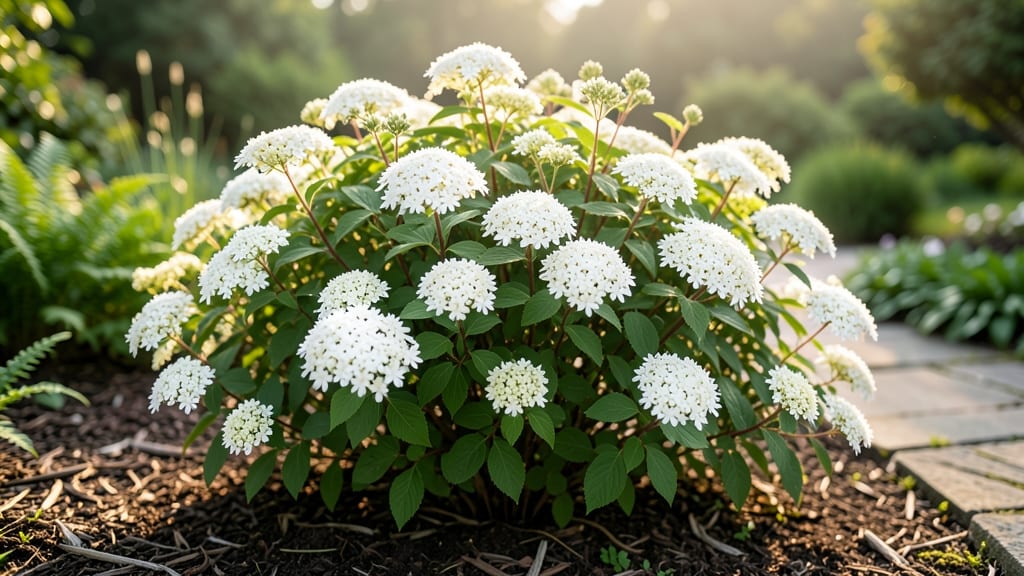
White spring blooms transform any garden into a dreamy, romantic escape—spring flowering shrubs with white flowers bring that ethereal beauty while attracting pollinators and adding structure. 🌸 My favorite, the mock orange (Philadelphus), bursts into fragrant white blossoms in late spring, filling the air with a sweet, citrusy scent that lingers for weeks.
These shrubs aren’t just pretty; they create a fragrant privacy screen that keeps looking stunning long after the flowers fade, with glossy foliage or striking bark adding year-round interest.
Most thrive in zones 4-8, making them versatile for gardens across the U.S., though a few like deutzia or pieris stretch into cooler climates. They love morning sun and afternoon shade, which prevents scorched blooms while keeping the flowers vibrant.
Pair them with purple or blue spring bulbs like hyacinths or grape hyacinths to create a soft, romantic contrast, or tuck them near evergreen shrubs like boxwood for a layered, lush effect that feels intentional.
What makes these shrubs special is how they evolve through the seasons—white blooms give way to textured foliage, and some even produce berries or seed pods that add winter interest.
My pieris japonica (Japanese andromeda) stays evergreen, its dark leaves peeking through delicate white flowers in spring, while deutzia offers arching branches that dance in the breeze. The result? A garden that feels like a curated masterpiece, not just a collection of plants.
For a fragrant privacy screen, plant mock orange or viburnum along fences or property lines—their height (6-10 feet) creates instant impact while their scent keeps neighbors lingering. In smaller spaces, dwarf varieties like deutzia gracilis (2-3 feet tall) work beautifully in containers or as focal points.
The key is spacing them 3-5 feet apart for airflow and future growth, ensuring those white clouds of blooms don’t get crowded out.
📚 In This Guide
- What you need
- Instructions
- Tips and common mistakes
- Wrapping up and next steps
What you need
- ● Spring flowering shrubs with white flowers: 3–5 Deutzia (e.g., 'Nikko' or 'Candidissima') – 3–5 gallon containers or bare-root plants
- ● 3–5 Weigela (e.g., 'Wine & Roses' or 'Alexandra') – 3–5 gallon containers or bare-root plants
- ● 3–5 Pieris japonica (Andromeda) – 3–5 gallon containers or bare-root plants
- ● 1–2 Abelia grandiflora (Glossy Abelia) – 1 gallon containers or bare-root plants
- ● High-quality potting soil: 5–10 bags (2–3 cubic feet each), well-draining and enriched with compost
- ● Organic mulch: 2–3 bags (e.g., shredded bark or pine straw) for moisture retention and weed control
- ● Slow-release fertilizer: 1–2 bags (10–20 lb) with a balanced NPK ratio (e.g., 10-10-10 or 14-14-14)
- ● Pruning shears: 1 pair (bypass pruners, sharp and sterilized)
- ● Garden gloves: 1 pair (heavy-duty for protection)
- ● Watering can or hose with a gentle spray nozzle: 1 (for delicate watering)
- ○ Stakes or plant supports (optional for larger shrubs): 5–10 stakes (4–6 feet tall)
- ● Garden trowel: 1 (for digging small holes)
- ● Wheelbarrow: 1 (for transporting soil and mulch)
- ● Soil pH test kit: 1 (to ensure optimal growing conditions, ideally 5.0–6.5 for most shrubs)
- ● Epsom salt (magnesium sulfate): 1 small container (for occasional foliar spray to boost bloom health)
- ● Decorative garden flags or labels: 5–10 (to track plant varieties)
- ● Drip irrigation system or soaker hoses: 1 (for efficient watering, especially in hot climates)
- ● 🌡️ Choose the right location: Select a spot with 6+ hours of sunlight daily (partial shade for Pieris in hot climates).
- ● ✨ Plant in early spring or fall: Avoid extreme heat or frost for best root establishment.
- ● 💧 Water deeply 2–3 times per week: First year is critical for root growth—don’t skimp!
How to design a fragrant white-flowering privacy screen
Here's my approach to creating a fragrant, ever-evolving screen that blooms white in spring and stays beautiful year-round.
🌿 Step 1: Select the Right Shrubs for Year-Round Interest
Choose four shrubs that complement each other in height, bloom time, and seasonal interest. I recommend starting with Deutzia for early spring blooms, Weigela for late spring color, Abelia for summer-to-fall flowers, and Pieris for winter interest. Each should reach 6-10 feet tall at maturity to create an effective screen.
Plant Deutzia first along the back row—it blooms earliest and provides a fragrant white canopy. Space plants 6-8 feet apart to allow for mature spread. The key is layering: taller shrubs in back, mid-height in middle, and lower-growing varieties in front. This creates depth and ensures no gaps when leaves emerge.
☀️ Step 2: Prepare the Planting Site for Optimal Growth
Choose a location with full sun to partial shade—most white-flowering shrubs thrive with at least 6 hours of direct sunlight daily. Test the soil pH (ideal range is 5.5-6.5 for these varieties). If your soil is heavy clay, amend with 2-3 inches of compost mixed into the top 12 inches of soil before planting.
Dig holes twice as wide as the root balls but only as deep. This prevents burying the stems too deeply, which can cause rot. Place each shrub so the top of the root ball sits 1 inch above ground level. Water each hole thoroughly before planting to settle the soil and eliminate air pockets.
💧 Step 3: Plant and Mulch for Long-Term Health
Gently remove each shrub from its container and loosen the roots if they're circling. Place the shrub in the hole and backfill with native soil, pressing lightly to eliminate gaps. Water immediately to help the soil settle around the roots. This first watering is critical—it removes air pockets and ensures good root-to-soil contact.
Spread 2-3 inches of mulch (cypress or pine bark) over the soil surface, keeping it 3 inches away from the stems to prevent rot. Mulch conserves moisture, regulates soil temperature, and suppresses weeds. Replenish mulch annually in late winter to maintain this protective layer. Avoid organic mulches like wood chips near stems—they can compact and suffocate roots.
✂️ Step 4: Prune for Shape and Encourage Full Blooms
Prune immediately after flowering to shape the shrubs and encourage next year's blooms. For Deutzia and Weigela, cut back any dead or crossing branches first. Then, trim to maintain a natural, rounded shape. Remove no more than one-third of the plant's growth in a single season—this prevents stress and maintains vigor.
Use sharp, clean pruners to make cuts at a 45-degree angle just above a bud or lateral branch. This encourages outward growth rather than inward. Avoid heavy pruning in late summer or fall—new growth won't harden off before winter, leaving plants vulnerable to cold damage. Fertilize lightly in early spring with a balanced, slow-release fertilizer to support new growth.
🌱 Step 5: Maintain Through the Seasons for Continuous Beauty
Water deeply once a week during the first growing season to establish roots. After that, water only during prolonged dry spells—these shrubs are drought-tolerant once established. Monitor for pests like aphids or spider mites, especially on new growth. A strong spray of water usually dislodges them, but severe infestations may require neem oil.
In late winter, prune again to remove any dead or diseased wood and shape the screen. This is also the time to divide any overcrowded plants or add new shrubs to fill gaps. The goal is to keep the screen dense and full—thin plants will let light through and reduce privacy. With proper care, your white-flowering privacy screen will provide fragrance, color, and structure for decades.
Tips & tricks for perfect fragrant white-flowering shrubs
Creating a fragrant privacy screen that stays beautiful year-round takes thoughtful planning—and these tips will help you avoid common pitfalls while maximizing your garden's potential.
Plant Placement Strategy: When arranging your four shrubs in Step 1, consider mature heights and growth habits. Place the Pieris (6-8 feet) at the back, followed by Weigela (8-10 feet) in the middle, then Abelia (6-8 feet) in front, with Deutzia (6 feet) as the foreground accent. This creates a natural, cascading effect that prevents light gaps as leaves emerge. I've found that spacing 6-8 feet apart gives each plant room to grow without crowding, which is especially important for the faster-growing Weigela.
Soil Preparation Secret: The 2-3 inches of compost mixed into the top 12 inches of soil in Step 2 is non-negotiable for these acid-loving shrubs. I recommend testing your soil pH before planting—if it's above 6.5, amend with sulfur or peat moss to lower it. For heavy clay soils, incorporate 10% perlite into your compost mix to improve drainage. This prevents root rot, which is a silent killer of newly planted shrubs. Trust me, I learned this after losing two Deutzia plants to waterlogged roots.
Mulching Mastery: That 2-3 inches of mulch in Step 3 isn't just decoration—it's a critical moisture barrier. Use cypress or pine bark mulch specifically, as these types break down slowly and won't smother your plants. The key is keeping it 3 inches away from stems to prevent rot. I've seen gardeners make the mistake of piling mulch against trunks, which creates the perfect environment for fungal diseases. Replenish annually in late winter to maintain that protective layer—this single habit makes all the difference in winter survival.
Pruning Precision: When pruning in Step 4, focus on removing no more than one-third of growth at a time. I recommend using a 45-degree angle cut just above a bud to encourage outward growth. For Weigela specifically, look for the small buds that form at the base of old wood—these will produce next year's flowers. Avoid pruning in late summer or fall unless absolutely necessary, as new growth won't have time to harden off before winter. I've seen too many gardeners over-prune in fall, leaving their shrubs vulnerable to cold damage.
Pro Tips for Spring Flowering Shrubs White Flowers
- Creating a fragrant privacy screen that stays beautiful year-round takes thoughtful planning—and these tips will help...
- Plant Placement Strategy: When arranging your four shrubs in Step 1, consider mature heights and growth habits. Place...
- Soil Preparation Secret: The 2-3 inches of compost mixed into the top 12 inches of soil in Step 2 is non-negotiable f...
Frequently asked questions
Got questions about choosing, planting, or caring for spring flowering shrubs with white blooms? You’re in the right place! Here are some of the most common queries—and their answers—to help you create a fragrant, stunning privacy screen with ease.
What are the best low-maintenance white-flowering shrubs for beginners?
If you’re new to gardening, opt for Hydrangea macrophylla (bigleaf hydrangea), Abelia grandiflora, or Weigela florida. These thrive with minimal fuss, offer year-round interest, and handle partial shade beautifully. Pro tip: Mulch annually to retain moisture and suppress weeds!
When is the ideal time to plant these shrubs for spring blooms?
Plant in early spring (March–April) or fall (September–October) for the best root establishment. Avoid extreme heat or frost—shrubs need time to settle before flowering. Evergreens like Pieris japonica (Andromeda) can handle cooler temps, but tender varieties (e.g., Deutzia) need warmer soil.
How do I keep my white-flowering shrubs blooming all season?
Most spring bloomers (like Forsythia or Spirea) need pruning right after flowering to encourage new growth. Feed with balanced fertilizer in early spring and water deeply during droughts. Deadheading spent blooms on repeat-flowering types (e.g., Abelia) extends the show!
Are white-flowering shrubs deer-resistant, or will they get munched?
Unfortunately, most white-flowering shrubs are deer magnets! For deer-resistant options, try Daphnes (mildly toxic) or Leucothoe axillaris (evergreen). Bonus tip: Plant near Lavender or Russian Sage—deer dislike their scent and may avoid the area entirely.
How do I protect these shrubs from heavy rain or wind damage?
Stake tall, top-heavy shrubs (like Hydrangea paniculata) in windy areas and mulch deeply to prevent soil erosion. For rain-prone zones, ensure well-draining soil—soggy roots lead to fungal issues. Container-grown shrubs? Elevate pots and use saucers to catch excess water.
Can I mix white-flowering shrubs with other colors for a bold look?
Pair whites with purple (Weigela ‘Wine & Roses’), pink (Spirea ‘Goldflame’), or yellow (Forsythia) for high contrast. For a soft palette, add blush-toned blooms like Deutzia ‘Nikko’. Design tip: Use odd-numbered groupings (3–5 plants) for visual balance!
Wrapping up and next steps
Transforming your garden into a fragrant, white-blooming paradise is easier than you think! From the delicate charm of Deutzia to the bold elegance of Hydrangea, these spring flowering shrubs offer year-round beauty and privacy while filling the air with intoxicating scents.
Whether you’re a seasoned gardener or just starting, these plants are perfect for adding timeless elegance and low-maintenance drama to any outdoor space.
Ready to take the next step? Sketch your dream garden layout—consider sunlight, soil, and space—then pick your favorite shrubs and start planting! 🌸 Your future blooms (and future neighbors’ envy) will thank you.