
Plants
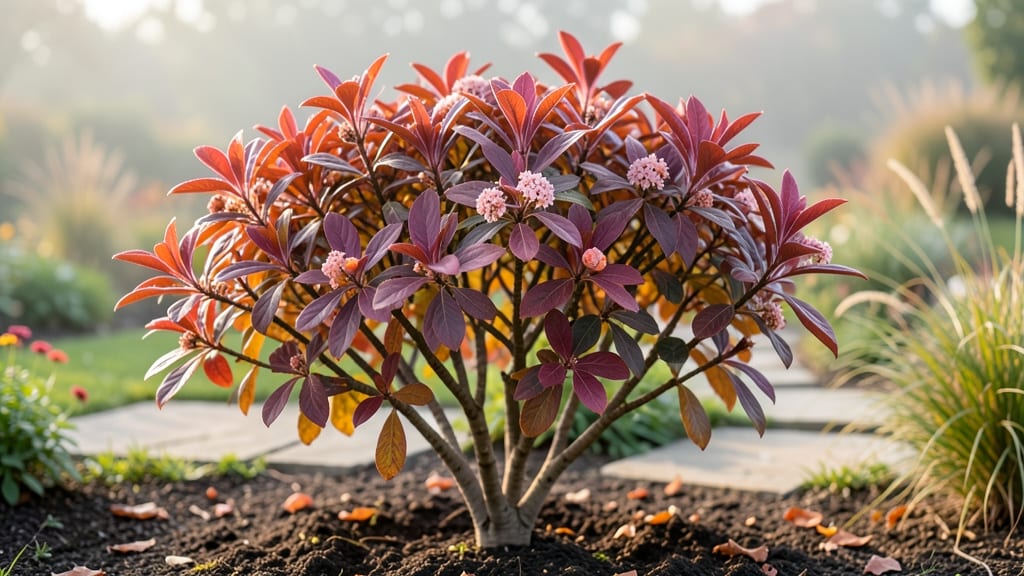
A burning bush shrub looks like a striking landscape plant with bright red-orange stems that appear in late summer, glossy dark green leaves growing in clusters of 3-5, and an upright, arching shape that can grow 6-15 feet tall. Its leaves dramatically turn fiery red in fall before dropping, which is how it got its name.
A burning bush shrub stands out in gardens with its bold seasonal transformation. 🌿 The glossy dark green leaves create a lush backdrop that contrasts sharply with the vibrant red-orange stems emerging in late summer, while the arching growth habit gives it a natural, flowing silhouette.
What makes it truly unique is how the foliage shifts from green to fiery red in fall—a dramatic color change that draws attention. This shrub thrives in full sun and handles various soil types, making it a popular choice for both privacy screens and ornamental plantings.
The stem color progression from green to red-orange happens as the plant matures, while the leaf clusters (3-5 leaves per stem) create a dense, layered look. Unlike similar shrubs, burning bush maintains its vibrant hues even after the leaves drop, leaving striking stems through winter.
This combination of year-round visual interest and low-maintenance care explains why it's a garden favorite.
💡 In This Article
- Distinctive Stem and Leaf Characteristics of Burning Bush
- Visual Identification Tips for Burning Bush vs Similar Shrubs
Distinctive stem and leaf characteristics of burning bush
The burning bush's glossy dark green leaves grow in clusters of 3-5 along each stem, creating a dense, layered appearance that's immediately noticeable. These leaves are elliptical with serrated edges, measuring about 2-4 inches long and 1-2 inches wide, and they're arranged in opposite pairs along the stem.
The glossy texture comes from a waxy cuticle that helps reduce water loss, which is particularly useful in its native habitats where it often faces dry conditions.
The stem color progression is one of the plant's most striking features. Young stems emerge green in spring, gradually transitioning to a bright red-orange as they mature by late summer.
This color change happens because of increased anthocyanin production—a natural pigment that develops in response to sunlight exposure and cooler temperatures.
The stems develop a slightly rough texture as they age, with small lenticels (pores) visible along their length, which help with gas exchange. 🌿 In winter, these vibrant stems remain visible even after the leaves drop, providing year-round interest.
The fall foliage transformation is what truly earns this plant its name. As temperatures drop, chlorophyll breaks down and the leaves produce more anthocyanins, turning them a brilliant fiery red. This process is similar to what happens in maple leaves but occurs more dramatically in burning bush.
The leaves maintain their vibrant color for several weeks before eventually falling, leaving behind the striking red-orange stems that persist through winter.
What sets burning bush apart from similar shrubs is its upright, arching growth habit that can reach 6-15 feet tall and 5-8 feet wide at maturity. The branching pattern creates a natural, layered look that's both dense and airy.
Unlike some shrubs that develop woody stems quickly, burning bush maintains a more flexible growth pattern, allowing it to arch gracefully under its own weight. This growth habit makes it excellent for creating privacy screens or as a focal point in landscape designs.
The plant's bark texture also plays a role in identification. Young stems have smooth bark that becomes slightly rougher with age, developing a subtle diamond pattern. When you run your fingers along mature stems, you'll feel these small ridges that help distinguish it from smoother-barked shrubs.
This texture, combined with the vibrant stem colors, creates a visual contrast that's hard to miss in any garden setting. 💫
What most gardeners don't realize is how the burning bush's characteristics change with its age. Young plants focus their energy on leaf production, creating a lush green appearance, while mature specimens develop more prominent red-orange stems.
This progression makes older burning bushes particularly striking, with their vibrant stems often becoming the main visual feature during winter months when other plants have lost their leaves.