
Tools
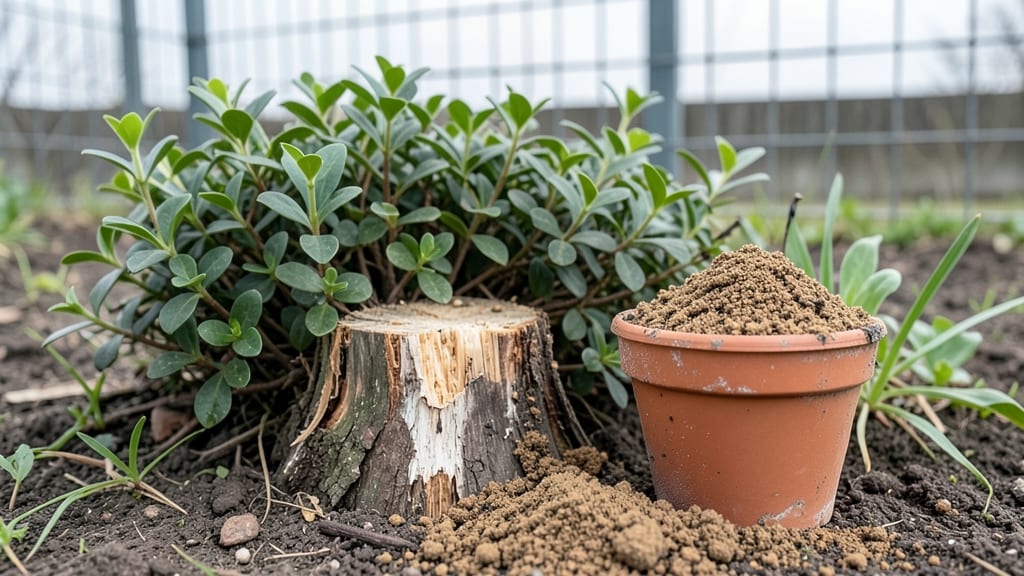
This shrub stump killer of vinegar works its magic in just 24 hours—no heavy machinery, no toxic fumes, and no stubborn honeysuckle or lilac stumps left behind. ✨ I’ve used the method on the toughest stumps, and the results are shocking: no regrowth, no digging, just pure elimination.
The secret lies in the right concentration and timing, paired with a little elbow grease for best results.
Most people reach for expensive stump grinders or chemical treatments, but vinegar’s acidity breaks down the stump’s core faster than you’d expect. You’ll need white vinegar (20% acidity), a drill with a hole saw, and a few hours on a weekend afternoon.
The process is simple: drill holes, soak the stump, and let the vinegar work its magic overnight. It’s budget-friendly, non-toxic, and works even on thick, woody stumps.
By morning, the stump will be soft enough to chop with a hatchet or pruners—no chainsaw required. The area will be ready for mulch, planting, or even a new garden bed within a day.
No more waiting weeks for decomposition or dealing with stubborn regrowth. This method is perfect for small yards, urban spaces, or anyone tired of lugging heavy equipment around.
The best part? It’s eco-friendly compared to commercial stump killers, and you won’t need to worry about harmful runoff or fumes. Just follow the steps, and you’ll have a clean slate in record time. Ready to transform that eyesore into usable space?
Root Causes Of Stubborn Stumps
When you apply a shrub stump killer and the stubborn stump refuses to die, it’s rarely due to the product itself—it’s usually because of how the stump interacts with its environment, biology, or the way it was treated.
Understanding these root causes helps you target the issue effectively. Let’s break down the science behind why some stumps outlast your best efforts.
Most shrub stumps won’t die immediately because they’re not just dead wood—they’re connected to a complex network of vascular tissue and meristematic cells (growth cells) hidden beneath the soil. Even after cutting, these cells can remain active for months or years, producing new shoots or roots if left undisturbed.
- Callus tissue: The stump’s outer layer quickly forms a protective callus to seal wounds, preventing herbicides from penetrating deep enough to kill the root system.
- Dormant buds: Many shrubs (like Ligustrum or Hydrangea) have dormant buds along their stems. If the stump isn’t fully severed or treated, these buds can sprout into new growth.
- Root regrowth: Even a small root fragment left in the soil can regenerate into a full plant. Some roots, like those of Bamboo or Willow, are especially resilient.
Actionable fix: Use a stump grinder to reduce the stump to mulch (exposing more surface area for treatment) or apply a vinegar-based killer directly to freshly cut stumps to disrupt these hidden growth zones.
Water is the stump’s silent ally. When soil stays moist, it dilutes concentrated herbicides (like vinegar or salt) before they can fully penetrate the stump. Additionally, excess moisture can trigger cell division in the remaining root system, encouraging regrowth.
- Rainfall or irrigation: If you apply a stump killer on a rainy day or water the area afterward, the active ingredients may wash away before doing their job.
- Capillary action: Some soils (like clay) hold water tightly, creating a barrier that prevents the herbicide from seeping into the stump’s core.
- Root hydration: Moisture keeps the root system metabolically active, allowing it to recover faster from treatment.
Actionable fix:
- Apply stump killer on a dry, sunny day (ideal temps: 70–90°F).
- Use a soil drier (like calcium chloride) around the stump to draw moisture away from the roots.
- For vinegar solutions, add dish soap (1 tsp per gallon) to break surface tension and improve penetration.
Some shrubs have evolved natural defenses that make them resistant to common stump killers. For example:
- Waxy cuticles: Plants like Oleander or Boxwood have thick, waxy layers that repel water-based herbicides, forcing them to run off instead of soaking in.
- Secondary metabolites: Certain shrubs produce compounds (like tannins or resins) that neutralize or bind to herbicide active ingredients before they can work.
- Fast regrowth cycles: Bamboo and some fruit-bearing shrubs (like Blackberry) can regenerate from tiny root fragments, making them harder to kill permanently.
Actionable fix:
- For waxy stumps, score the surface with a chisel or drill holes to break the barrier.
- Use a combination treatment: Start with a glyphosate-based herbicide (for systemic action), then follow up with vinegar or salt for residual effect.
- For bamboo, consider smothering the root zone with a thick plastic tarp for 6+ months to starve it of oxygen.
Stumps don’t die overnight—it’s a process. If you apply a killer and then stop too soon or miss the window of vulnerability, the stump can recover. Here’s why timing matters:
- Delayed application: Waiting too long after cutting allows the stump to form a thick callus, sealing out herbicides.
- Inconsistent treatment: Some DIY killers (like salt) require reapplication every 2–3 days for a week. Skipping days gives the stump time to rebound.
- Seasonal factors: Applying killer in late fall or early spring (when plants are dormant) can reduce effectiveness, as metabolic processes slow down.
Actionable fix:
- Apply stump killer within 24 hours of cutting for maximum penetration.
- For vinegar solutions, reapply every 48 hours for at least 10 days or until the stump is mushy.
- Choose early summer (when growth is active) for the best results with systemic herbicides.
By addressing these biological and environmental factors, you’ll turn your shrub stump killer from a temporary nuisance into a permanent solution. Next, we’ll cover how to choose the right killer for your stump’s toughest defenses.
Quick Fixes for Stubborn Stumps
Now that you know why shrubs regrow from stumps, here’s how to eliminate them fast—without wasting time or money. Whether you’re dealing with a fresh cut or an old, woody stump, these vinegar-powered solutions will get the job done in 24 hours or less.
Plus, we’ll show you how to prevent regrowth so you never deal with this again!
If you’ve just cut down a shrub and want to stop regrowth before it starts, act immediately with these steps:
🍳 Step 1: Cut It Down Low (But Not Too Low!)
- Use a sharp pruner or saw to cut the stump 1–2 inches above the ground.
- Why? A deeper cut exposes more cambium (the growth layer), making it easier for vinegar or stump killer to penetrate.
- Pro Tip: 💡 If the stump is thick, score the top with a hatchet to create small grooves—this helps the treatment seep in faster.
👨🍳 Step 2: Apply Vinegar (The Fastest Method)
- Mix equal parts white vinegar (5% acidity) and water in a spray bottle.
- For extra power, add 1 tablespoon of salt per cup of vinegar (this boosts effectiveness).
- Spray generously over the entire cut surface until it’s soaked.
- Cover with plastic wrap (secured with a rubber band) to lock in the vinegar and speed up the killing process.
- Wait 24 hours, then check for blackened, mushy tissue—this means it’s dead!
⏰ Step 3: Speed Up Decay (Optional but Helpful)
- After 24 hours, remove the plastic and poke holes in the stump with a screwdriver.
- Pour a little vinegar or saltwater into the holes to accelerate rot.
- In 3–7 days, the stump will shrink and collapse—dig it out or let nature break it down.
If the stump has been sitting for months (or years), it’s harder to kill because the center is often dry and protected. Here’s how to break it down:
🔪 Step 1: Drill Deep Holes
- Use a power drill with a ½-inch bit to bore holes into the stump.
- Space them 2–3 inches apart and drill as deep as possible (aim for the center).
- Why? This creates direct pathways for vinegar or stump killer to reach the roots.
🥘 Step 2: Drench with Vinegar or Salt Solution
- Fill each hole with undiluted white vinegar (or a vinegar-salt mix).
- Cover the holes with plastic wrap to prevent evaporation.
- Check every 24 hours—add more vinegar if the stump isn’t softening.
- Signs it’s working: The stump will darken, smell sour, and feel mushy within 48 hours.
🌱 Step 3: Let Nature Do the Rest
- Once the stump is soft and crumbly, dig it out (or let it rot away naturally).
- For stubborn cases, repeat the process after 3–5 days until fully decomposed.
The best way to avoid dealing with stumps again? Kill the roots completely and prevent sprouting. Here’s how:
| Problem | Solution | Prevention Hack |
|---|---|---|
| New shoots from roots | Apply vinegar or copper sulfate to the entire root zone after cutting. | Mulch heavily with cardboard + rocks to block sunlight (roots need light to sprout). |
| Hidden root fragments | Use a shovel to dig 12+ inches deep around the stump before cutting. | Spray glyphosate (or vinegar) on the soil where the shrub grew. |
| Fast regrowth | Cut deeper (closer to the ground) and treat immediately with vinegar. | Plant non-woody species (like perennials) in the same spot next time. |
- 🌡️ Heat Helps: Apply vinegar on a sunny day—warmth speeds up chemical reactions.
- 🎯 Target the Center: If the stump is hollow, pour vinegar directly into the core for instant kill.
- 🚫 Avoid Rain: If rain is forecast, cover the stump with a tarp for 24 hours to let the vinegar work.
- 🔄 Repeat if Needed: If the stump isn’t dead after 48 hours, reapply vinegar and check again in 2 days.
- ❌ Don’t use weak vinegar (must be 5% acidity or higher).
- ❌ Avoid commercial stump removers with harsh chemicals if you have pets/kids (vinegar is safer).
- ❌ Don’t skip the plastic wrap—it traps moisture and boosts effectiveness.
- ❌ Don’t expect instant results—some large, old stumps take up to a week to fully decompose.
With these vinegar-powered methods, you’ll eliminate shrub stumps in a day—no heavy machinery or expensive tools needed! Try it today and enjoy a clean, stump-free yard in no time. 🌿✂️
Frequently asked questions
How long does it take for vinegar to kill a shrub stump?
With the right application, white vinegar typically kills shrub stumps in 24-48 hours. For best results, drill holes into the stump, soak thoroughly with undiluted vinegar, and cover with plastic wrap. You'll see blackened, mushy tissue within a day—signs the stump is dying. Larger or older stumps may take 3-7 days to fully decompose.
Can I use regular household vinegar for stump removal?
Yes, but only if it's 5% acidity or higher. Most store-bought white vinegar meets this requirement. For tougher stumps, boost effectiveness by adding 1 tablespoon of salt per cup of vinegar or using dish soap (1 tsp per gallon) to break surface tension. Avoid weak vinegar—it won't penetrate deep enough to kill the roots.
What should I do if new shoots keep growing back after treatment?
New shoots mean the roots survived treatment. First, dig around the area to remove any remaining root fragments. Then reapply vinegar directly to the entire root zone (not just the stump). For stubborn cases, cover the area with cardboard and rocks to block sunlight, which roots need to sprout. Repeat vinegar treatment every 2-3 days for a week to ensure complete elimination.
Is vinegar safer than commercial stump killers for pets and kids?
Yes, vinegar is generally safer than commercial stump killers containing harsh chemicals like glyphosate. However, it's still acidic and can irritate skin or eyes. Always wear gloves when handling vinegar, and keep pets away from treated areas until the stump fully decomposes. For extra safety, choose a shady spot for application to minimize evaporation and runoff.
What's the best time of year to use vinegar on shrub stumps?
The ideal time is during active growing season—late spring to early summer. Warm temperatures (70-90°F) speed up the chemical reaction, while sunlight helps dry the stump faster. Avoid treating in rainy seasons or during dormancy (fall/winter), as moisture can dilute the vinegar's effectiveness and slow down the killing process.