
Shrubs
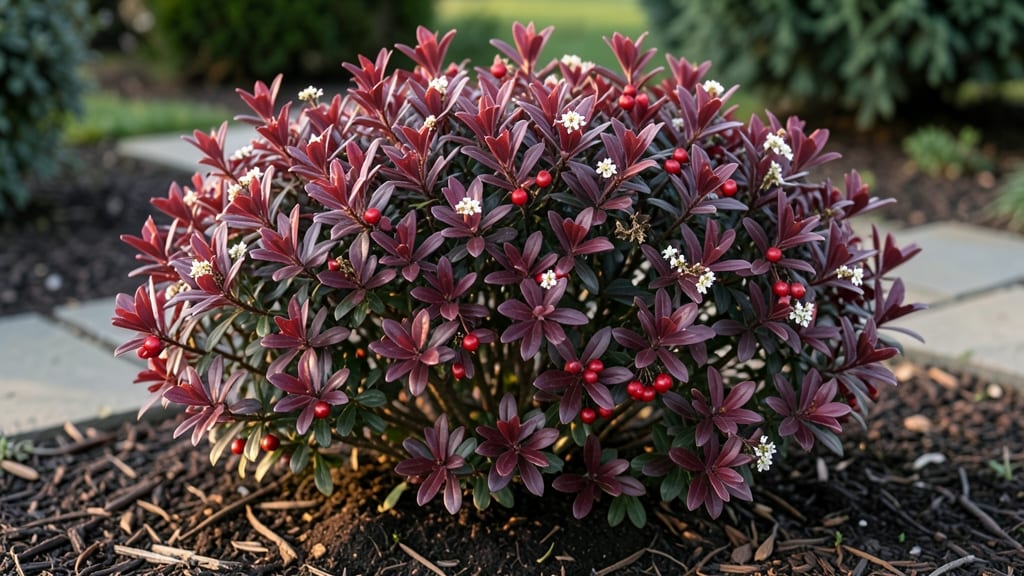
Red-leaved shrubs turn your garden into a living painting—year-round drama that no seasonal flowers can match. 🌿 I’ll never forget the first time I spotted a deep burgundy Cotinus against a winter sky: that’s when I realized foliage could be the star of the show, not just the supporting cast.
These shrubs thrive in partial shade to full sun, making them perfect for borders, containers, or as bold focal points. Pair them with silvery foliage (like lamb’s ear) or creamy white blooms to make their red leaves pop even harder.
The secret? Most hold their color best in cooler weather, so plant them where they get afternoon shade in hot climates.
Imagine your front yard in winter: glossy red stems peeking through snow, or a container bursting with Ilex crenata ‘Burford Red’ framing your porch. The texture contrast alone—smooth, waxy leaves against rough bark—creates depth that flowers simply can’t. And the best part? They need zero deadheading or seasonal fuss.
For maximum impact, group odd numbers together (three or five plants) and layer heights. A single specimen shrub makes a statement, but clusters create movement. Now’s the time to sketch your design—these shrubs won’t disappoint.
📚 In This Guide
- What you need
- Instructions
- Tips and common mistakes
- Wrapping up and next steps
What you need
- ● Red-leaved shrubs: Choose from varieties like Ilex crenata ‘Dwarf Burford’, Pieris japonica ‘Little Heath’, or Cotoneaster dammeri ‘Royal Purple’. Buy 3–5 mature plants (1–3 ft tall) for immediate impact or 5–10 young plants (6–12 in tall) for long-term growth.
- ● High-quality potting mix: 1–2 cubic yards (for in-ground planting) or 5–10 gallons (for containers). Use a blend with 50% peat moss/compost and 50% perlite/sand for drainage.
- ● Organic mulch: 2–3 inches of cedar chips or pine bark to retain moisture and suppress weeds.
- ● Garden trowel or spade: For digging holes (choose a 6–8 inch diameter for small shrubs, 12+ inches for larger varieties).
- ● Garden gloves: Heavy-duty nitrile-coated gloves to protect hands from thorns (e.g., Pyracantha) and rough bark.
- ● Watering can or hose with nozzle: A 1–2 gallon can for precision or a soaker hose for deep watering.
- ● Pruning shears: Bypass pruners (for clean cuts) and loppers (for thicker stems).
- ● Measuring tape: To ensure proper spacing (3–6 ft apart, depending on mature size).
- ● Slow-release fertilizer: 10–20 lb of 10-10-10 or balanced organic fertilizer (e.g., fish emulsion) for a nutrient boost.
- ● Container garden setup: 5–15 gallon pots with drainage holes if planting in containers. Use fabric liners for root-bound plants.
- ● Plant support stakes: 3–4 ft bamboo stakes for top-heavy shrubs like Cornus sericea ‘Cardinal’.
- ● Seasonal care kit: Anti-desiccant spray (for winter protection) and copper fungicide (to prevent leaf spot).
Step-by-step guide to designing with red-leaved shrubs
Here’s how to create striking visual impact with these showstopping plants—year after year.
🌿 Step 1: Choose Shrubs with Complementary Colors
Start by selecting 3-4 red-leaved varieties with different shades—deep burgundy, fiery orange-red, or rich purple-red—to create depth. I like pairing Euonymus alatus 'Compactus' (burning bush) with Cornus sericea 'Kiefferi' (red-twig dogwood) for layered contrast. These plants will pop against evergreens like Picea pungens 'Glauca Globosa' (blue spruce) or Abies concolor (white fir).
Look for shrubs with textural variety too—some have smooth leaves while others have serrated edges or glossy finishes. A mix of broadleaf and needleleaf plants adds dimension. For example, the smooth, waxy leaves of Ilex crenata 'Soft Touch' (Japanese holly) balance the feathery foliage of Salix caprea 'Pendula' (weeping willow).
☀️ Step 2: Position for Maximum Visibility and Sunlight
Most red-leaved shrubs thrive in full sun to partial shade, but placement matters for color retention. Deep reds like Cotoneaster dammeri 'Royal Purple' need 6+ hours of sun to maintain their vibrancy, while lighter reds (like Viburnum bodnantense 'Dawn') tolerate morning sun and afternoon shade. I always place them where they’ll catch early morning sunlight—this makes their colors glow for winter photos.
For year-round impact, group them near walkways, patios, or entryways where their bold hues will be seen daily. If planting near a house, position them 6-10 feet from walls—this creates a living backdrop for windows and doors. Avoid placing them under large deciduous trees, as competing roots and shade will dull their color over time.
🪴 Step 3: Plant with Proper Spacing and Soil Prep
Dig holes twice as wide as the root ball but only as deep as the container’s base—this prevents burying the stem, which can cause rot. Amend the soil with 2-3 inches of compost mixed into the native dirt for better drainage and nutrient retention. Red-leaved shrubs prefer well-draining, slightly acidic soil (pH 5.5-6.5), so test your soil before planting.
Space shrubs 4-6 feet apart for medium-sized varieties (like Berberis thunbergii 'Rose Glow') and 8-10 feet apart for larger ones (like Physocarpus opulifolius 'Little Devil'). Overcrowding leads to weak stems and duller foliage—trust me, you’ll regret it when they start competing for sunlight. Mulch with 2-3 inches of shredded bark to retain moisture and suppress weeds, but keep mulch 6 inches away from the stem to prevent rot.
✂️ Step 4: Prune for Shape and Health
Prune late winter or early spring (just before new growth starts) to shape your shrubs and encourage denser foliage. Use clean, sharp pruners to make cuts at a 45-degree angle just above a bud or branch junction. For formal shapes, remove 1/3 of the oldest stems each year to rejuvenate the plant—this keeps them looking fresh and prevents woody centers.
If a shrub loses its vibrant color, it’s often a sign of over-fertilizing or poor drainage. Cut back any dead or diseased branches immediately, and avoid heavy-handed pruning—red-leaved shrubs hate aggressive trimming. Instead, focus on light shaping to maintain their natural form. A little patience goes a long way—your shrubs will reward you with bold, consistent color for years.
💧 Step 5: Water and Feed for Long-Term Vibrancy
Water deeply once a week (or more in extreme heat) to encourage deep root growth. Shallow watering leads to weak stems and faded leaves, so always water until 6 inches of soil is moist. I use a soaker hose for even distribution—it saves time and prevents runoff. After the first year, most red-leaved shrubs become drought-tolerant, but newly planted specimens need consistent moisture to establish roots.
Fertilize once in early spring with a balanced, slow-release fertilizer (10-10-10). Avoid high-nitrogen fertilizers—they promote leafy growth at the expense of color. Instead, opt for a low-nitrogen, high-phosphorus blend to boost root development and foliage vibrancy. If your shrubs start looking pale or leggy, they’re likely starving for nutrients—this is your cue to amend the soil with compost or organic matter.
Tips & tricks for stunning red-leaved shrub landscaping
Creating a showstopping display with red-leaved shrubs isn't just about planting—it's about strategic choices that make all the difference. Here's how to elevate your design from good to breathtaking.
Color Layering Secret: When selecting your 3-4 varieties, think about the color wheel—place deep burgundy shrubs like Cotoneaster dammeri 'Royal Purple' behind lighter reds like Viburnum bodnantense 'Dawn' to create depth. This creates a stunning gradient effect that draws the eye. I've found that adding a single silver-leaved plant (like Artemisia 'Silver King') among the reds makes the colors pop even more dramatically.
Sunlight Strategy: The 6+ hours of sunlight needed for deep reds is non-negotiable, but here's the pro move: position your shrubs to catch the morning sun for winter photos. The light hits at a lower angle, making colors appear more intense and creating beautiful shadows. For afternoon shade lovers like Ilex crenata 'Soft Touch', place them on the north side of structures to protect them from harsh afternoon rays.
Soil Science: That 2-3 inches of compost isn't just for drainage—it's your color enhancer. Red-leaved shrubs need slightly acidic soil (pH 5.5-6.5) to maintain their vibrant hues. Before planting, mix in a handful of sulfur-based amendment if your soil tests higher than 6.5. I've seen dull reds transform into fiery displays just by adjusting the soil pH—it's like giving your plants a color boost!
Pruning Pro Tip: When you're removing 1/3 of the oldest stems each year, don't just cut randomly. Look for stems that are thicker than a pencil—these are the ones causing woody centers. Cut just above a outward-facing bud at a 45-degree angle. This technique keeps your shrubs looking youthful and encourages new growth that will maintain that vibrant color for years to come.
Pro Tips for Red Leaved Shrubs
- Creating a showstopping display with red-leaved shrubs isn't just about planting—it's about strategic choices that make all the difference.
- This creates a stunning gradient effect that draws the eye.
- Sunlight Strategy: The 6+ hours of sunlight needed for deep reds is non-negotiable, but here's the pro move: position your shrubs to catch the morning sun for winter photos.
Frequently asked questions
Got questions about adding red-leaved shrubs to your garden? You’re not alone! Here are some of the most common queries—and their answers—to help you make the best choices for your landscape.
What’s the best time of year to plant red-leaved shrubs?
For optimal root establishment, plant in early spring or fall when temperatures are mild. Avoid extreme heat or frost, which can stress young shrubs. If you’re in a warm climate, late fall to winter works too—just water deeply to support growth.
How much sunlight do red-leaved shrubs need?
Most varieties thrive in full sun (6+ hours/day), but some (like Pieris japonica) tolerate partial shade. Check the specific type—overly shady spots can dull foliage color. Morning sun + afternoon shade often works best in hotter regions.
Do red-leaved shrubs need pruning? If so, when?
Yes! Prune in late winter or early spring (before new growth) to shape and encourage vibrant foliage. Avoid heavy pruning in fall—it can stress the plant. Dead or diseased branches should be removed year-round. Pro tip: Use clean, sharp tools to prevent damage!
Can I grow red-leaved shrubs in containers? Which ones work best?
Dwarf varieties
like Cotoneaster dammeri or Heuchera thrive in containers. Use well-draining soil and a pot with drainage holes. Larger shrubs (e.g., Rhododendron) need bigger containers and regular watering. Bonus: Containers let you move shrubs for seasonal color displays!
Are red-leaved shrubs prone to pests or diseases?
Some varieties attract aphids, spider mites, or fungal issues (like powdery mildew) in humid climates. Prevent problems by:
- Watering at the base (not overhead)
- Choosing disease-resistant cultivars (e.g., Ilex crenata ‘Blood Red’)
- Inspecting leaves regularly for early signs
How can I pair red-leaved shrubs with other plants for contrast?
Play with texture and color! Pair deep reds with:
- Silver foliage (e.g., Artemisia ‘Silver King’)
- Chartreuse or yellow (e.g., Hosta ‘Francee’)
- White or pale blooms (e.g., Hydrangea ‘Annabelle’)
Wrapping up and next steps
Red-leaved shrubs are a game-changer for adding drama, texture, and year-round interest to your garden or landscape. Whether you’re drawn to their fiery foliage, low-maintenance charm, or ability to thrive in diverse climates, these plants offer effortless elegance with minimal fuss. 🌿✨
Now that you’re inspired, why not take the next step? Start small—plant one striking variety in a pot or along a pathway, then expand as you fall in love with their bold beauty. Your garden (and your neighbors!) will thank you.