
Shrubs
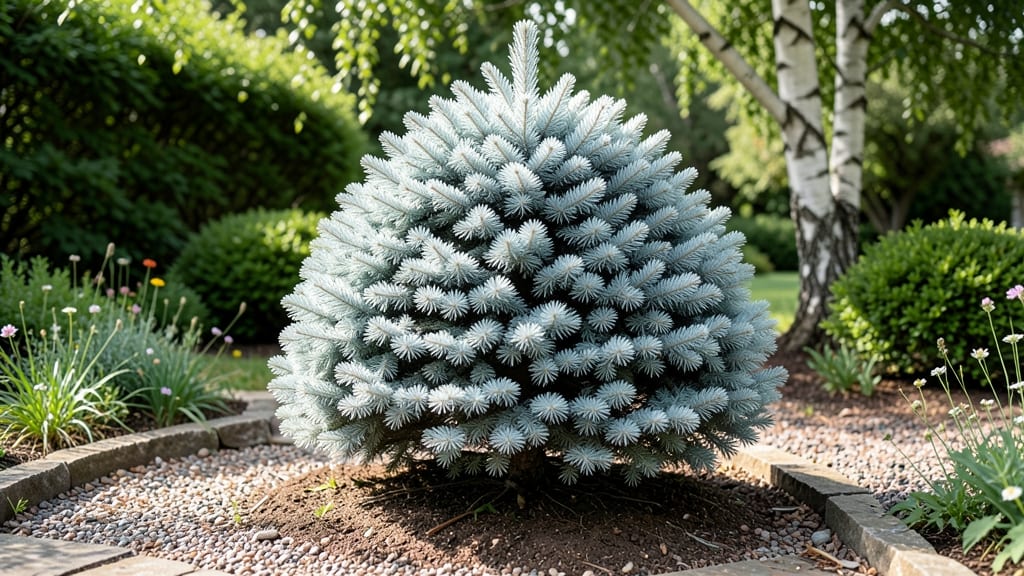
A dwarf blue spruce shrub transforms any yard into a year-round masterpiece with its striking blue-green needles and dense growth. 🌲 I've used these evergreens to create privacy screens, dramatic focal points, and even container gardens that steal the show—all while requiring minimal fuss.
They thrive in full sun to partial shade, making them perfect for tight spaces or formal hedges. In just 3 years, you can create a lush, wind-resistant barrier that stays vibrant through snow and summer alike.
The dense foliage blocks noise and wind while adding texture that no other shrub can match. For design inspiration, try pairing them with hostas for contrast or using them as a living frame for patios.
Their compact size (typically 3-5 feet tall) makes them ideal for small yards, while their slow growth means you won’t need to prune often. The color alone—deep blue in winter, softer green in summer—makes them a standout feature.
Whether you want a structured hedge or a natural-looking border, these shrubs deliver low-maintenance beauty that keeps your landscape looking polished year after year. Let’s get your design started!
📚 In This Guide
- What you need
- Instructions
- Tips and common mistakes
- Wrapping up and next steps
What you need
- ● Dwarf Blue Spruce Shrubs: 3–5 plants (spaced 3–4 feet apart for full coverage in 3 years). Look for Picea pungens 'Glauca Globosa' or similar cultivars.
- ● Well-draining soil: Mix of native soil + 20% organic matter (compost or peat moss). Test soil pH (ideal: 6.0–7.0).
- ● Mulch: 2–3 inches of pine bark or shredded cedar chips (keeps roots cool and moist).
- ● Watering can or hose with nozzle: For gentle, deep watering (avoid overhead spray).
- ● Fertilizer: Slow-release evergreen fertilizer (10-10-10 or similar) or organic option like fish emulsion.
- ● Gloves & pruning shears: For handling plants and trimming (sterilize shears with rubbing alcohol).
- ● Trowel or spade: For digging holes (1.5x wider than root ball).
- ○ Stakes & twine: To support young plants in windy areas (optional but helpful).
- ● Soil moisture meter: Ensures roots stay hydrated without overwatering.
- ● De-icing salt alternative: For winter pathways (sand or calcium chloride to protect roots).
- ● Plant tags or markers: To track varieties and planting dates.
- ● Timing: Plant in early spring or fall to avoid extreme heat/cold stress.
- ● Sunlight: Ensure full sun (6+ hours/day)—this shrub thrives in cold but needs light!
- ● Drainage: Avoid low spots where water pools. Elevate beds if needed.
Step-by-step guide to planting dwarf blue spruce shrubs
Here's how to establish a lush, cold-hardy privacy screen that thrives for decades with minimal care.
🪴 Step 1: Select and Prepare Planting Sites
Choose 4 locations spaced 6-8 feet apart for your dwarf blue spruce shrubs—this spacing ensures full coverage in 3 years while allowing airflow between plants. Look for spots with full sun to partial shade (at least 6 hours of direct sunlight daily). These evergreens tolerate a range of conditions but thrive best in well-draining soil with a pH between 5.0 and 7.0. Test your soil first—amending with sand or compost if it feels heavy or clay-like.
Dig holes twice as wide as the root ball and 1-2 inches deeper to accommodate roots without bending. I like to loosen the soil at the bottom of the hole with a fork—this prevents compacting when roots spread. If planting in USDA Zones 3-7, no additional protection is needed; these spruces handle winter temps down to -40°F with ease. For zones 8+, provide afternoon shade during the first summer to reduce stress.
🌱 Step 2: Plant Shrubs with Proper Spacing and Support
Remove each shrub from its container and gently tease the roots if they’re circling—this encourages outward growth instead of root-bound stress. Place the root ball into the hole so the top of the root ball sits level with the surrounding soil (burying too deep suffocates the plant). Fill the hole with native soil, tamping lightly every 2 inches to eliminate air pockets. Water deeply to settle the soil around roots.
Stake each shrub only if needed—you’ll know by the first strong wind. Use 2-3 stakes per plant, tying the trunk loosely with soft fabric strips (never wire, which cuts into bark). Mulch the base with 2-3 inches of pine bark or shredded leaves, keeping mulch 6 inches away from the trunk to prevent rot. Water immediately after planting to help roots establish in the first critical 2 weeks.
☀️ Step 3: Water and Fertilize for First-Year Growth
Water newly planted spruces deeply once a week for the first 3 months, ensuring 1-1.5 inches of water reaches the root zone. You’ll know you’ve watered enough when the soil feels moist 4-6 inches down—stick your finger in to check. Overwatering is the biggest mistake here; these shrubs hate soggy roots. Reduce watering to every 2 weeks once the first year is complete, as established plants are drought-tolerant.
Apply a slow-release, balanced fertilizer (10-10-10) in early spring (March) and late summer (August) for the first year. Use half the recommended dose—too much fertilizer burns tender new growth. Sprinkle granules 6 inches from the trunk and water thoroughly to activate them. Avoid fertilizing in fall or winter, as new growth won’t harden off before cold snaps.
✂️ Step 4: Prune and Maintain for Long-Term Health
Prune your dwarf blue spruces only to remove dead or damaged branches in the first year—never cut into old wood, as these shrubs heal slowly. Use clean, sharp shears to make cuts just above a healthy bud or branch collar. If a branch grows too tall or leggy, trim it back by ⅓ in late winter (February) before new growth begins. This encourages bushier, denser foliage.
Inspect plants annually for spider mites or bagworms, common pests that target evergreens. Treat infestations early with neem oil or insecticidal soap—wait until afternoon to apply to avoid burning needles in direct sun. In USDA Zones 5-7, protect young shrubs with burlap wraps during the first 2 winters if your area gets extreme wind or heavy snow. Remove wraps in early spring to avoid trapping moisture.
⏰ Step 5: Monitor Growth and Adjust Care Over 3 Years
Check your shrubs’ growth annually in early spring—healthy dwarf blue spruces grow 6-12 inches per year. If growth stalls after year 2, it’s time to fertilize lightly or check for compacted soil (aerate if needed). By year 3, your 4-plant screen should form a dense, 6-foot-wide privacy barrier with blue-green foliage that stands out against any landscape. If any shrub looks sparse, transplant a replacement in early fall for seamless integration.
Once established, these shrubs require almost no maintenance—just annual pruning to shape and occasional watering in droughts. Their cold-hardy nature means you’ll never need to dig them up or protect them in winter. That’s the beauty of dwarf blue spruces: plant them right, and they’ll thrive for decades with almost no effort.
Tips & tricks for perfect dwarf blue spruce planting
Here’s what I’ve learned after planting these resilient evergreens in my own yard—and how to avoid the mistakes I made.
Soil Prep Secret: Before planting, mix half a bucket of compost into the bottom of each hole to give roots an instant nutrient boost. I also add a handful of perlite or coarse sand to improve drainage, especially if your soil feels dense. This helps prevent root rot while keeping moisture just right for the first critical 2 weeks when roots are establishing.
Root Teasing Technique: When you remove each shrub from its container, don’t just pull it out—run your fingers through the root ball to loosen any circling roots. I use a small hand fork to gently separate tight roots without damaging them. This encourages outward growth instead of letting roots stay compacted in a circle, which can strangle the plant over time.
Staking Strategy: Only stake your shrubs if you live in a windy area or notice them leaning after the first strong breeze. Use soft fabric strips (like old t-shirts) instead of wire—they won’t cut into the bark as the trunk grows. I’ve seen too many plants with girdling marks from wire ties, so this small switch makes a big difference in long-term health.
Watering Wisdom: The 1-1.5 inches of water per week recommendation is spot-on, but here’s the trick: water in the early morning so foliage has all day to dry. Wet needles at night invite fungal issues. I also check soil moisture by sticking my finger 4-6 inches down—if it’s dry, water again. These shrubs hate soggy roots but need consistent moisture until established.
Pro Tips for Dwarf Blue Spruce Shrub
- Here’s what I’ve learned after planting these resilient evergreens in my own yard—and how to avoid the mistakes I made.
- Soil Prep Secret: Before planting, mix half a bucket of compost into the bottom of each hole to give roots an instant...
- Root Teasing Technique: When you remove each shrub from its container, don’t just pull it out—run your fingers throug...
Frequently asked questions
Got questions about growing and caring for your dwarf blue spruce shrub? You’re not alone! Here are some of the most common queries—plus quick, actionable answers to keep your evergreen thriving.
How fast does a dwarf blue spruce shrub grow?
A dwarf blue spruce typically grows 6–12 inches per year, reaching its mature height of 3–5 feet in 3–5 years with proper care. For faster growth, plant in well-draining soil and water deeply after planting. Patience pays off—these shrubs are slow but steady!
Is a dwarf blue spruce cold-hardy enough for Zone 3?
This shrub is one of the toughest in its class, thriving in USDA Zones 2–7. It handles subzero temps and heavy snow without flinching. Just avoid soggy soil—root rot is its only weakness.
Can I prune a dwarf blue spruce to keep it smaller?
Yes, but go easy! Prune only to shape or remove dead branches—never more than 25% of the foliage at once. Use clean, sharp shears after the growing season (late fall/winter) to avoid stressing the plant. Over-pruning stunts growth and harms its iconic blue hue.
What pests or diseases should I watch for?
Dwarf blue spruces are low-maintenance, but keep an eye out for:
- Spider mites (tiny webs on needles—spray with water or neem oil).
- Bagworms (chewing caterpillars—handpick or use Bt spray early).
- Root rot (yellowing needles + mushy stems—improve drainage ASAP).
What’s a good alternative if I want a similar look but faster?
If you love the color and texture but need quicker privacy, try:
- ‘Blue Rug’ juniper (spreading, drought-tolerant, Zone 3–9).
- ‘Glaucus’ blue false cypress (taller, feathery, Zone 5–8).
- ‘Ice Blue’ arborvitae (faster-growing, Zone 4–8).
Wrapping up and next steps
The dwarf blue spruce shrub is a fantastic choice for adding year-round color and privacy to your landscape—fast! With its cold-hardy nature and low-maintenance care, it’s perfect for gardeners who want beauty without the hassle. 🌲❄️
Ready to transform your outdoor space? Start by selecting the right location, gathering your supplies, and planting with confidence. In just three years, you’ll enjoy a lush, evergreen privacy screen that thrives in even the harshest winters.