
Flowers
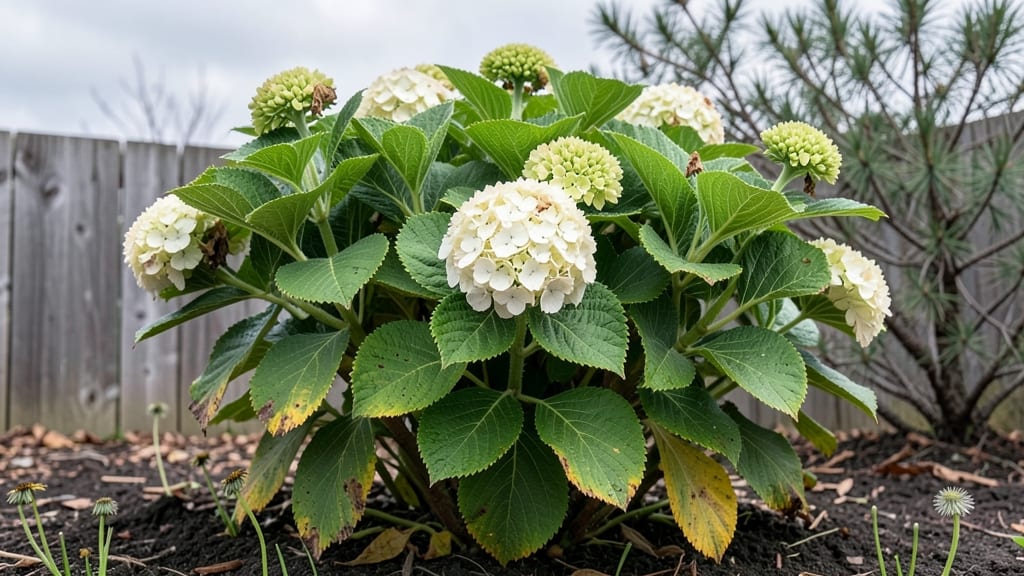
This green shrub with white flowers isn’t just pretty—it’s the quiet hero of pollinator-friendly gardens, drawing bees and butterflies while keeping your landscape lush year-round. 🌿 I’ve seen gardenias, abutilon, and hydrangeas transform neglected corners into fragrant, buzzing havens, and the best part?
They’re low-maintenance once established. The key is matching the right variety to your climate and design style—whether you want a fragrant border or a bold focal point.
These shrubs thrive in partial shade to full sun, with most blooming from spring through fall. Gardenias reward you with creamy, intoxicating flowers in summer, while abutilon offers fluffy, lantern-like blooms that last all season.
Hydrangeas bring that classic white pom-pom charm, but they’re just as happy in pink or blue with the right soil pH. The secret to keeping them looking their best? Pruning after blooming and feeding with compost in early spring—no fancy tricks, just consistent care.
Pair them with purple salvias for a cottage-garden dream or contrast their white blooms against deep green boxwoods for a clean, modern look. In formal gardens, they work as structured hedges, while in wildflower meadows, they anchor the space with structure.
The fragrance alone—especially gardenias at dusk—makes them worth every inch of space. You’ll end up with a garden that smells as good as it looks, and the pollinators will thank you too.
From coastal gardens to city patios, these shrubs adapt beautifully, making them the ultimate versatile choice. Whether you’re filling a sun-drenched border or adding height to a shady corner, they’ll bring texture, color, and life to your outdoor space without demanding constant attention.
Let’s find the perfect one for your garden’s personality.
Why Flowers Stay Green
When you’re nurturing a green shrub with white flowers, the last thing you want is for those delicate blooms to fade into the foliage.
Instead of vibrant white flowers, you might notice lush green leaves dominating the scene—leaving you wondering, “Why isn’t my shrub flowering?” The answer often lies in a mix of environmental, biological, and care-related factors.
Let’s break down the science behind why your shrub might be holding onto its leaves instead of bursting into bloom.
Light is the primary trigger for flowering in most shrubs. Without adequate sunlight, plants prioritize leaf growth over reproductive processes like bud formation. Many flowering shrubs—especially those with white blooms—require 6 to 8 hours of direct sunlight daily to trigger photoperiodic responses (light-sensitive signals that kickstart flowering).
Why it happens:
- Photosynthesis struggles: Low light reduces energy production, so the plant diverts resources to sustaining existing leaves rather than producing flowers.
- Phytochrome disruption: This plant pigment detects light quality and duration. In shady conditions, phytochrome stays in a "far-red" state, suppressing flowering genes.
- Weak stems and sparse blooms: Shrubs in shade often grow leggy and produce fewer, if any, flower buds.
Actionable fix:
- 🔍 Assess your shrub’s location: Observe sunlight patterns for at least a week. Note when direct light hits the area and for how long.
- 🌞 Relocate or prune obstacles: Trim overhanging trees or move the shrub to a sunnier spot. Partial shade (morning sun + afternoon shade) may work for some varieties, but full sun is ideal for most white-flowering shrubs.
- 💡 Use reflective surfaces: Place mirrors or light-colored walls near the shrub to bounce extra light onto its leaves.
Pruning at the wrong time can severely delay or prevent flowering. Many shrubs produce flower buds the previous year (e.g., Hydrangea, Weigela, or Pieris), meaning aggressive pruning in late winter or early spring can remove those buds before they bloom.
Why it happens:
- Bud formation is seasonal: Some shrubs set buds in late summer/fall. Pruning after this window removes potential flowers for the next season.
- Hormonal imbalance: Cutting back too much stimulates vegetative growth (leaves and stems) over reproductive growth (flowers).
- Species-specific sensitivity: Evergreens and semi-evergreens often need light pruning after flowering, while deciduous shrubs may tolerate pruning in early spring.
Actionable fix:
- ⏰ Know your shrub’s bloom time: Research whether it flowers on old wood (last year’s growth) or new wood (current year’s growth). Old-wood bloomers (like Spirea) should be pruned right after flowering.
- ✂️ Prune at the right time:
- 🌸 Old wood bloomers: Prune immediately after flowering (e.g., spring for summer blooms).
- 🌿 New wood bloomers: Prune in late winter/early spring before new growth starts.
- 🌱 Avoid heavy cuts: Never remove more than 1/3 of the shrub’s height in a single pruning session.
Flowering is an energy-intensive process, and your shrub needs the right balance of water and nutrients to support it. Too much or too little of either can shift its priorities away from blooms.
Why it happens:
Issue
Effect on Flowering
Signs to Watch For
Overwatering
Roots suffocate, limiting nutrient uptake. The plant focuses on survival, not flowers.
Yellowing leaves, mold, root rot, stunted growth.
Underwatering
Stress triggers dormancy-like responses, halting flower production.
Wilting, crispy leaf edges, slow growth.
Nitrogen-heavy fertilizer
Excess nitrogen promotes leafy growth at the expense of flowers.
Dark green, bushy foliage with no buds.
Deficiency in phosphorus/potassium
Phosphorus supports root and flower development; potassium regulates water and nutrient flow.
Purple-tinged leaves, weak stems, sparse blooms.
Actionable fix:
- 💧 Water deeply but infrequently: Aim for 1–1.5 inches of water per week, including rainfall. Use well-draining soil to prevent soggy roots.
- 🌿 Fertilize for blooms: Choose a balanced or phosphorus-rich fertilizer (e.g., 5-10-10 or 10-20-20 ratio) in early spring. Avoid high-nitrogen lawn fertilizers.
- 🔄 Mulch properly: Apply 2–3 inches of organic mulch (like bark or compost) to retain moisture and regulate soil temperature.
Flowering is often temperature-dependent. Some shrubs need a period of cool weather or dormancy to break dormancy and trigger blooming. Additionally, stress from extreme heat, cold, or pests can shut down flower production as the plant focuses on survival.
Why it happens:
- Lack of chilling hours: Many shrubs require 100–500 hours below 45°F (7°C) to set flower buds. Without this, they may skip flowering entirely.
- Heat stress: Temperatures above 90°F (32°C) can cause flower buds to drop or fail to form.
- Pest/disease damage: Aphids, spider mites, or fungal infections divert energy away from flowering.
- Transplant shock: Recently planted shrubs may delay flowering for 1–2 years while establishing roots.
Actionable fix:
- 🌡️ Monitor temperature needs: Research your shrub’s chilling requirement. For example, Camellia needs 300–600 hours, while Abelia thrives with 100–200 hours.
- 🌿 Protect from extreme heat: Provide afternoon shade in hot climates or use mulch to keep roots cool.
- 🐜 Pest-proof your shrub: Inspect
Revive Your Blooming Shrub
When your green shrub with white flowers starts looking less than its vibrant best, don’t panic—there’s always a way to bring it back to life! Below are practical, step-by-step solutions tailored to common issues, from overwatering to pests, along with prevention tips to keep your garden thriving.
Signs: Yellowing leaves, wilting, or dry, crispy foliage.
How to Solve: 🔥 Check the soil moisture – Stick your finger 1–2 inches deep. If it’s soggy, you’re overwatering; if dry, it’s time to hydrate. 🍳 Adjust your watering routine – Water deeply but infrequently (1–2 times per week, depending on climate). Ensure pots have drainage holes. 👨🍳 Improve soil drainage – Mix in perlite or sand to aerate compacted soil. For container plants, repot if roots are waterlogged. ⏰ Water in the morning – This reduces evaporation and fungal risks.
Prevention Tip: 💡 Mulch around the base to retain moisture while preventing root rot.
Signs: Leggy growth, pale leaves, or sparse blooms.
How to Solve: 🔥 Assess light needs – Most white-flowering shrubs thrive in partial sun (4–6 hours/day). If yours is in full sun, provide afternoon shade. 🍳 Gradually acclimate – Move potted shrubs to sunnier spots over 1–2 weeks to avoid shock. 👨🍳 Use shade cloth – For intense afternoon sun, drape 30–50% shade fabric temporarily. ⏰ Rotate pots – If indoors, turn the plant weekly for even light exposure.
Prevention Tip: ✨ Plant in a location that matches its natural light preferences from the start.
Signs: Holes in leaves, sticky residue, mold, or wilting despite proper care.
How to Solve: 🔥 Identify the pest/disease – Common culprits include aphids, spider mites, or powdery mildew. 🍳 Manual removal – Spray pests off with water or use a soft brush for stubborn bugs. 👨🍳 Neem oil or insecticidal soap – Apply every 5–7 days for organic pest control. ⏰ Prune affected areas – Cut back damaged leaves/stems and dispose of them (don’t compost!). 🌡️ Boost plant immunity – Fertilize with a balanced, organic mix (10-10-10) to strengthen growth.
Prevention Tip: 🎯 Space plants properly for airflow and avoid overhead watering to prevent fungal spread.
Signs: Slow growth, yellowing between leaf veins, or poor flowering.
How to Solve: 🔥 Test your soil – Use a DIY kit or send a sample to a local extension office. 🍳 Amend soil as needed – Add compost for organic matter or a slow-release granular fertilizer (like 10-10-10). 👨🍳 Feed seasonally – Apply fertilizer in early spring (for new growth) and mid-summer (for blooms). ⏰ Use foliar sprays – For quick results, mix liquid seaweed or fish emulsion into water and spray leaves.
Prevention Tip: 💡 Top-dress with compost annually to maintain soil health.
Signs: Overgrown, leggy, or unkempt appearance.
How to Solve: 🔥 Prune at the right time – Do light shaping after flowering (late spring/early summer) and major cuts in late winter. 🍳 Use clean tools – Sterilize shears with rubbing alcohol to prevent disease. 👨🍳 Cut strategically –
- Remove dead/diseased branches first.
- Trim back overly long stems to encourage bushier growth.
- Shape by cutting just above a leaf node (the bump where leaves grow).
⏰ Avoid heavy pruning – Never cut more than 1/3 of the shrub at once.
Prevention Tip: ✨ Schedule regular light pruning (2–3 times per year) to stay ahead of overgrowth.
Signs: Drooping, brown leaf edges, or stunted growth in extreme heat/cold.
How to Solve: 🔥 Protect from frost – Cover young shrubs with burlap or move potted plants indoors during hard freezes. 🍳 Provide afternoon shade – Use temporary shade cloth in scorching summers. 👨🍳 Mulch heavily – Apply 2–3 inches of mulch to insulate roots in winter. ⏰ Water deeply before cold snaps – Helps roots withstand freezing temps.
Prevention Tip: 🌡️ Choose cold-hardy varieties (like Pieris japonica or Abelia) if your climate has harsh winters.
Final Pro Tip: 🎯 Observe and adapt – Keep a garden journal to track what works (and what doesn’t) for your specific shrub! With a little TLC, your fragrant, white-blooming beauty will be back to its pollinator-friendly best in no time. 🐝✨
Frequently asked questions
Which green shrubs with white flowers are best for pollinators?
Look for varieties like Abelia, Pieris, or Gardenia—these are pollinator magnets! Their fragrant blooms attract bees and butterflies while providing year-round interest. For maximum impact, pair them with native plants like Salvia or Butterfly Bush.
Can I grow these shrubs in containers?
Many white-flowering shrubs like Dwarf Gardenia or Abelia 'Kaleidoscope' thrive in pots. Use well-draining soil and a container at least 12 inches wide for each shrub. Just ensure they get 4-6 hours of sunlight daily and water consistently during dry spells.
How do I keep my white-flowering shrub blooming all season?
Deadhead spent blooms regularly to encourage new growth, and feed with a balanced fertilizer (10-10-10) in early spring. Most varieties prefer partial shade to full sun—avoid deep shade, which can reduce flowering. Mulch annually to retain moisture and nutrients.
Are there any fragrant white-flowering shrubs that tolerate shade?
Yes! Pieris japonica (Andromeda) and Camellia varieties produce stunning white blooms in partial shade. These thrive in morning sun with afternoon shade and add a sweet, intoxicating fragrance to shaded garden corners. Just ensure they have well-draining soil to prevent root rot.
What's the best way to prune these shrubs for maximum blooms?
Prune after flowering for most varieties—this prevents cutting off next year's buds. For new wood bloomers (like Abelia), prune in late winter. Always use clean, sharp shears and avoid cutting more than 1/3 of the shrub's height at once. Light shaping in spring keeps them bushy and full.