
Succulent
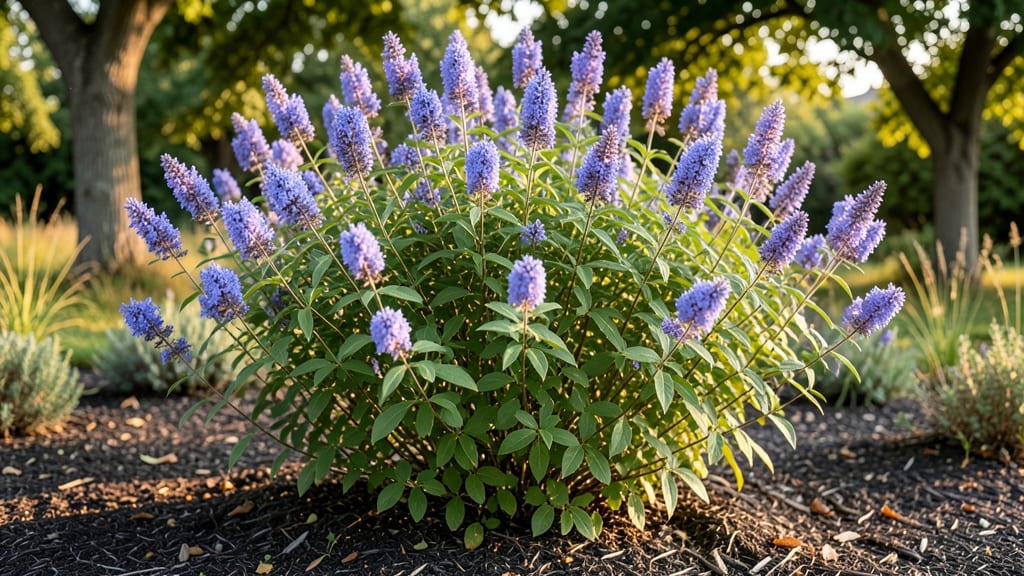
Planting Caryopteris 'Blue Mist' transforms your garden into a fragrant, late-summer cloud of lavender-blue blooms. 🌿 I've grown this shrub for five seasons, and it's become my go-to for effortless color when most perennials start to fade.
The secret lies in its adaptability—it thrives where others struggle, from dry slopes to city containers.
This shrub demands little beyond full sun and well-draining soil. I swear by mixing compost into native soil at planting, which encourages strong root growth. Water deeply once established, but never let it sit soggy—'Blue Mist' hates wet feet.
Prune back by one-third in early spring to shape it and remove dead stems, and you'll trigger a flush of fresh growth before summer even arrives.
By late July, your shrub will be blanketed in tiny, fragrant flowers that attract butterflies and hummingbirds. The foliage stays attractive all season, turning golden bronze in fall before dropping cleanly.
Even in winter, the skeletal branches add structure to the garden. It's the kind of plant that makes neighbors ask, "What's that?"—and then want one for themselves.
Propagate easily from softwood cuttings in summer, and watch it spread without ever needing division. Pest-resistant and disease-free, this shrub is the ultimate low-maintenance star. Perfect for borders, mass plantings, or as a focal point in any sunny spot. Let's get yours growing!
📚 In This Guide
- What you need
- Instructions
- Tips and common mistakes
- Wrapping up and next steps
What you need
- ● Caryopteris 'Blue Mist' shrubs: 1–3 mature plants (3–4 ft tall at maturity) or 6–12 nursery-grown young plants (1–2 ft tall) for fuller coverage.
- ● High-quality potting soil or well-draining garden soil: 5–10 gallons (for containers) or amended native soil (for in-ground planting). Mix in compost (1 part) and perlite or sand (1 part) for optimal drainage.
- ● Organic mulch: 2–3 inches of pine bark, shredded leaves, or straw to retain moisture and regulate soil temperature.
- ● Slow-release fertilizer: 10-10-10 or balanced organic fertilizer (e.g., 1 lb per 100 sq ft).
- ● Pruning shears: Bypass pruners (sharp, clean) for shaping and deadheading.
- ● Garden gloves: Heavy-duty to protect hands from thorns (if pruning older shrubs).
- ● Watering can or hose with a gentle spray nozzle: For deep, infrequent watering (1–1.5 gallons per plant, 2–3x/week in dry spells).
- ○ Stakes or plant supports (optional): 3–4 bamboo stakes or metal cages if your shrub leans in windy areas.
- ● Soil pH test kit: Caryopteris thrives in slightly alkaline soil (pH 6.0–7.5). Adjust with lime if needed.
- ● Epsom salt (magnesium sulfate): 1 tbsp per gallon of water (monthly spray for vibrant foliage).
- ● Drip irrigation system: For automated, low-stress watering in larger landscapes.
- ● Frost cloth or row covers: Lightweight fabric to protect young plants in USDA Zones 5–6 during late frosts.
- ● Companion plants: Pair with lavender, Russian sage, or ornamental grasses for a pollinator-friendly display!
Step-by-step guide to planting and cultivating Caryopteris 'Blue Mist'
This cold-hardy shrub thrives with minimal fuss—here's how to establish it for years of effortless blooms.
🌱 Step 1: Select and Prepare the Planting Site
Choose a location with full sun exposure (6+ hours daily)—this shrub's signature lavender-blue blooms demand plenty of light. Caryopteris tolerates USDA zones 5-9, making it adaptable to most climates, but it performs best in well-draining soil. If your soil is heavy clay, amend it with 2-3 inches of compost mixed into the top 12 inches of soil.
Dig a hole twice as wide as the root ball but only as deep as the container's root base. Loosen the roots gently if they're circling—this prevents transplant shock. Water the hole thoroughly before planting to settle the soil and eliminate air pockets.
🪴 Step 2: Plant and Establish the Shrub
Place the Caryopteris in the hole so the top of the root ball sits 1 inch above ground level. This prevents water from pooling around the stem, which can cause rot. Backfill with native soil, tamping lightly every 2 inches to remove air gaps. Avoid compacting too firmly—roots need room to spread.
Water deeply right after planting to encourage root contact with the soil. Mulch around the base with 2-3 inches of organic mulch, keeping it 3 inches away from the stem to prevent moisture buildup. This mulch layer helps retain soil moisture and regulate temperature, especially in hot climates.
☀️ Step 3: Provide Ongoing Care for Optimal Growth
Water newly planted Caryopteris once a week during the first growing season, providing 1 inch of water per week. Once established, it's drought-tolerant—water only during prolonged dry spells. Overwatering leads to weak growth and fewer blooms, so let the soil dry out between waterings.
Fertilize lightly in early spring with a balanced, slow-release fertilizer (10-10-10). Avoid high-nitrogen fertilizers, which promote leafy growth at the expense of flowers. Prune back 1/3 of the oldest stems in late winter to encourage new growth and maintain a compact shape.
✂️ Step 4: Prune for Health and Abundant Blooms
Prune immediately after flowering (late summer) to shape the shrub and remove any dead or crossing branches. Cut back stems by 1/3 their length to stimulate fresh growth. This also prevents the shrub from becoming woody and leggy over time.
In colder zones (5-6), protect young plants with 2-3 inches of mulch in winter. Caryopteris is cold-hardy, but extra insulation helps young roots survive harsh winters. Avoid heavy pruning in fall—this can stimulate tender new growth that won't survive frost.
Tips & tricks for perfect Caryopteris Blue Mist cultivation
Between us, these little details make all the difference when growing Caryopteris 'Blue Mist'—especially if you want those signature blooms to last all season.
Soil Preparation Secret: The 2-3 inches of compost mixed into the top 12 inches of soil isn't just about drainage—it's about creating a sponge-like environment that holds moisture while allowing excess to drain. I've seen plants struggle in amended soil that was packed too tightly after mixing. Instead, work the compost in loosely so roots can easily penetrate. For heavy clay soils, consider adding perlite or coarse sand to improve aeration even further.
Planting Depth Precision: That 1-inch elevation above ground level is critical for preventing crown rot. I learned this the hard way when my first planting sat too low—within weeks, the stem base turned mushy. Use a level or straightedge to verify the height before backfilling. Pro tip: Mark the top of the root ball with a pencil before removing it from the container so you can reference it during planting.
Watering Wisdom: The once-weekly watering during the first year might seem generous, but Caryopteris needs consistent moisture to establish roots. I recommend watering deeply in the morning so the soil has time to dry out before evening. For containers, check soil moisture by sticking your finger 2 inches down—if it's dry, water. Overwatering is the #1 reason for poor blooming, so let the soil dry completely between waterings once established.
Pruning Strategy: When you cut back those oldest stems by 1/3 in late winter, focus on removing the oldest, thickest stems first—they're the ones that become woody and stop producing flowers. I like to prune in stages: first remove dead wood, then shape the shrub, and finally thin out crowded stems. This keeps the plant looking natural while encouraging new growth from the base.
Pro Tips for Caryopteris Blue Mist Shrub
- Between us, these little details make all the difference when growing Caryopteris 'Blue Mist'—especially if you want those signature blooms to last all season.
- Soil Preparation Secret: The 2-3 inches of compost mixed into the top 12 inches of soil isn't just about drainage—it's about creating a sponge-like environment that holds moisture while allowing excess to drain.
- Planting Depth Precision: That 1-inch elevation above ground level is critical for preventing crown rot.
Frequently asked questions
Got questions about growing and caring for Caryopteris 'Blue Mist'? You’re not alone! Here are some of the most common queries—and their answers—to help you master this cold-hardy beauty.
How cold-hardy is Caryopteris 'Blue Mist' really?
The Blue Mist shrub thrives in USDA Zones 5-8, surviving winters as low as -20°F (-29°C) with proper mulching. Its silvery foliage and late-summer blooms make it a standout even in chilly climates. Pro tip: Plant it in full sun for best cold tolerance and air circulation.
When is the best time to prune Caryopteris 'Blue Mist'?
Prune right after flowering (late fall or early winter) to shape the shrub and encourage dense growth. Avoid heavy pruning in spring—this shrub blooms on new wood, so trimming too early may reduce flowers. Quick tip: Use clean, sharp shears and remove no more than 1/3 of the plant per year.
What are some low-maintenance alternatives if 'Blue Mist' is too high-maintenance?
If you want similar blue-purple blooms with less fuss, try:
- Lavender ('Grosso' or 'Munstead') – Drought-tolerant and fragrant.
- Butterfly Bush (Buddleia davidii) – Attracts pollinators but can be invasive.
- Russian Sage (Perovskia atriplicifolia) – Hardy, deer-resistant, and thrives in poor soil.
Why aren’t my Caryopteris 'Blue Mist' blooms as vibrant?
Faded blooms often signal over-fertilizing (especially with high nitrogen) or poor sunlight. To revive:
- Move to full sun (6+ hours/day).
- Use a balanced, low-nitrogen fertilizer (10-10-10) in early spring.
- Prune dead or leggy stems to encourage new growth.
Does Caryopteris 'Blue Mist' attract pollinators like butterfly bush?
Yes! While not as bee/butterfly-magnet as Buddleia, Blue Mist still draws:
- Butterflies (especially sulfurs and swallowtails).
- Bees (for its nectar-rich flowers).
- Hummingbirds (if planted near other nectar sources).
Wrapping up and next steps
The Caryopteris Blue Mist shrub is a fantastic choice for gardeners seeking low-maintenance, cold-hardy beauty with year-round appeal. Its fragrant blooms, drought tolerance, and adaptability make it a standout addition to any landscape—whether you're a beginner or a seasoned pro. 🌿
Ready to transform your garden? Start by selecting the perfect spot, gathering your supplies, and planting with confidence. Before you know it, you’ll be enjoying a Blue Mist shrub that thrives and delights for seasons to come!