
Shrubs
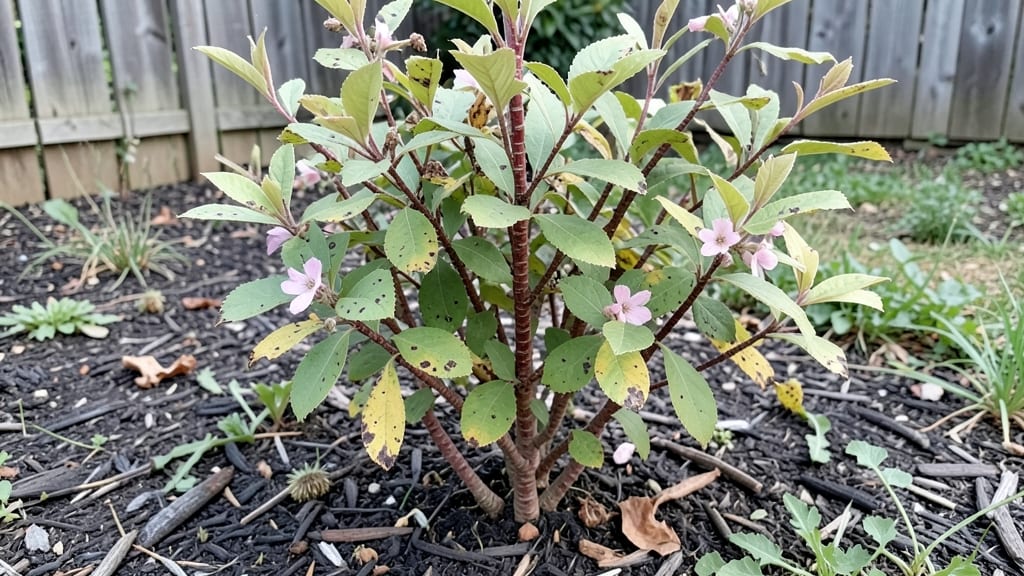
Your burning bush shrub problems might be easier to fix than you think. 🌿 I’ve nursed back more than a few of these vibrant shrubs from leaf spots to wilting, and the solutions often come down to a few key adjustments—most of which take less than an hour.
The key is catching issues early, whether it’s fungal leaf spots, spider mites, or stress from improper pruning.
Most problems start with environmental clues: yellowing leaves often signal overwatering or poor drainage, while brown edges point to underwatering or salt buildup from tap water. Pests like spider mites or scale leave sticky residue or tiny webs, and fungal spots appear as dark, irregular patches.
The good news? Many fixes are simple—adjusting water, pruning correctly, or applying targeted treatments.
With the right approach, your burning bush can bounce back to its signature deep red foliage in just a few weeks. We’ll cover how to identify each issue, what’s really causing it, and the most effective fixes—from organic sprays to cultural tweaks.
You’ll know exactly what to do the next time you spot trouble.
Best part? These methods work for both new and established shrubs, and they’ll keep your burning bush thriving for years. Let’s get those leaves looking healthy again—no guesswork required.
Root Causes Behind Burning Bush Struggles
Understanding why your Euonymus alatus (burning bush) shrub is struggling starts with identifying the underlying factors. These plants, prized for their striking fall foliage and adaptability, can still fall victim to environmental stressors, pests, and cultural mismanagement.
Below, we break down the science behind the most common culprits—so you can address the issue at its source.
Burning bushes thrive in full sun to partial shade, but when conditions veer too far from their preferences, stress sets in. Here’s how:
- Extreme Heat or Drought These shrubs prefer well-draining soil and can tolerate dry conditions once established, but prolonged drought or scorching summer heat causes leaf scorch (brown, crispy edges) or wilting.
The plant’s stomata (tiny pores) close to conserve water, but this disrupts photosynthesis, leading to weakened growth or dieback. - Actionable fix: Mulch with 2–3 inches of organic matter (wood chips, shredded bark) to retain moisture and regulate soil temperature.
Water deeply 1–2 times per week during droughts, aiming for 1–1.5 inches of water per session.
- Poor Drainage or Waterlogged Soil Burning bushes hate soggy roots. Compacted or clay-heavy soils trap excess moisture, suffocating roots and promoting root rot (a fungal disease caused by Phytophthora or Pythium).
Symptoms include yellowing leaves, stunted growth, and blackened stems at the base. - Actionable fix: Amend soil with compost or sand to improve aeration. If planting in heavy clay, consider raising beds or installing French drains to redirect excess water.
- Temperature Swings & Frost Damage Young burning bushes are especially vulnerable to late spring frosts or early fall freezes, which can cause bud or leaf damage.
The plant may produce blackened or distorted new growth as a result. - Actionable fix: Protect tender shoots with frost cloth or row covers during cold snaps. Choose a sheltered planting site away from drafts or cold air pockets.
While burning bushes are relatively pest-resistant, a few insects and diseases can still wreak havoc if conditions are right.
- Spider Mites (🕷️) & Scale Insects (🐛) Spider mites thrive in hot, dry conditions, sucking sap from leaves and causing yellow stippling or webbing. Scale insects (armored or soft-bodied) attach to stems and leaves, excreting sticky honeydew that attracts sooty mold. - Actionable fix: - Spider mites: Spray leaves with a strong stream of water to dislodge them, or use neem oil (1 tsp per quart of water) weekly. - Scale: Prune and dispose of heavily infested branches.
Apply horticultural oil in early spring before pests emerge.
- Japanese Beetles & Leaf Miners Japanese beetles chew semi-circular notches in leaves, while leaf miners (larvae of flies or sawflies) create blotchy, serpentine tunnels inside foliage.
Both weaken the plant and invite secondary infections. - Actionable fix: - Handpick beetles into soapy water in the morning. - For leaf miners, prune and destroy infested leaves in fall. Use kaolin clay as a barrier to deter adults.
- Fungal Diseases: Powdery Mildew & Anthracnose Powdery mildew (white, powdery coating on leaves) and anthracnose (dark, sunken lesions) flourish in humid, shaded conditions.
Both reduce photosynthesis and can defoliate the shrub if untreated. - Actionable fix: - Improve airflow by thinning dense growth. - Apply baking soda spray (1 tsp baking soda + 1 quart water + a drop of dish soap) for mildew. - For anthracnose, use copper fungicide in early spring before symptoms appear.
Even the hardiest shrubs suffer when basic care is neglected. Burning bushes are no exception.
- Over-Fertilizing (Especially Nitrogen) While burning bushes don’t need heavy feeding, excess nitrogen promotes soft, lush growth that’s prone to pests and diseases.
Over-fertilized plants may also burn roots or develop yellow leaves from salt buildup. - Actionable fix: Use a balanced, slow-release fertilizer (10-10-10 or 20-20-20) once in early spring at half the recommended rate. Avoid granular fertilizers near the stem.
- Improper Pruning (Timing & Technique) Burning bushes bleed sap when pruned in late winter or early spring, stressing the plant.
Additionally, cutting too aggressively or pruning at the wrong time can lead to poor regrowth or dieback. - Actionable fix: - Best time to prune: Late winter (dormant season) or early summer after flowering. - Avoid heavy cuts: Never remove more than 1/3 of the plant’s foliage in one season. - Use clean, sharp tools to prevent tearing and disease entry.
- Transplant Shock or Root Damage If recently planted, burning bushes may struggle with transplant shock, where roots struggle to establish in new soil. Root circling, girdling, or damage from improper digging can also strangle growth.
- Actionable fix:
- Water deeply for the first 2–3 weeks post-planting.
- Avoid disturbing roots when planting—loosen soil gently and amend with compost for better adaptation.
- If roots are circling, prune excess roots before replanting.
- Actionable fix:
Burning bushes adapt to a range of soil types but perform best in slightly acidic to neutral pH (6.0–7.0). If soil is too alkaline, compacted, or nutrient-deficient, the plant may show signs of distress.
- Alkaline Soil (High pH) In calcareous or chalky soils, plants struggle to absorb iron and manganese, leading to yellowing between leaf veins (chlorosis). - Actionable fix: Test soil pH and amend with elemental sulfur or peat moss to lower pH gradually.
Apply chelated iron as a foliar spray for quick relief.
- Compacted or Poor Soil Heavy, clay-like soils restrict root growth, leading to stunted shrubs with small, pale leaves.
- Actionable fix: Aerate soil with a garden fork or plant in raised beds with well-draining mix (50% native soil, 50% compost).
Before blaming pests or disease, check for: ✅ Volatile soil changes (new construction, buried debris, or buried trash affecting roots). ✅ Herbicide drift (if nearby lawns were treated, burning bushes may show bleached or distorted growth). ✅ Animal damage (deer, rabbits, or voles may gnaw on bark or roots).
Practical fixes for ailments
Got a burning bush shrub that’s looking worse for wear? Don’t panic—most issues have simple, effective fixes. Below, we’ve matched common problems to step-by-step solutions, plus tips to keep your shrub thriving long-term. Let’s revive that beauty!
If your burning bush leaves are turning yellow, crispy, or drooping, water might be the culprit.
Fix: ✅ Check the soil – Stick your finger 2–3 inches deep. If it’s soggy, you’re overwatering; if dry, it’s time to hydrate. 💧 Adjust watering habits – Burning bushes prefer moderate moisture but hate soggy roots. Water deeply 1–2 times per week (more in extreme heat, less in rain). 🔄 Improve drainage – If your soil stays wet, amend it with compost or sand to help water flow through. 🌡️ Pro Tip: Mulch around the base (2–3 inches) to retain moisture without suffocating roots.
Brown, dry leaf edges often mean thirsty roots—or too much salt from fertilizers or hard water.
Fix: 💦 Water deeply and slowly – Use a soaker hose or drip irrigation to avoid runoff, which can leave salt deposits. 🧼 Flush the soil – Run a hose over the root zone for 10–15 minutes to leach out excess salts. 🌿 Switch to rainwater or filtered water if your tap water is hard (high in minerals). ✨ Pro Tip: If you fertilize, use a slow-release, organic option to prevent salt buildup.
Tiny critters can defoliate your burning bush faster than you can say “pesticide.”
Fix: 🕷️ Spot-treat pests –
- Spider mites? Spray with neem oil or a soapy water solution (1 tsp mild soap per quart of water).
- Aphids? Blast them off with a strong stream of water, then apply insecticidal soap.
- Scale insects? Scrape them off with a soft brush or use horticultural oil in late fall/early spring.
🌿 Encourage natural predators – Ladybugs and lacewings love aphids! Plant marigolds or dill nearby to attract them. 🔥 Pro Tip: Check the undersides of leaves—that’s where pests love to hide!
If your burning bush is shedding leaves unexpectedly, it’s likely stressed.
Fix: 🌞 Shade in extreme heat – Use light shade cloth (30–50%) during peak summer if temps hit 90°F+. ❄️ Protect from late frosts – Wrap young shrubs in burlap if frost is forecasted after buds swell. 🌱 Transplant carefully – If moved recently, water deeply daily for 2 weeks to reduce shock. 💡 Pro Tip: Mulch heavily (3–4 inches) to insulate roots from temperature swings.
White powder or dark spots on leaves? Fungi might be the villain.
Fix: 🍄 Improve airflow – Prune to open the canopy and remove crowded branches. 💧 Water at the base – Avoid overhead watering, which spreads spores. Use drip irrigation instead. 🧴 Fungicide spray – Apply baking soda spray (1 tbsp baking soda + 1 tsp soap per gallon of water) or a copper-based fungicide for severe cases. ✨ Pro Tip: Prune infected leaves immediately and dispose of them in the trash (not compost).
Keep your burning bush healthy with these easy habits:
- Prune in late winter/early spring (never after fall—it encourages tender new growth).
- Test your soil every 2–3 years (aim for slightly acidic, pH 6.0–7.0).
- Fertilize lightly in early spring with balanced 10-10-10 or compost.
- Monitor for pests weekly—catch them early before they spread!
With these fixes, your burning bush should bounce back in no time. Happy gardening! 🌿🔥
Frequently asked questions
Why are my burning bush leaves turning yellow?
Yellowing leaves usually signal overwatering or poor drainage. Burning bushes prefer moderate moisture—check soil moisture by sticking your finger 2-3 inches deep. If soggy, reduce watering and improve drainage with compost or sand. Yellowing can also mean nutrient deficiency, so test your soil pH (ideal: 6.0-7.0).
What causes brown, crispy edges on burning bush leaves?
This is classic leaf scorch, often caused by underwatering, high salt buildup from tap water, or extreme heat. Water deeply 1-2 times per week using a soaker hose, and flush the soil with 10-15 minutes of hose water to remove salts. Mulch with 2-3 inches of organic matter to retain moisture and protect roots.
How do I get rid of spider mites on my burning bush?
Spider mites thrive in dry conditions and leave tiny webs or yellow stippling on leaves. Blast them off with a strong stream of water, then apply neem oil (1 tsp per quart of water) weekly. For severe infestations, use insecticidal soap. Increase humidity around the plant by watering the soil (not leaves) and using mulch.
Can I prune a burning bush in summer?
Pruning in summer is risky—it stresses the plant and can lead to poor regrowth. The best times are late winter (dormant season) or early spring after flowering. If you must prune in summer, do it lightly (never more than 1/3 of foliage) and avoid cutting into old wood. Always use clean, sharp tools to prevent disease.
Why does my burning bush have white powdery spots?
That’s likely powdery mildew, a fungal disease that thrives in humid, shaded conditions. Improve airflow by pruning crowded branches, and avoid overhead watering. Treat with a baking soda spray (1 tbsp baking soda + 1 tsp soap per gallon of water) or a copper fungicide. Remove infected leaves immediately and dispose of them in the trash.