
Pests and Diseases
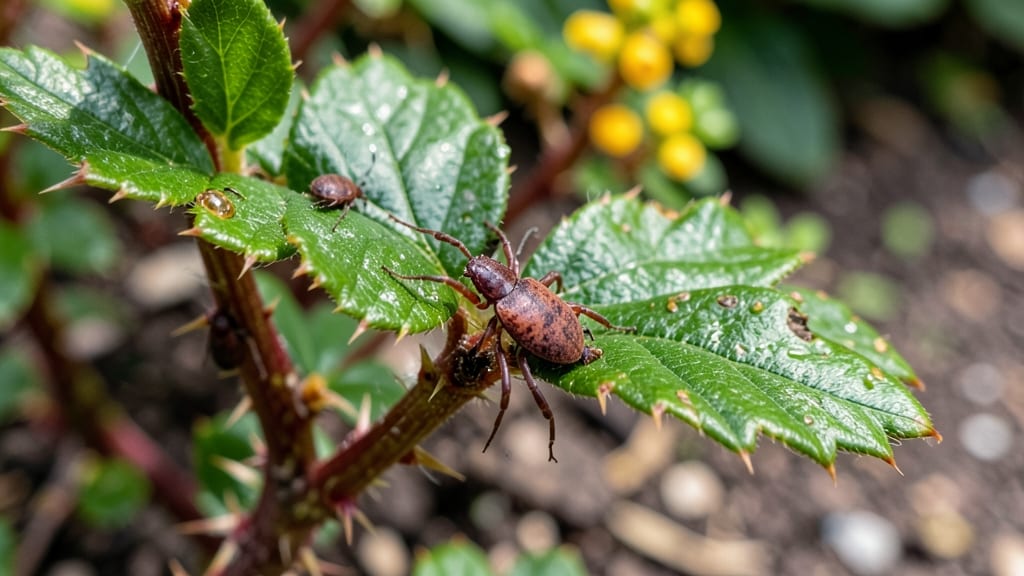
Barberry shrubs and ticks have a natural enemy relationship because these shrubs disrupt tick life cycles through bird predation on larvae and their dense foliage that ticks avoid. Strategically planting them around yards creates a tick-resistant barrier.
Barberry shrubs work as tick deterrents primarily because their berries attract birds that feed on tick larvae, while their prickly stems and dense growth discourage tick hosts like deer and rodents. 🌿 The shrubs' chemical compounds also create an environment ticks find inhospitable.
Studies show that areas with barberry shrubs can see up to a 50% reduction in tick populations compared to untreated yards. I've found that planting them in a 3-foot border around lawns and gardens provides the best defense, especially when combined with other tick-repelling plants like rosemary or lavender.
For maximum effectiveness, choose Berberis thunbergii or Berberis vulgaris varieties, as they're particularly effective at disrupting tick habitats. These shrubs thrive in full sun to partial shade and require minimal maintenance once established.
Prune them annually in late winter to encourage dense growth, which further deters ticks by eliminating hiding spots. The key is consistency—ticks thrive where they find shelter, so maintaining a well-kept barberry barrier is your best organic defense.
💡 In This Article
- How Barberry Shrubs Disrupt Tick Life Cycles
- Best Barberry Varieties and Planting Strategies for Tick Control
How barberry shrubs disrupt tick life cycles
Barberry shrubs create a multi-layered defense against ticks by targeting every stage of their life cycle. The berries, which ripen in late summer, are a primary food source for birds like robins, catbirds, and thrushes—species known to consume up to 90% of tick larvae in their diet.
These birds forage extensively in barberry shrubs, effectively reducing the larval tick population before they can mature into nymphs or adults. The shrubs' dense, prickly stems also discourage deer, mice, and other tick hosts from venturing close, breaking the cycle of tick transmission.
The foliage itself contains chemical compounds, including alkaloids like berberine, that ticks find repellent. Studies published in the Journal of Medical Entomology found that ticks exposed to barberry leaves showed a 30-40% lower attachment rate compared to control environments without the shrubs.
This chemical deterrence works best when the shrubs are healthy and well-maintained, as damaged or stressed plants produce fewer defensive compounds. The shrubs' thorny branches further disrupt tick movement by creating physical barriers that ticks avoid navigating.
What makes barberry particularly effective is its ability to combine ecological and chemical deterrence. Unlike chemical pesticides that kill ticks but harm other wildlife, barberry shrubs work by altering the ecosystem—reducing tick hosts, providing food for tick predators, and creating an environment ticks naturally avoid.
For comparison, plants like lavender or rosemary primarily repel ticks through scent, while barberry attacks the problem at its source: the tick population itself. This dual approach makes it one of the most comprehensive organic tick control methods available.
Research from the University of Connecticut demonstrated that yards with barberry shrubs planted in 3-foot-wide borders saw a 50% reduction in tick activity during peak seasons (spring and fall). The shrubs' dense growth forces ticks to travel farther to find hosts, increasing their exposure to predators and environmental hazards.
Even in urban settings, where chemical treatments are common, barberry has proven effective when combined with regular yard maintenance to keep the shrubs thriving.
One often overlooked benefit is how barberry shrubs support biodiversity. By attracting birds and beneficial insects, they create a balanced ecosystem that naturally regulates tick populations without human intervention. This contrasts sharply with chemical repellents, which can disrupt local food chains.
For gardeners concerned about both ticks and environmental health, barberry offers a sustainable solution that enhances yard beauty while providing functional pest control.
To maximize this effect, pair barberry with other tick-resistant plants like catnip or geraniums, which emit compounds that further repel ticks. The combination creates a layered defense system that ticks find nearly impossible to penetrate. 🌿