
Shrubs
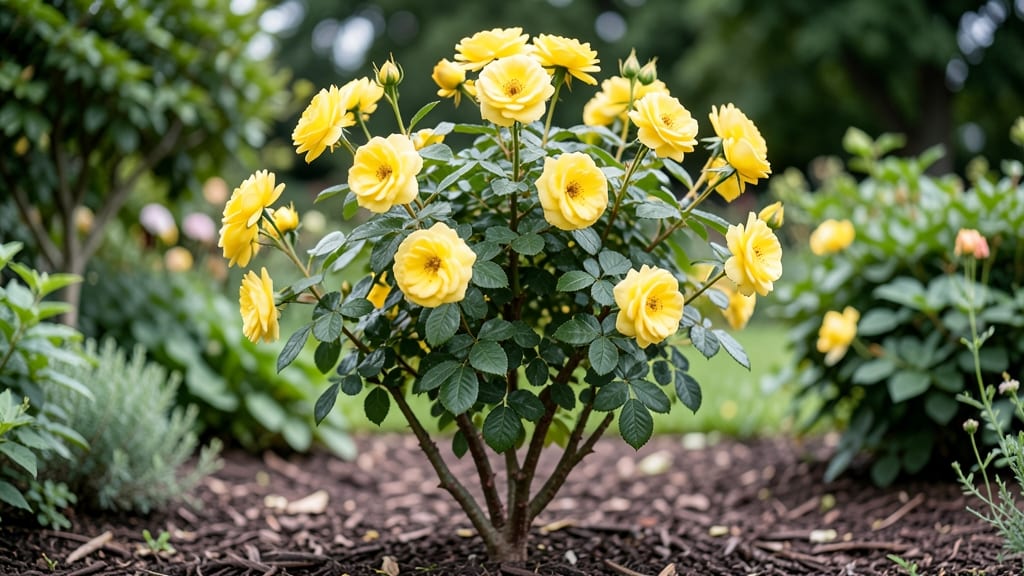
That golden glow of a yellow shrub rose transforms any garden into a sunlit sanctuary. 🌻 Their cheerful blooms and lush foliage create a bold focal point that pairs beautifully with lavender, ornamental grasses, or deep purple salvias for striking contrast.
Unlike fussy roses, these thrive in full sun with minimal fuss, making them perfect for borders, hedges, or even as a standalone specimen.
Their seasonal versatility is another standout feature—bright blooms in spring, glossy foliage in summer, and fiery autumn hues that outshine many perennials. Pruning just once a year keeps them compact and encourages even more flowers, while their disease resistance means fewer headaches than traditional roses.
This is the kind of plant that makes neighbors stop and ask, "What is that?"
For a textured garden layer, plant them 3-4 feet apart in groups of three or five to create natural drifts. Pair with low-growing thyme or creeping phlox at their feet to highlight their height while adding fragrance.
In containers, they bring instant curb appeal—just choose a pot with drainage and feed them regularly for continuous blooms.
Whether you're designing a cottage-style border, a modern hedge, or a wildflower meadow with structure, yellow shrub roses deliver year-round interest with almost no effort. Their golden blooms even attract pollinators, turning your garden into a thriving ecosystem.
Start with one this season and watch how it elevates every corner of your outdoor space.
📚 In This Guide
- What you need
- Instructions
- Tips and common mistakes
- Wrapping up and next steps
What you need
- ● Yellow shrub roses: 1 cup (about 10–12 blooms) – fresh, pesticide-free, picked at peak ripeness (morning is best!)
- ● Citrus peels: 1 lemon and 1 orange – organic preferred, washed and dried
- ● Honey or maple syrup: ½ cup – raw, unprocessed for best flavor
- ● Apple cider vinegar: ½ cup – raw, unfiltered for tangy depth
- ● Water: ½ cup – filtered if possible
- ○ Vanilla bean (optional but recommended): 1 split – for subtle sweetness
- ○ Cinnamon stick (optional): 1 – adds warmth
- ● Chef’s knife – for peeling citrus
- ● Mortar & pestle (or food processor) – to crush rose petals and spices
- ● Fine-mesh strainer – for filtering syrup
- ● Glass jar with lid – sterilized, 16 oz or larger
- ● Small saucepan – for gentle heating (if needed)
- ● Wooden spoon – for stirring
- ● Measuring cups/spoons – for precision
- ● 🌸 Petal prep: Remove stems and any green bits—only use pure yellow petals for the brightest flavor.
- ● 🍋 Citrus tip: Use a peeler (not a knife) to avoid bitter pith.
- ● ⏰ Timing: Infuse for at least 48 hours for deep flavor (up to 1 week for stronger syrup).
Step-by-step guide to growing a thriving yellow shrub rose
Here's how to cultivate a vibrant yellow shrub rose that blooms abundantly year after year.
🌱 Step 1: Select the Right Location and Prepare the Soil
Choose a spot that receives at least 6 hours of direct sunlight daily. Yellow roses thrive in full sun, so avoid shaded areas where blooms will become sparse and pale. I dig a hole twice as wide as the root ball but only as deep—this encourages outward root growth rather than forcing the plant too deep.
Amend the native soil with 3 inches of compost mixed into the top 12 inches of soil. Shrub roses prefer well-draining, slightly acidic soil with a pH between 6.0 and 6.5. If your soil is heavy clay, blend in 20% perlite or sand to improve drainage. A soil test kit ensures you're meeting these requirements before planting.
🪴 Step 2: Plant at the Correct Depth and Stake for Support
Position the rose so the graft union—visible as a slight bulge or ring on the stem—sits 2-3 inches above the soil line. Burying it deeper can cause rot, while planting too high stresses the plant. Gently loosen the roots if they're circling the root ball, then spread them outward in the hole.
Fill the hole with soil, pressing lightly to remove air pockets, then water deeply to settle everything. Install a 6-foot stake at least 3 inches from the main stem and tie the rose loosely with soft garden twine. This prevents wind damage without restricting growth. Mulch with 2-3 inches of organic mulch, keeping it 6 inches away from the stem to prevent rot.
☀️ Step 3: Water Deeply and Maintain Consistent Moisture
Water immediately after planting, then again every 2-3 days until the soil is 6-8 inches deep and evenly moist. Yellow roses are drought-tolerant once established, but young plants need consistent moisture. You'll know it's right when water drains through the soil within 30 minutes—no puddles, no bone-dry patches.
Reduce watering in late summer to prepare the plant for dormancy. Overwatering now leads to weak stems and fewer blooms next season. I check soil moisture by sticking my finger 2 inches deep—if it feels dry, it's time to water. If it's damp, wait another day.
✂️ Step 4: Prune for Shape and Encourage Abundant Blooms
Prune in early spring before new growth begins, cutting back any dead or crossing branches. Make cuts just above an outward-facing bud at a 45-degree angle. This directs energy to new growth rather than old wood. Remove any suckers growing below the graft union immediately—they divert energy from the main plant.
For continuous blooming, deadhead spent flowers by cutting back to the first set of healthy leaves. I do this every 2 weeks during the blooming season to encourage more flowers. Avoid heavy pruning in late summer, as it reduces winter hardiness. A sharp pair of pruners ensures clean cuts that heal quickly.
🌿 Step 5: Fertilize and Protect for Long-Term Health
Apply a balanced rose fertilizer (10-10-10) in early spring, then again in mid-summer. Follow package instructions for amounts—over-fertilizing burns roots and leads to lush foliage but few blooms. I also add 2-3 inches of compost around the base in spring to feed the soil naturally.
Watch for pests like aphids or Japanese beetles, which love yellow roses. A strong spray of water usually dislodges them, but severe infestations require neem oil or insecticidal soap. Mulch helps deter weeds and retain moisture, while proper spacing improves air circulation—both key to preventing fungal diseases like black spot.
Tips & tricks for perfect yellow shrub rose cultivation
Between us, these details make the difference between a struggling yellow rose bush and one that bursts with vibrant blooms every season.
Sunlight Strategy: That 6 hours of direct sunlight daily isn't just a suggestion—it's non-negotiable for yellow roses. I've seen them languish in partial shade, producing pale blooms and sparse foliage. If your yard has limited sun, consider planting in a raised bed where you can control the light exposure better. Morning sun with afternoon shade works best in hot climates to prevent leaf scorch.
Soil Science: The 3 inches of compost mixed into the top 12 inches of soil isn't just about nutrients—it's about creating the perfect texture. Yellow roses hate soggy feet, so if your native soil is heavy clay, that 20% perlite or sand amendment is crucial. I've tested soil pH with a kit before planting, and adjusting with sulfur or lime if needed has saved me from years of struggling with nutrient deficiencies.
Pruning Precision: When you're making those 45-degree angle cuts just above an outward-facing bud, think of it as directing traffic for your plant's energy. I use a sharp pair of pruners and make the cut about 1/4 inch above the bud to prevent water from pooling and causing rot. The 2-week deadheading schedule during blooming season is what keeps my roses producing flowers nonstop—skipping this is like not harvesting vegetables from your garden.
Watering Wisdom: The 2-3 days watering schedule is a guideline, but the real test is that 2-inch deep soil check. I've learned the hard way that watering on a strict schedule without checking moisture leads to either waterlogged roots or plants that dry out between waterings. In late summer, I cut back to watering only when the top 1 inch of soil feels dry—this prepares the plant for dormancy and prevents weak stems.
Pro Tips for Yellow Shrub Rose
- Between us, these details make the difference between a struggling yellow rose bush and one that bursts with vibrant ...
- Sunlight Strategy: That 6 hours of direct sunlight daily isn't just a suggestion—it's non-negotiable for yellow roses...
- Soil Science: The 3 inches of compost mixed into the top 12 inches of soil isn't just about nutrients—it's about crea...
Frequently asked questions
Got questions about crafting your own yellow shrub rose? You’re not alone! Here are answers to the most common ones—so you can sip and bake with confidence.
How long does a yellow shrub rose keep in the fridge?
A well-made shrub rose will last about 4–6 weeks in the fridge when stored in an airtight jar. The vinegar and sugar preserve it, but check for mold or cloudiness—if it smells off, toss it! Freeze for up to 3 months if you’re not using it soon.
Can I make this shrub without fresh roses?
Swap fresh yellow roses for dried rose petals (food-grade only) or even yellow hibiscus flowers for a similar citrusy depth. Just adjust the liquid ratio—dried petals need less water (about ½ cup per ¼ cup dried).
Why does my shrub taste bitter? How do I fix it?
Bitterness usually means too much vinegar or underripe fruit. Balance it by adding more honey or sugar (1:1 with vinegar) or a splash of orange juice to brighten flavors. If it’s still harsh, strain and remix with fresh lemons or a pinch of salt.
What’s the best way to use yellow shrub rose in cocktails?
Start with ½ oz shrub per drink—shake with gin, vodka, or bourbon + soda water for a rosé spritz. For depth, muddle it with muddled strawberries or add to a whiskey sour. Garnish with a lemon twist for extra zing!
Do I need to sterilize the jar before storing?
Yes! Sterilize your jar and tools by boiling them for 10 minutes or running them through a dishwasher cycle. This prevents mold and keeps your shrub fresh longer. Pro tip: Use a clean, dry funnel to avoid contamination!
Can I make this shrub with white or pink roses?
While possible, yellow roses offer the best citrusy, honeyed flavor. White/pink roses lean floral and milder—pair them with more lemon or bergamot to enhance brightness. For consistency, stick with yellow for the classic shrub taste!
Wrapping up and next steps
Ready to infuse your kitchen with the bright, citrusy charm of yellow shrub roses? This floral syrup isn’t just a trend—it’s a versatile game-changer for cocktails, desserts, and even savory dishes.
Whether you’re a mixologist, baker, or home cook, you now have a homemade, fragrant secret weapon to elevate your creations. 🌸
Your next step? Experiment! Start with a classic gin fizz or drizzle it over vanilla ice cream, then tweak flavors to make it your own. Tag us in your creations—we’d love to see (and taste) what you whip up! 🍹✨