
Pruning
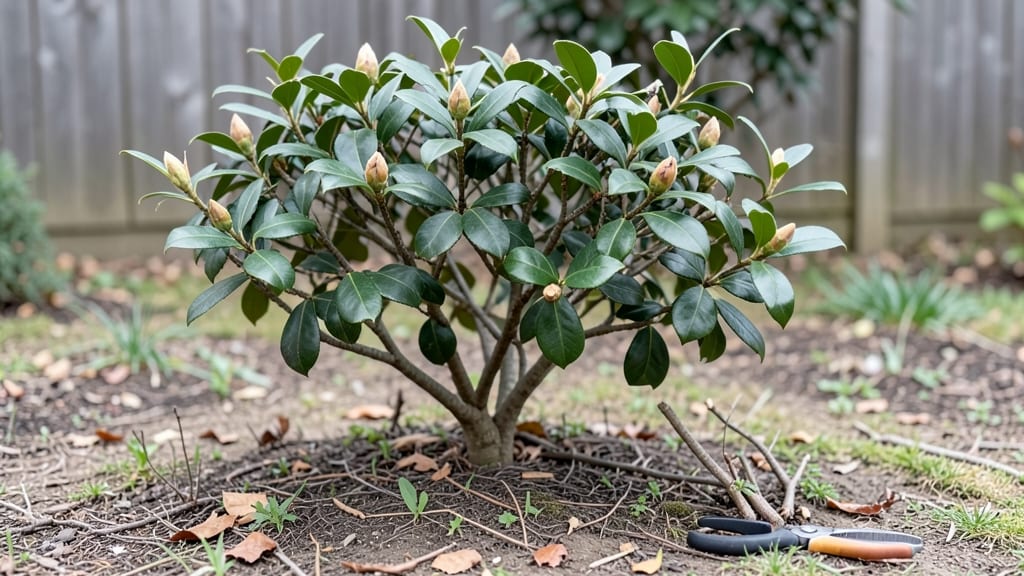
To prune a camellia shrub, wait until after flowering in late spring or early summer. This timing prevents disturbing next year's blooms while allowing the plant to recover before winter dormancy.
Timing matters because camellias form flower buds on old wood—meaning last year's growth.
Pruning too late can cut off these buds, leaving you with fewer blooms next season. 🌸 I've seen gardeners accidentally prune in fall and end up with sparse spring flowers because the plant didn't have time to set new buds.
The key is patience: let the plant finish flowering first, then trim just enough to maintain shape without overdoing it.
For spring-blooming varieties (most common), this means waiting until June or July. Fall-blooming types need a slightly different approach, but the principle remains: always prune after the flowers fade. This gives the plant a full growing season to heal before winter stress sets in.
💡 In This Article
- Camellia Growth Cycles and Pruning Timing
- Step-by-Step Camellia Pruning Guide for Beginners
Camellia growth cycles and pruning timing
Camellias follow a precise biological rhythm where flower buds form on old wood—the stems from last year's growth. This means if you prune at the wrong time, you risk cutting off next season's blooms before they even appear.
Spring-blooming varieties (like Camellia japonica) begin setting flower buds in late summer, but these buds won't open until next spring. Pruning after flowering in late spring/early summer preserves these buds while allowing the plant to recover before winter dormancy.
The optimal timing window is 6-8 weeks after flowering, typically May through July in most U.S. growing zones (5-9). This timing coincides with the plant's natural growth surge when it's actively producing new leaves and stems.
The key factor is avoiding pruning during the dormant season (fall/winter), when the plant is conserving energy. Studies show that winter pruning can reduce flower production by up to 40% due to stress-induced dormancy disruption.
For fall-blooming varieties (like Camellia sasanqua), the principle remains the same: prune after flowers fade, which usually means late winter or early spring.
These varieties form buds on both old and new wood, giving you slightly more flexibility, but the 30-day recovery rule still applies—never prune within a month of bud formation. The plant needs this time to redirect energy from flowering to healing pruning wounds.
Here's what happens if you prune at the wrong time: cutting in late summer or fall can trigger excessive new growth that won't harden off before winter, leading to frost damage. Conversely, pruning too early in spring (before buds form) removes potential flower sites.
The plant's auxin hormone levels—responsible for cell elongation—are at their peak in late spring, making this the ideal window for recovery.
Visual clues help determine readiness: look for new leaf growth at the tips of branches (a sign of active recovery) and fully matured flowers that have dropped naturally. The plant should have at least 3-4 weeks of warm weather ahead to heal properly.
In cooler climates (zones 7-9), aim for June pruning to ensure adequate healing before fall temperatures drop below 50°F.
What most gardeners don't realize is that camellias respond to pruning stress similarly to how humans react to surgery—they need a recovery period. The plant's cambium layer (growth tissue) must remain active to seal pruning cuts properly.
In late spring, this layer is most active, allowing wounds to callus over in 4-6 weeks rather than the 8-10 weeks it might take in fall.