
Plants
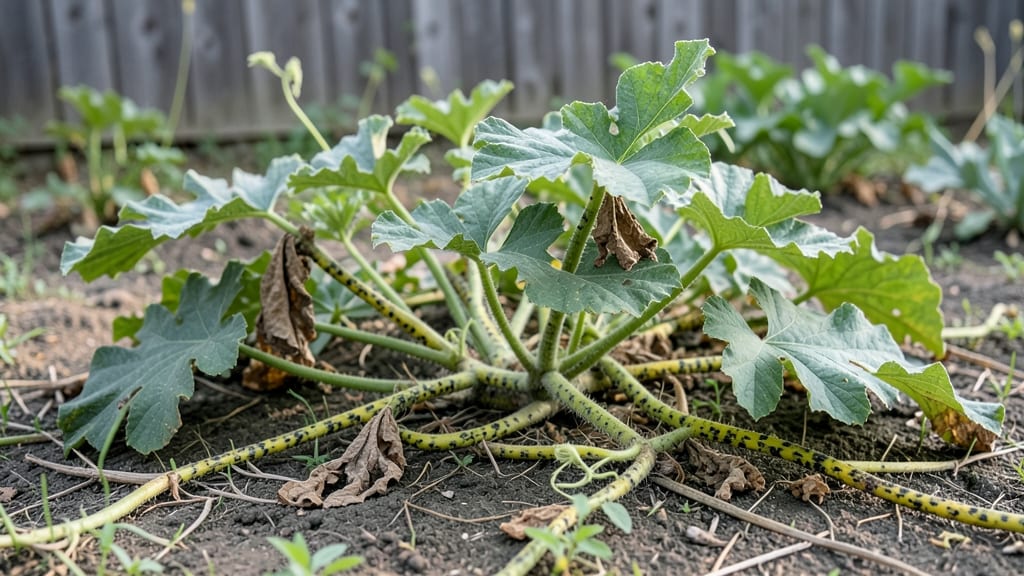
Your watermelon plant dying faster than a summer storm rolls in? I’ve pulled back struggling vines from the brink more times than I’d like to admit, and the first step is spotting the exact trouble before it’s too late. The good news?
Most issues have quick fixes—if you catch them early enough. Yellowing leaves, wilted vines, or spots that look like someone dropped paint on them? Those are your plant’s SOS signals, and I’ll show you exactly how to decode them in minutes.
Overwatering drowns roots faster than a cucumber beetle can chew through a leaf, while underwatering turns soil into concrete. Then there’s powdery mildew—white fuzz that spreads like gossip at a garden club—and fusarium wilt, which sneaks in through the roots like a thief in the night.
But here’s the thing: each problem has a fast fix, from adjusting your watering schedule to a simple spray that stops pests dead in their tracks. No need for expensive treatments or desperate prayers to the gardening gods.
By the end of this, you’ll know whether your plant needs more sun, less water, or a nutrient boost—and how to deliver it in under 30 minutes. I’ll walk you through the exact steps I use to revive wilting vines, from diagnosing the issue to applying the cure.
The key? Acting before the plant hits the point of no return. Let’s get those melons back on track before it’s too late.
Works for container plants, raised beds, or sprawling backyard patches—no matter where your watermelon’s struggling, these fixes apply. And the best part? You’ll save your harvest (and your sanity) without losing a single seed to the fight. Ready to turn things around?
Root Causes Behind Your Wilting Watermelon
When your watermelon plant starts to decline, it’s usually a cry for help from its roots, leaves, or environment. Understanding the specific stressors behind the issue is the first step to revival.
Below, we break down the most common reasons your watermelon plant might be dying—and what’s really going on in the soil, air, or plant structure.
Watermelons thrive in well-draining soil, but too much love (in the form of water) can drown them. Overwatering leads to:
- Root rot: Fungal infections like Phytophthora or Pythium thrive in soggy conditions, cutting off oxygen to roots and causing them to turn black and mushy. 💀
- Nutrient leaching: Excess water washes away essential minerals (like nitrogen, potassium, and magnesium) that roots need to absorb.
- Wilting despite wet soil: A classic sign of root rot—your plant looks thirsty, but the roots are suffocating.
Actionable fix: Let the top 1–2 inches of soil dry out between waterings. If your pot lacks drainage holes, repot immediately. For garden beds, amend clay soil with compost or perlite to improve aeration.
Watermelons are tropical but not heat- or cold-tolerant beyond their comfort zone. Here’s how temperature swings sabotage them:
| Too Hot | Too Cold |
|---|---|
|
|
Actionable fix:
- 🌡️ Heat: Provide 30–50% shade cloth during peak sun (10 AM–4 PM). Mulch with straw to retain moisture.
- ❄️ Cold: Use row covers or move pots to a sheltered spot. Avoid planting until soil temps hit 70°F (21°C).
Watermelons are susceptible to pathogens that thrive in humid or waterlogged conditions. Watch for these red flags:
- Powdery mildew: White, powdery spots on leaves (caused by Podosphaera xanthii). Blocks sunlight, weakening the plant.
- Downy mildew: Yellow spots on top leaves, purple fuzz on undersides (from Pseudoperonospora cubensis).
- Bacterial wilt: Sudden wilting, yellowing veins, and a foul odor when stems are cut (caused by Erwinia tracheiphila). 🚨 This is often fatal.
Actionable fix:
- 💡 Prevent: Space plants for airflow (3–4 feet apart). Water at soil level (not overhead) to keep leaves dry.
- 🧴 Treat: Spray with neem oil (for mildew) or copper fungicide (follow label instructions). Remove infected leaves immediately.
Watermelons are heavy feeders, and poor soil nutrition leads to slow decline. Here’s what’s missing (and how to spot it):
| Deficiency | Symptoms | Quick Fix |
|---|---|---|
| Nitrogen (N) | Yellowing older leaves (bottom-up), stunted growth. | Apply blood meal or compost tea. |
| Potassium (K) | Brown leaf edges, weak stems, poor fruit development. | Use greensand or potassium sulfate. |
| Magnesium (Mg) | Interveinal yellowing (between veins), crispy edges. | Spray Epsom salt solution (1 tbsp/gallon) weekly. |
| Phosphorus (P) | Purple stem discoloration, delayed flowering. | Add bone meal or rock phosphate. |
Actionable fix: Test your soil with a DIY kit or send a sample to a lab. Amend based on results—watermelons prefer pH 6.0–6.8. Avoid over-fertilizing; more isn’t better.
Insects like aphids, cucumber beetles, and spider mites suck sap, inject toxins, or transmit diseases. Signs include:
- Sticky honeydew on leaves (aphids).
- Chewed holes in leaves/stems (beetles).
- Fine webbing (spider mites) + yellow stippling.
Actionable fix:
- 🔍 Inspect leaves daily (especially undersides).
- 💦 Blast pests off with a strong water spray.
- 🌿 Use row covers early to block beetles. For mites, spray neem oil or insecticidal soap.
Revive Your Watermelon Plant Fast
If your watermelon plant is struggling, don’t panic—most issues have quick fixes! Below is a cause-to-solution guide to diagnose and treat your plant before it’s too late. We’ve also included prevention tips to keep your vines thriving next season.
Cause: Yellow leaves (especially lower ones) often signal overwatering, poor drainage, or nitrogen deficiency.
How to Fix It:
- 🔥 Check soil moisture – Stick your finger 1–2 inches deep. If damp, reduce watering and let the topsoil dry between sessions.
- 🍳 Boost nitrogen – Feed with a balanced fertilizer (10-10-10) or compost tea every 2–3 weeks. For a quick fix, use Epsom salt (1 tbsp per gallon of water) to replenish magnesium.
- 👨🍳 Improve drainage – If your pot lacks holes, transfer to a larger container with perlite or sand mixed into the soil.
💡 Prevention Tip:
- Mulch heavily (2–3 inches) to retain moisture without soggy roots.
- Water deeply but less often—watermelons hate "wet feet."
Cause: Sudden wilting usually means thirst, root rot, or extreme heat.
How to Fix It:
- ⏰ Water thoroughly – Soak the soil until water drains from the bottom. Repeat every 2–3 days in heatwaves.
- 🌡️ Provide shade – Use row covers or shade cloth (30–50%) if temps exceed 90°F (32°C).
- 🔪 Trim damaged vines – If leaves are crispy, snip them back to encourage new growth (but keep 2–3 healthy vines per plant).
💡 Prevention Tip:
- Morning watering is best—it reduces evaporation and fungal risks.
- Drip irrigation keeps roots consistently moist without wetting leaves (which causes disease).
Cause: If your plant has leaves but no blooms or fruit, it may be due to poor pollination, temperature swings, or over-fertilizing.
How to Fix It:
- 🐝 Hand-pollinate – Gently shake vines or use a soft paintbrush to transfer pollen between flowers.
- 🌡️ Stabilize temps – Watermelons thrive in 75–85°F (24–29°C). Avoid cold snaps or sudden heat spikes.
- 🍽️ Adjust fertilizer – Too much nitrogen = leafy growth, no fruit. Switch to a low-nitrogen, high-phosphorus fertilizer (like 5-10-10) to encourage flowering.
💡 Prevention Tip:
- Plant near buzzing bees—even a small bee-friendly flower patch helps!
- Avoid pruning too late—stop trimming after flowers appear.
Cause: Dark spots, powdery mildew, or mushy stems mean fungal infections from overwatering or humidity.
How to Fix It:
- 🧼 Spray with neem oil – Mix 1 tsp neem oil + 1 tsp dish soap per quart of water. Spray every 5–7 days until cured.
- 🌬️ Improve airflow – Space plants 3–4 feet apart and prune crowded vines.
- 🔪 Remove infected leaves – Snip off blackened or moldy foliage with sterilized scissors (wipe with rubbing alcohol).
💡 Prevention Tip:
- Water at the base—never overhead (especially in the evening).
- Rotate crops—don’t plant watermelons in the same spot yearly.
Cause: Soft, mushy stems or blackened roots = root rot from overwatering or poor soil.
How to Fix It:
- 🚰 Stop watering immediately – Let the soil dry out completely.
- 🔪 Repot if needed – Gently remove the plant, trim rotted roots, and replant in fresh, well-draining soil (add vermiculite or coconut coir).
- 🌡️ Use fungicide – Apply hydrogen peroxide (3%) to soil (1 part H₂O₂ to 10 parts water) to kill fungus.
💡 Prevention Tip:
- Test your soil—ideal pH for watermelons is 6.0–6.8.
- Use raised beds if your garden retains too much moisture.
- 🌱 Start with strong seedlings – Choose disease-resistant varieties like ‘Sugar Baby’ or ‘Crimson Sweet’.
- 🍎 Monitor pests early – Watch for cucumber beetles or aphids (spray with soapy water if spotted).
- 📅 Plant at the right time – Wait until soil temps hit 70°F (21°C) before transplanting.
With these fixes, your watermelon plant should bounce back in 1–2 weeks! 🚀 Keep an eye on it, and soon you’ll be harvesting juicy, sweet melons instead of a sad, wilted vine.
Frequently asked questions
Why are my watermelon leaves turning yellow but the soil feels dry?
Yellowing leaves with dry soil usually mean nutrient deficiency or over-fertilizing. Too much nitrogen causes leaf burn, while potassium or magnesium deficiencies (yellowing between veins) need a boost. Try Epsom salt solution (1 tbsp/gallon) for magnesium or switch to a balanced fertilizer (5-10-10) for potassium. Test your soil first—watermelons hate soggy roots but need consistent moisture.
Can I save a watermelon plant with blackened stems and mushy roots?
If the roots are black and soft, you’re likely dealing with root rot from overwatering. Stop watering immediately and let the soil dry completely. Trim any mushy roots, repot in fresh, well-draining soil with perlite or vermiculite, and avoid wetting the foliage. For extra protection, spray the soil with hydrogen peroxide (3%) diluted 1:10 to kill fungus.
How do I tell if my watermelon plant is getting too much sun or not enough?
Too much sun causes brown, crispy leaf edges and curled leaves, while too little sun leads to long, weak vines with pale, sparse foliage. Watermelons need 6–8 hours of direct sun daily. If leaves scorch, provide 30–50% shade cloth during peak afternoon sun. For leggy plants, move to a sunnier spot or use a reflective mulch to bounce light onto leaves.
Why won’t my watermelon plant produce fruit, even though it has flowers?
No fruit despite flowers usually means poor pollination, temperature stress, or over-fertilizing with nitrogen. Hand-pollinate by gently shaking vines or using a paintbrush to transfer pollen. Keep temps between 75–85°F (24–29°C) and switch to a low-nitrogen, high-phosphorus fertilizer (5-10-10) to encourage blooming. Plant near bee-friendly flowers to attract pollinators naturally.
Is it too late to revive a watermelon plant with white powdery spots on the leaves?
Not yet! Powdery mildew is treatable if caught early. Spray leaves with a mix of 1 tsp neem oil + 1 tsp dish soap per quart of water and apply every 5–7 days until cured. Improve airflow by spacing plants 3–4 feet apart and avoid overhead watering. Remove infected leaves immediately to stop the spread. With consistent care, your plant can recover in 2–3 weeks.