
Shrubs
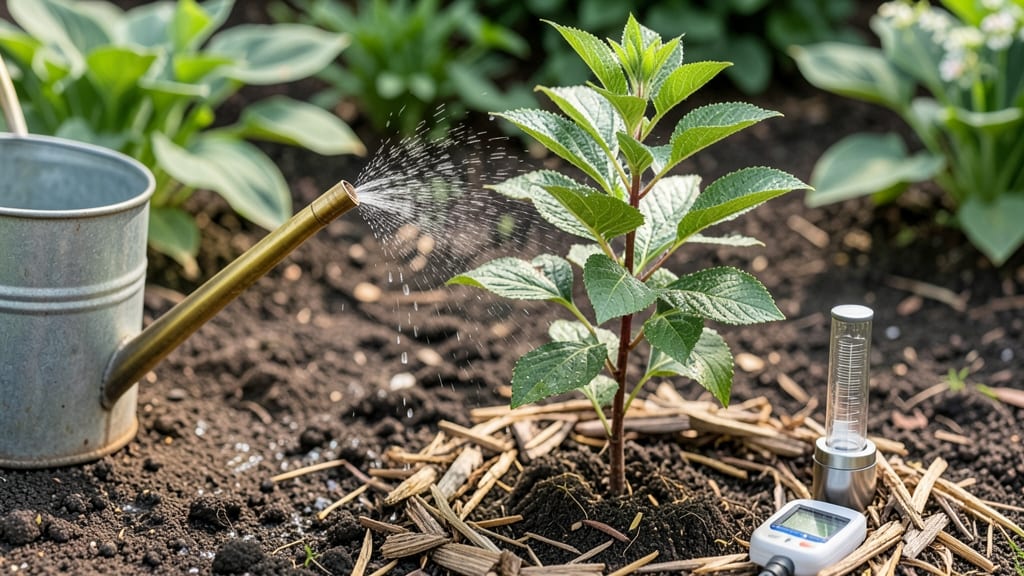
Watering new shrubs correctly is the difference between a lush, thriving plant and one that struggles to survive its first year.
You’ve just planted your new shrubs 🌿, and now the real work begins—not just watering, but watering the right way. Too much or too little can send roots into a downward spiral before they even get a chance to establish.
The key? A balance that keeps the soil moist but never soggy, and a schedule that changes with the seasons.
Most gardeners overcomplicate it, but the science is simple: deep, infrequent watering encourages roots to grow downward, while shallow, frequent watering keeps them weak and thirsty at the surface.
I’ll walk you through the exact techniques—from deep soaks to mulching hacks—that make all the difference in Zone 6 climates and beyond.
Skip the guesswork and learn how to check soil moisture, adjust for summer heat or winter dormancy, and spot the early warning signs of over- or underwatering before it’s too late.
How often to water new shrubs in their first year
The first year is critical for new shrubs—their roots need consistent moisture to establish deep into the soil, but improper watering can be just as deadly as neglect. Young roots are delicate and need predictable hydration to grow strong enough to survive on their own.
I’ve learned the hard way that overwatering (which suffocates roots) is just as harmful as underwatering (which stresses plants). The key is balancing frequency, depth, and seasonal adjustments.
Your shrub’s watering needs depend on three factors: season, soil type, and root development stage. For example, a sandy soil drains quickly, requiring more frequent watering, while clay soil holds moisture longer.
In summer heat, even drought-tolerant shrubs need extra care, while winter dormancy reduces watering to a bare minimum. Let’s break down the science-backed schedule you need to follow.
Pro Tip: Always water deeply—aim for 6-12 inches down—to encourage roots to grow downward rather than staying shallow. Use your finger to check soil moisture: if the top 2-3 inches are dry, it’s time to water. This method prevents surface evaporation and ensures roots get the hydration they need.
| Season | Root Stage | Soil Type | Watering Frequency | Water Amount | Best Time |
|---|---|---|---|---|---|
| Spring | Establishing roots | Sandy | Every 3-4 days | 1 gallon | Morning |
| Spring | Establishing roots | Clay | Every 5-7 days | 1.5 gallons | Morning |
| Summer | Active growth | Sandy | Every 2-3 days | 2 gallons | Early morning |
| Summer | Active growth | Clay | Every 4-5 days | 2.5 gallons | Early morning |
| Fall | Slowing growth | Sandy | Every 7-10 days | 1 gallon | Late morning |
| Winter | Dormant | All types | Every 3-4 weeks | 0.5 gallon | Midday |
In spring, focus on week
Best watering techniques for new shrubs to prevent root rot
When you plant new shrubs, the first year is all about root establishment. Too little water and they struggle; too much and root rot sets in. The key is deep, infrequent watering that encourages roots to grow downward where moisture is most stable.
Shallow watering keeps roots near the surface, making them vulnerable to drought and fungal diseases like Phytophthora.
I’ve learned that morning watering is critical—it gives soil time to dry slightly during the day, reducing fungal risks. Pair this with mulching to lock in moisture and regulate soil temperature. Let’s break down the best methods to keep your new shrubs thriving without drowning their roots.
Deep Watering vs. Shallow Watering
- Encourages root growth downward
- Reduces surface evaporation
- Minimizes fungal diseases by drying soil faster
- Best for establishing strong roots in new shrubs
- Keeps roots near surface (vulnerable to drought)
- Increases fungal risk (wet soil stays damp longer)
- Leads to weaker root systems
- Avoid for newly planted shrubs
For deep watering, I recommend using a soaker hose or drip irrigation system. These deliver water slowly at the base of the plant, avoiding leaf wetting. Aim for 1-2 gallons per watering for small shrubs, adjusting based on soil type—sandy soil drains faster than clay.
Always water until you see moisture 6 inches deep.
Another game-changer is mulching. Apply a 2-3 inch layer of organic mulch (like shredded bark or straw) around the base of your shrub, keeping it 3 inches away from the stem.
Mulch acts like a blanket, slowing moisture loss and keeping roots cool. Replenish it annually as it breaks down—this simple step can cut your watering needs by 30-50%.
If you’re dealing with clay soil or heavy rainfall, consider installing a French drain or improving drainage before planting. Poor drainage is a silent killer—it traps excess water, suffocating roots and inviting root rot.
Test your soil’s drainage by digging a hole, filling it with water, and timing how long it takes to drain. If it’s slower than 4 hours, amend with compost or sand.
Seasonal adjustments matter too. In summer heat, water every 5-7 days (or daily for extreme heat), while in winter dormancy, reduce to monthly unless your area experiences freeze-thaw cycles. Always check soil moisture with your finger—if the top 1-2 inches are dry, it’s time to water.
By mastering these techniques, your new shrubs will develop deep, resilient roots and stand strong against drought and disease. Start with deep watering, mulch like a pro, and adjust for your climate. Your shrubs will thank you with vibrant growth and years of beauty! 🌿