
Shrubs
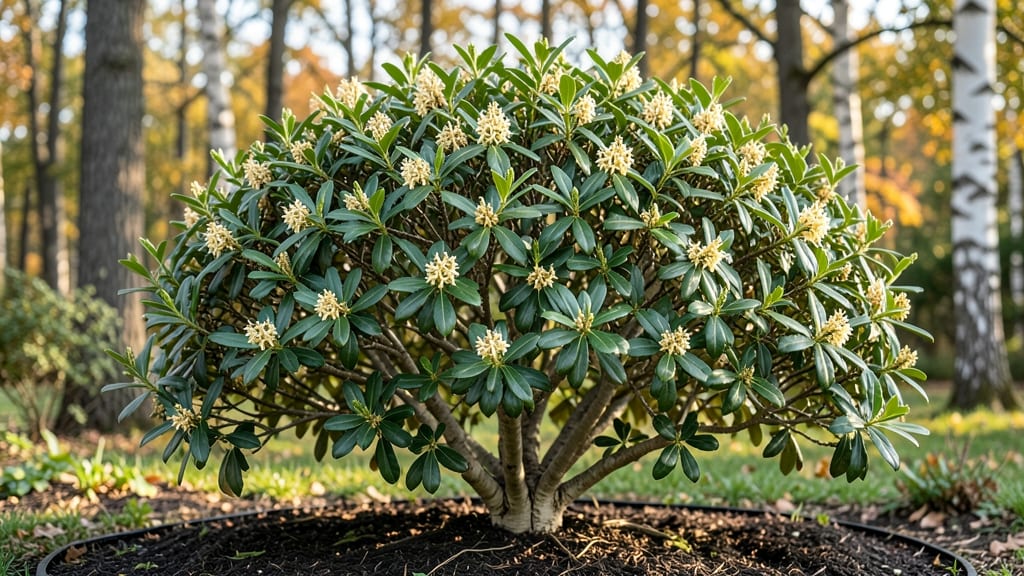
Growing sweet olive shrubs (Osmanthus fragrans) means bringing that intoxicating jasmine-like fragrance to your garden—the plant itself is the recipe. 🌿 Unlike its culinary namesake, this evergreen shrub thrives in landscapes with minimal fuss, offering year-round interest through glossy leaves and fragrant blooms.
The key? Understanding its light, soil, and climate preferences before planting.
This shrub loves partial shade to full sun, making it perfect for understory plantings or as a fragrant hedge. Well-draining, slightly acidic soil mimics its native woodland conditions, while USDA zones 7-9 suit its winter hardiness—though younger plants may need winter protection.
Start with a 1-gallon container plant or bare-root shrub, spacing them 6-10 feet apart for mature size.
Watering is simple: deep but infrequent—once established, sweet olive tolerates drought once roots are deep. Prune lightly after flowering to shape, but avoid heavy cuts that remove too many leaves. The reward? Fragrant white blooms in late spring, followed by glossy foliage that stays lush through winter.
Use it as a fragrant screen, foundation planting, or even in containers for patios. With proper care, it’ll reward you for years with that signature sweet olive scent—nature’s own herbal infusion.
📚 In This Guide
- What you need
- Instructions
- Tips and common mistakes
- Wrapping up and next steps
What you need
- ● Sweet olive berries: 1 cup (about 100–120g). Look for fresh, organic berries (dried work too, but fresh yields brighter flavor).
- ● Water: 2 cups (16 oz / 475 mL). Filtered or distilled water works best for clarity.
- ● Granulated sugar: 1 cup (200g). Adjust to taste if you prefer it sweeter or less sweet.
- ● Citrus zest: 2 tbsp (from 1 lemon + 1 orange). Use a fine grater for maximum flavor.
- ● Citrus juice: ¼ cup (60 mL). Freshly squeezed lemon or orange juice adds brightness.
- ○ Fresh herbs (optional but recommended): 2 sprigs rosemary or thyme. Enhances the earthy depth!
- ● 1-quart glass jar with lid (sterilized). Mason jars are ideal!
- ● Fine-mesh strainer or cheesecloth. A coffee filter works in a pinch.
- ● Wooden spoon or spatula. Avoid metal to prevent oxidation.
- ● Measuring cups/spoons for precision.
- ● Citrus zester (if not using a grater).
- ○ Fine-mesh sieve (optional, for ultra-smooth shrub).
- ● 🌡️ Temperature matters: Use cool water (not hot) to preserve sweet olive’s delicate flavors.
- ● ✨ Storage hack: Keep shrub refrigerated for up to 3 months or freeze in ice cube trays for cocktail garnishes!
- ● 🎯 Flavor boost: Add a pinch of salt (¼ tsp) to balance sweetness.
How to grow and maintain a sweet olive shrub
This hardy, fragrant shrub thrives with minimal fuss—here’s how to cultivate it for lush foliage and those signature sweet olive berries.
🪴 Step 1: Choose the Right Location and Soil
Sweet olive (Osmanthus fragrans) loves full sun to partial shade—at least 6 hours of direct sunlight daily—but tolerates light shade in hotter climates. I plant mine where it gets morning sun and afternoon shade; this prevents leaf scorch while keeping the berries sweet. The soil should be well-draining but moisture-retentive, so amend heavy clay with 2-3 inches of compost before planting.
Dig a hole twice as wide as the root ball but only as deep. Loosen the roots slightly if they’re circling—this encourages outward growth. Water deeply before backfilling to settle the soil around the roots. A mulch ring of 2-3 inches (using shredded bark or pine needles) preserves moisture and regulates soil temperature.
☀️ Step 2: Plant and Establish the Shrub
Place the shrub so the top of the root ball sits 1 inch below soil level—this prevents stem rot while allowing roots to expand. Press the surrounding soil firmly but gently to eliminate air pockets. Water immediately after planting to help the soil settle and remove any air gaps.
For the first 2-3 weeks, keep the soil consistently moist—not soggy—by watering every 2-3 days. You’ll know it’s right when the top 1-2 inches of soil feel damp but not wet. Avoid overhead watering; instead, use a soaker hose or water at the base to prevent fungal diseases.
✂️ Step 3: Prune for Shape and Health
Prune sweet olive in late winter or early spring before new growth begins. Remove dead, diseased, or crossing branches first—these compete for nutrients and disrupt airflow. Then, shape the shrub by cutting back overly long branches by ⅓ to encourage bushier growth. Use clean, sharp pruners and make cuts just above a leaf node or outward-facing bud.
Never prune in fall; new growth won’t harden off before winter, and the shrub may suffer cold damage. If you notice leggy growth reaching for light, your shrub needs more sun—relocate it or thin nearby competitors. Sweet olive responds well to pruning, so don’t hesitate to shape it into a hedge or small tree.
💧 Step 4: Water and Fertilize for Optimal Growth
Once established, sweet olive is drought-tolerant but produces sweeter berries with consistent moisture. Water deeply once a week during dry spells, aiming for 1-1.5 inches of water. Check by inserting a 6-inch screwdriver into the soil—if it resists, water again. Overwatering causes root rot, so always let the top 2 inches of soil dry out between waterings.
Fertilize in early spring with a balanced, slow-release fertilizer (10-10-10 or similar). Apply ½ cup per year of growth around the drip line, not the base. Avoid high-nitrogen fertilizers—they promote leafy growth at the expense of berries. If your shrub’s leaves yellow, it may need iron or micronutrients; a foliar spray corrects this quickly.
⏰ Step 5: Protect and Maintain Year-Round
Sweet olive is cold-hardy to USDA Zone 7 but may need winter protection in colder areas. Wrap the base with burlap or frost cloth in late fall if temperatures dip below 15°F. Prune out any winter-damaged branches in early spring. In warmer zones, it thrives year-round with minimal care—just monitor for spider mites or scale, common pests that thrive in dry conditions.
Harvest berries in late fall to winter when they turn deep purple-black. They’re not edible raw but make bold, herbal infusions (like the shrub recipe in the title!). If you’re growing for fragrance, pinch back new growth in summer to redirect energy into scented flowers—the more you prune, the more intensely it blooms.
Tips & tricks for cultivating a thriving sweet olive shrub
Here's what nobody tells you about keeping your sweet olive lush and productive—these are the details that make all the difference between a struggling shrub and one that thrives.
Location and Sunlight Strategy: While the instructions mention 6 hours of sunlight, I've found that positioning your shrub to capture morning sun and afternoon shade is especially important in hot climates. This balance prevents leaf scorch while maintaining the sweetness of the berries. If you're in a particularly sunny area, consider planting near a north-facing wall or under light dappled shade from taller trees. The key is to avoid the intense afternoon sun that can stress the plant.
Soil Preparation Secret: The 2-3 inches of compost recommendation is perfect, but don't stop there. I always add a handful of perlite or coarse sand to improve drainage, especially if your native soil is heavy clay. This prevents waterlogging while still maintaining moisture retention. For containers, use a mix of 60% quality potting soil, 20% compost, and 20% perlite for optimal results. The goal is to mimic the well-draining yet moisture-retentive conditions sweet olive loves.
Pruning Technique for Maximum Fragrance: When shaping your shrub in Step 3, focus on creating an open center that allows airflow. This not only prevents disease but also intensifies the fragrance by concentrating the blooms. I've noticed that shrubs with proper air circulation produce berries with a more concentrated sweet olive flavor. Remember to make cuts just above a leaf node or outward-facing bud—this is where new growth will emerge most vigorously.
Winter Protection Hack: The 15°F threshold is a good guideline, but I've learned to watch for your local forecast's "wind chill factor" when deciding whether to wrap your shrub. Cold winds can be just as damaging as low temperatures. If winds are predicted to drop below 15°F, add an extra layer of protection. I've had success using a combination of burlap wrapped around the base and frost cloth draped loosely over the top—this creates a microclimate that protects without suffocating the plant.
Pro Tips for Sweet Olive Shrub
- Here's what nobody tells you about keeping your sweet olive lush and productive—these are the details that make all the difference between a struggling shrub and one that thrives.
- Location and Sunlight Strategy: While the instructions mention 6 hours of sunlight, I've found that positioning your shrub to capture morning sun and afternoon shade is especially important in hot climates.
- Soil Preparation Secret: The 2-3 inches of compost recommendation is perfect, but don't stop there.
Frequently asked questions
Got questions about crafting or using your sweet olive shrub? You’re not alone! Here are answers to the most common queries to help you master this bold, herbal infusion like a pro.
What’s the best way to store sweet olive shrub to keep it fresh?
Store your shrub in an airtight glass bottle (like a mason jar) in a cool, dark place—such as a pantry or fridge if your kitchen is warm. It’ll stay fresh for up to 6 months if unopened, and 3–4 months once opened. Pro tip: Avoid metal containers to prevent oxidation!
How long does it take for the shrub to infuse properly?
For maximum flavor, let your shrub steep for 4–6 weeks in a dark place, shaking gently every few days. If you’re short on time, 2–3 weeks will still yield a decent infusion, though the taste may be slightly milder. Patience pays off—think of it as a slow dance with flavor!
Can I substitute sweet olive for another herb in shrubs?
If you can’t find sweet olive (Osmanthus fragrans), try lavender, rosemary, or thyme for a similar herbal depth. For a sweeter profile, swap in hibiscus flowers or rose petals. Just adjust the infusion time—some herbs (like lavender) release flavor faster.
Why does my shrub taste bitter or harsh?
Bitterness usually means over-infusion or low-quality herbs. If your shrub tastes harsh, try one of these fixes:
- Dilute it with simple syrup (1:1 ratio) to balance flavors.
- Strain out the herbs and re-infuse with fresh ones for 1–2 weeks.
- Check your herbs—ensure they’re dried properly (not moldy or dusty).
What’s the best way to use sweet olive shrub in cocktails vs. food?
For cocktails, use 1–2 oz of shrub per drink (great in gin or whiskey-based cocktails). In food, reduce it by half and simmer into sauces, glaze meats, or drizzle over roasted veggies. A splash in aioli or marinades adds a floral kick!
Wrapping up and next steps
The sweet olive shrub is a vibrant, aromatic gem that elevates both cocktails and dishes with its bold herbal notes. Whether you’re a mixologist or a home cook, this versatile infusion opens doors to creative flavors—perfect for summer sips or savory dishes. 🌿
Ready to experiment? Start by making a small batch, then play with it—infuse it into syrups, drizzle over grilled meats, or stir into your favorite drinks. Your taste buds (and guests!) will thank you.