
Shrubs
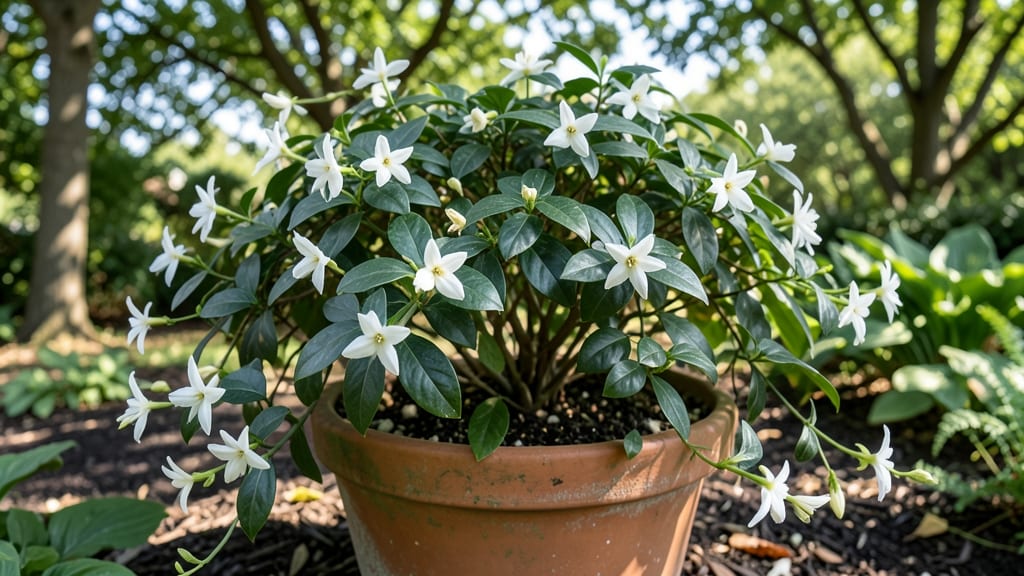
Growing star jasmine shrubs transforms your garden into a fragrant sanctuary. 🌿 The moment you plant these vines, you're inviting a sweet, citrusy perfume that fills the air at dusk—my neighbors still comment on how their yard smells like a tropical paradise after mine blooms.
These hardy plants thrive in zones 7-11, making them perfect for warm climates where they'll climb trellises or spill beautifully over fences.
Start with well-draining soil and a sunny spot—they need at least 6 hours of sunlight daily—and space them 3-6 feet apart to give their vines room to spread. Water consistently during their first year, then let the soil dry slightly between waterings once established.
Pruning in late winter keeps them compact and encourages lush, fragrant blooms all summer long.
What you'll love most is how these shrubs reward patience with their intoxicating scent and stunning white flowers. The blooms attract pollinators by day and release their signature fragrance as evening falls, creating a magical atmosphere.
Plus, their versatility means they work as ground covers, climbing accents, or even container plants on patios.
For best results, fertilize lightly in spring and avoid overwatering—star jasmine hates soggy roots. In colder zones, grow them in containers where you can winter them indoors. The payoff? A garden that smells like a citrus grove and looks like a dream, all from a single, low-maintenance shrub.
📚 In This Guide
- What you need
- Instructions
- Tips and common mistakes
- Wrapping up and next steps
What you need
- ● Star jasmine flowers – 1 cup (lightly packed) (fresh or dried; fresh yields brighter flavor).
- ● Citrus zest – 1 lemon + 1 lime (organic preferred for maximum aroma).
- ● Citrus juice – ½ cup lemon + ½ cup lime (freshly squeezed for tang).
- ● Simple syrup – 1:1 ratio (1 cup sugar + 1 cup water) (homemade or store-bought).
- ● Water – 1 cup (for dilution and infusion).
- ● Heavy-bottomed saucepan (for even heating).
- ● Fine-mesh strainer (to filter out solids).
- ● Wooden spoon or spatula (for gentle stirring).
- ● Glass jar or bottle (sterilized, for storage—8 oz minimum).
- ○ Cheesecloth or coffee filter (optional, for extra-fine straining).
- ○ Funnel (optional, for clean pouring).
- ● Vanilla bean or pod (adds depth; split and scrape seeds into the mix).
- ● Rosemary sprig (for herbal notes—remove after infusion).
- ● Food-grade plastic wrap or lid (to seal and preserve freshness).
- ● Label & marker (to track date and flavor profile).
How to grow and care for star jasmine shrubs
This fragrant, fast-growing vine transforms any garden into a citrus-scented paradise.
🌱 Step 1: Choose the Perfect Planting Spot
Star jasmine thrives in full sun to partial shade, with at least 6 hours of direct sunlight daily. I always pick a location with morning sun and afternoon shade to prevent leaf scorch during hot afternoons. The plant loves well-draining soil—amend heavy clay with 2-3 inches of compost before planting to improve drainage.
This vine grows aggressively, so give it plenty of space to climb. A sturdy trellis, fence, or arbor works best. If planting near a structure, leave 3-4 feet of clearance between the vine and the surface to allow for proper airflow and prevent moisture buildup against the walls.
🪴 Step 2: Plant Your Star Jasmine Correctly
Dig a hole twice as wide as the root ball but only as deep. Place the plant in the hole so the top of the root ball sits 1 inch above the surrounding soil. This slight elevation prevents water from pooling around the base and causing rot. Gently backfill with soil, pressing lightly to remove air pockets.
Water deeply right after planting to settle the soil and encourage root contact. You’ll know it’s time to water again when the top 2 inches of soil feel dry to the touch. Mulch around the base with 2-3 inches of organic mulch (like wood chips) to retain moisture and suppress weeds.
☀️ Step 3: Provide Consistent Watering and Fertilization
Star jasmine is drought-tolerant once established, but young plants need regular watering—about 1 inch per week during the growing season. Water at the base of the plant in the morning to reduce evaporation and fungal risks. Avoid wetting the leaves, as this can encourage powdery mildew.
Fertilize in early spring with a balanced, slow-release fertilizer (10-10-10). I like to use ½ cup per plant for mature vines. Skip fertilization in fall and winter, as the plant enters dormancy. Over-fertilizing can lead to excessive leaf growth at the expense of fragrant blooms.
✂️ Step 4: Prune for Health and Fragrance
Prune star jasmine right after flowering (late spring to early summer) to encourage bushier growth and more blooms. Remove any dead, diseased, or crossing branches first. Then, trim back 1/3 of the previous year’s growth to maintain shape and airflow. This keeps the plant compact and prevents overcrowding.
If your vine grows too long or leggy, you can also prune in early spring before new growth begins. Just avoid heavy pruning in fall, as the plant needs its foliage to store energy for winter. Always use clean, sharp pruners to make cuts just above a leaf node for the best regrowth.
⏰ Step 5: Prepare for Winter and Encourage Blooms
Star jasmine is semi-evergreen in mild climates but may drop some leaves in cold winters. If temperatures drop below 20°F, protect young plants with burlap wraps or a thick layer of mulch. In warmer zones, no winter care is needed—just reduce watering once growth slows.
To maximize fragrant blooms, keep the plant well-pruned and fed. I’ve found that pinching back new growth in early summer encourages more flowers. Also, avoid moving established plants—star jasmine is sensitive to transplant shock and may take years to recover if disturbed.
Tips & tricks for growing star jasmine shrubs
Let me share the insights that helped my star jasmine thrive—and avoid the mistakes I made while learning. These small details make all the difference.
Location is Everything: While the 6 hours of daily sunlight is essential, pay attention to the quality of that light. South-facing locations with morning sun and afternoon shade work best in hot climates. I’ve seen star jasmine struggle in harsh afternoon sun—its leaves can develop brown patches if exposed too long. If your garden gets intense afternoon heat, consider a partial shade spot with dappled sunlight.
Soil Preparation Matters: The 2-3 inches of compost recommendation is non-negotiable for heavy clay soils. I learned this the hard way when my first plant developed root rot—turns out, the clay was too dense even with my "good" soil. For sandy soils, mix in some peat moss or coconut coir to help retain moisture. Always test your soil’s drainage before planting by digging a hole and filling it with water—if it doesn’t drain within an hour, amend further.
Watering Wisdom: The top 2 inches of soil dryness test is your best friend. I use a screwdriver to check—when it comes out clean, that’s your signal. Morning watering is crucial because it gives leaves time to dry before nightfall, reducing fungal risks. For container-grown star jasmine, you’ll need to water more frequently—sometimes every other day in summer heat. Just remember, once established, these plants are surprisingly drought-tolerant.
Pruning Precision: When trimming back that 1/3 of previous year’s growth, focus on shaping rather than just reducing size. I like to create an open center that allows sunlight to reach lower branches—this encourages more blooms along the entire vine. Always cut just above a leaf node at a 45-degree angle to promote faster healing. And here’s a pro tip: save your pruned branches! They root easily in water and make great starter plants.
Pro Tips for Star Jasmine Shrub
- Let me share the insights that helped my star jasmine thrive—and avoid the mistakes I made while learning. These smal...
- Location is Everything: While the 6 hours of daily sunlight is essential, pay attention to the quality of that light....
- Soil Preparation Matters: The 2-3 inches of compost recommendation is non-negotiable for heavy clay soils. I learned ...
Frequently asked questions
How long does it take for a star jasmine shrub to produce flowers?
A healthy Trachelospermum jasminoides typically takes 2–3 years to establish and bloom, though some vigorous plants may flower in their first year with ideal conditions (full sun, well-draining soil, and consistent watering). Patience pays off—those fragrant white blooms are worth the wait!
When is the best time to harvest star jasmine flowers for syrup?
Harvest flowers in the early morning after dew has dried but before the sun intensifies (usually spring to early summer). Look for fully open buds—just as they’re about to bloom—when their scent and flavor peak. Avoid wilting flowers, as they’ll yield bitter syrup. Pro tip: Use scissors, not your hands, to avoid damaging the plant!
Why isn’t my star jasmine shrub flowering?
Common culprits include:
- Insufficient sunlight: Star jasmine thrives in full sun (6+ hours/day)—move it to a sunnier spot if indoors or relocate outdoors.
- Over-fertilizing: Too much nitrogen = leafy growth, not flowers. Use a low-nitrogen, high-phosphorus fertilizer in early spring.
- Stress: Drought, root-bound pots, or extreme temps can stall blooms. Water deeply 1–2x/week and prune lightly after flowering.
Can I substitute star jasmine flowers for other citrus-scented blooms in syrup?
Yes! If star jasmine is unavailable, try:
- Orange blossoms (mildly citrusy, floral)
- Lemon verbena (bright, herbal-citrus)
- Yuzu flowers (tart, complex—rarer but stunning)
- Mock orange (sweeter, less citrus-forward)
Adjust syrup ratios: citrus-heavy flowers (like yuzu) need less sugar (1:2 flower-to-sugar), while milder blooms (like mock orange) can handle 1:3. Taste-test as you go!
Will bees or pests bother my star jasmine shrub?
Star jasmine is pest-resistant but may attract aphids or whiteflies if stressed. To deter them:
- Spray with neem oil (mild, organic).
- Introduce ladybugs (natural predators).
- Ensure good airflow to prevent fungal issues.
Bees love the flowers—embrace them! They’re pollinators and won’t harm the plant. Just avoid harvesting from heavily sprayed areas.
Wrapping up and next steps
Transforming your star jasmine shrub into a fragrant citrus-blossom syrup is a game-changer for your cocktails and desserts! 🌸 With just a few simple steps, you’ve unlocked a homemade, aromatic treasure that’s far fresher and more flavorful than store-bought alternatives.
Whether you’re a mixologist, baker, or just love experimenting in the kitchen, this syrup is your new go-to for adding a touch of elegance and zing.
Now that you’re equipped with the know-how, why not treat yourself to a little creativity? Whip up a batch of your favorite cocktail or dessert and let that star jasmine-citrus magic shine. Cheers to elevating your flavors—one sip at a time! 🍹✨