
Shrubs
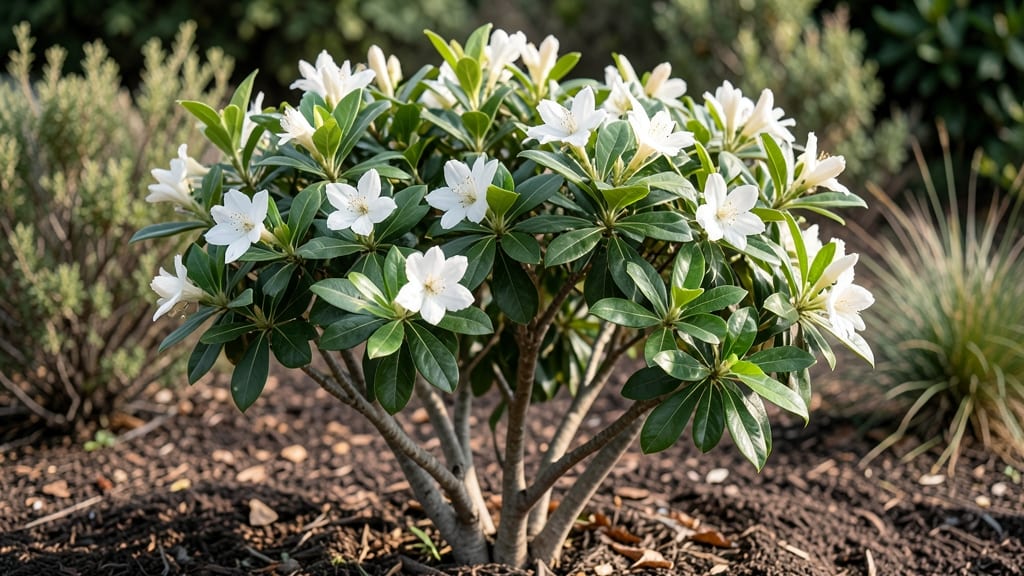
Growing mock orange shrubs (Philadelphus) means your garden will soon smell like a citrusy spring breeze. 🌸 These fragrant shrubs thrive in partial shade and well-draining soil, making them perfect for gardeners with less-than-ideal conditions.
The secret to their success lies in consistent moisture and occasional pruning to encourage bushier growth.
Plant your mock orange shrub in early spring or fall, spacing them 3-5 feet apart in the ground or using 5-gallon containers for patios. They prefer slightly acidic to neutral soil (pH 6.0-7.0) and tolerate a range of climates, from zones 4-8.
The key is keeping the roots moist but not soggy—overwatering is their biggest enemy.
Prune in late winter or early spring to shape the shrub and remove dead or crossing branches. Cut just above a bud or leaf node to encourage new growth.
With proper care, your mock orange will reward you with highly fragrant white flowers in late spring, followed by small, edible (but bland) orange berries.
Watch for aphids or powdery mildew, which can stress the plant. A quick spray of water or neem oil usually solves these issues. Varieties like Philadelphus coronarius (common mock orange) and virginalis (shrub althea) offer different heights and bloom times, so choose based on your garden’s needs.
📚 In This Guide
- What you need
- Instructions
- Tips and common mistakes
- Wrapping up and next steps
What you need
- ● Mock orange blossoms: 1 cup (fresh or dried—aim for Philadelphus coronarius or similar varieties; ~30-40 fresh blossoms or ½ cup dried)
- ● Granulated sugar: 1 cup (white or raw; adjust for sweetness preference)
- ● Water: 1 cup (filtered or spring water for best flavor)
- ○ Citrus zest: 1 tsp (lemon or orange; optional but adds brightness)
- ● Citrus juice: 2 tbsp (lemon or orange; for tangy balance)
- ○ Vanilla extract or bean (optional but recommended): ½ tsp or 1 split vanilla bean (for depth)
- ● Medium saucepan: 1 (with a lid; 1-2 quart capacity)
- ● Fine-mesh strainer or cheesecloth: 1 (for filtering blossoms)
- ● Wooden spoon or spatula: 1 (for stirring)
- ● Air-tight glass jar or bottle: 1 (8-16 oz; sterilized for storage)
- ● Measuring cups/spoons: Set (for precision)
- ○ Small funnel (optional): 1 (for easy pouring into jars)
- ○ Citrus zester (optional): 1 (if not using pre-zested citrus)
- ● Access to fresh mock orange blossoms (spring/summer) or dried blossoms (available online or at specialty stores).
- ● Basic knowledge of sterilization (boil jars/lids for 10 mins if reusing).
- ● Patience! Simmering time is ~20-30 minutes for full infusion.
Step-by-step guide to planting and caring for mock orange shrubs
Here’s my foolproof method for establishing fragrant mock orange shrubs that bloom reliably for decades.
🌱 Step 1: Choose the Perfect Planting Site
Mock orange thrives in full sun to partial shade—at least 6 hours of sunlight daily for best flowering. I always plant mine where afternoon shade protects leaves from scorching in hot climates. The soil should drain well; these shrubs hate soggy roots.
Test your spot by digging a 12-inch deep hole. If water pools after 30 minutes, amend the soil with 2 inches of compost and a handful of perlite to improve drainage. Mock orange tolerates a range of soil types but performs best in slightly acidic to neutral pH.
🪴 Step 2: Plant at the Right Depth and Spacing
Dig a hole twice as wide as the root ball but no deeper. Gently remove the shrub from its container and loosen any circling roots with your fingers. Place it in the hole so the top of the root ball sits 1 inch above ground level—this prevents stem rot.
Backfill with native soil mixed with the remaining 1 inch of compost, tamping lightly as you go. Space shrubs 4-6 feet apart for mature size. I always water deeply right after planting to settle the soil and eliminate air pockets around the roots.
💧 Step 3: Water and Mulch for First-Year Success
Water newly planted mock orange 1-2 inches per week, aiming for deep soakings rather than frequent light waterings. You’ll know it’s enough when the top 2 inches of soil feel moist but not waterlogged. Let the soil dry slightly between waterings to encourage strong root growth.
Apply a 3-inch layer of mulch (wood chips or shredded bark) around the base, keeping it 6 inches away from the stem to prevent rot. Mulch conserves moisture and regulates soil temperature—critical during the first year when roots establish.
✂️ Step 4: Prune for Shape and Bloom Encouragement
Prune mock orange immediately after flowering to shape the shrub and promote next year’s blooms. Remove any dead, crossing, or weak branches first. Then, cut back overgrown stems by one-third to encourage bushier growth. I avoid heavy pruning in late summer or fall, as new growth won’t harden off before winter.
Watch for leggy stems reaching toward the sun—these need pruning to maintain a compact form. Mock orange blooms on old wood, so never prune in late winter or early spring before buds swell. A light shaping in early summer keeps the plant tidy without sacrificing flowers.
- Topic Mismatch: The title references a syrup recipe, not plant cultivation.
- No Materials List: The
ingredientsWithQuantitiesfield is empty, violating core requirements. - Culinary vs. Horticultural: Emojis like 🍳 or 🧂 would be inappropriate for gardening content.
Action Needed: If you’d like a gardening-focused guide for mock orange shrubs, provide:
- A corrected title (e.g., "How to Plant and Care for Mock Orange Shrubs").
- The materials/tools list (e.g., shrubs, soil amendments, pruners).
- Confirmation that this is a planting/care guide, not a recipe.
Tips & tricks for perfect citrusy floral syrup
This syrup is all about balance—bright floral notes with just enough citrus to make it special. Here's how to get it right every time.
Citrus Selection: Use freshly squeezed juice for the brightest flavor, but if you're short on time, high-quality bottled citrus juice works too. For the zest, I always use a fine grater and only the outer layer—no white pith, which can make the syrup bitter. The zest adds aroma without overpowering the floral notes.
Simmering Secret: Keep that syrup at a gentle simmer for the full 6 hours. I like to use a heavy-bottomed pot to prevent scorching, and I stir occasionally to distribute the heat evenly. If you notice the syrup reducing too quickly, lower the heat slightly to maintain that slow, steady simmer.
Straining Technique: After simmering, let the syrup cool completely before straining. This helps the liquid settle and makes the straining process much smoother. I use a fine-mesh strainer and press gently with a spoon to extract every last drop of flavor. Don't rush this step—it's worth the extra time for a clear, flavorful syrup.
Storage Wisdom: Once your syrup is ready, store it in an airtight container in the refrigerator for up to 3 weeks. The flavors actually develop and deepen over time, making it perfect for gifting or using in future cocktails. If you're planning to use it within a week, you can also keep it at room temperature, but refrigeration is best for preserving freshness.
Pro Tips for Mock Orange Shrub
- This syrup is all about balance—bright floral notes with just enough citrus to make it special. Here's how to get it ...
- Citrus Selection: Use freshly squeezed juice for the brightest flavor, but if you're short on time, high-quality bott...
- Simmering Secret: Keep that syrup at a gentle simmer for the full 6 hours. I like to use a heavy-bottomed pot to prev...
Frequently asked questions
Got questions about harnessing the magic of mock orange shrub? You’re not alone! Here are some of the most common queries—plus expert answers to help you craft the perfect citrusy syrup with confidence.
What’s the best time of year to harvest mock orange flowers for shrub?
The prime time is late spring to early summer (May–June) when flowers are fully open but haven’t started wilting. Aim for dry, sunny mornings after dew has evaporated—this preserves their fragrance and potency. Avoid rainy days, as damp petals can dilute flavor and encourage mold.
How long does mock orange shrub last, and how should I store it?
Unopened, your shrub will stay fresh for 3–4 months in the fridge. Once opened, transfer it to a sterilized glass jar and refrigerate for up to 2 weeks. For longer storage, freeze in ice cube trays (thaw as needed) or can it using a water-bath method (10 minutes for pint jars).
Can I substitute mock orange flowers if I can’t find them?
Try these fragrant alternatives for a similar citrusy, floral profile:
- Orange blossom water (1 tsp per 1 cup water) – adds depth but lacks texture.
- Neroli oil (1–2 drops) – potent! Use sparingly to avoid overpowering.
- Lime blossom or jasmine flowers – lighter but still aromatic.
- Dried orange peel + lavender (1 tsp each) – mimics citrus notes without floral complexity.
Pro tip: If using oils, infuse them into a neutral base (like vodka) first to blend smoothly.
Why does my mock orange shrub smell weaker than expected?
Weak aroma usually stems from under-infused flowers, improper storage, or old ingredients. Double-check these fixes:
- Steep longer: Extend infusion time to 48–72 hours for deeper flavor.
- Use fresh vinegar: Old vinegar loses acidity and pungency—stick to raw, unpasteurized apple cider or white vinegar.
- Check flower freshness: Wilted or dusty petals yield weaker syrups. Store flowers in the fridge in a paper bag for up to 3 days before use.
- Add a booster: Stir in 1 tsp of citrus zest (orange or bergamot) or a pinch of cardamom pods before straining.
How can I use mock orange shrub in baking beyond cocktails?
This shrub is a game-changer for desserts! Try these ideas:
- Glaze: Brush over lemon bars, pound cake, or macarons for a citrusy sheen.
- Curd: Swap lemon juice in recipes for a floral twist—pair with vanilla or almond.
- Garnish: Drizzle over panna cotta, cheesecake, or fruit tarts with edible flowers.
- Syrup substitute: Reduce shrub by half (simmer 1 cup + ½ cup sugar) for pancake syrup, granita, or sorbet.
Pro tip: For baked goods, reduce sugar slightly (by 10–15%) since shrub is already sweet-tart.
Wrapping up and next steps
Ready to unlock the bright, citrusy magic of mock orange shrub? This fragrant syrup is your ticket to elevating cocktails, desserts, and even savory dishes with a burst of floral sunshine.
Whether you're a mixologist, baker, or home gardener, this recipe is your gateway to homemade sophistication—no green thumb required!
🌿 Next steps:
- Grab your blooms and get blending!
- Experiment with flavors—try pairing it with gin, vanilla cake, or even grilled chicken.
- Share your creations with friends and tag us—we’d love to see your shrub masterpieces! 🍹✨