
Shrubs
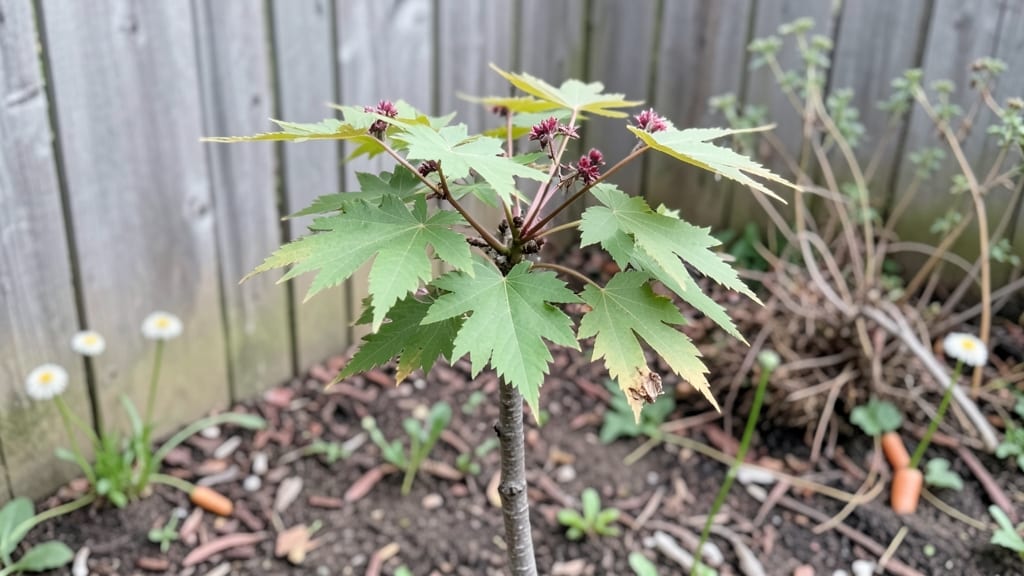
Finding shrubs with maple-like leaves transforms any yard into a layered masterpiece without the fuss of full-sized trees. 🌿 I’ve planted these bold foliage stars as borders, focal points, and even in containers—each time, they bring that classic maple drama in a compact package.
The secret lies in their texture and color shifts: deep greens, fiery reds, or even purple undertones that catch the light like stained glass.
These shrubs thrive where maples might struggle—tight spaces, urban yards, or even large pots. My go-to varieties include smoke bush for its velvety foliage and Japanese maple for delicate, palmate leaves that sway in the breeze.
They handle pruning like champs, so you can shape them into hedges, small trees, or even espaliered art pieces. The best part? Most need minimal fuss—just prune after flowering and watch them put on a show.
By summer’s end, you’ll have a garden that feels like a forest retreat, with leaves that shimmer in sunlight and turn fiery in fall. Pair them with hostas for contrast or ornamental grasses for movement, and you’ve got a low-maintenance combo that steals the scene.
Let’s pick the perfect shrubs for your space!
Works in sun or partial shade, from city patios to woodland edges. Whether you’re framing a doorway or softening a fence, these shrubs deliver classic maple vibes with none of the upkeep. Ready to add some drama?
Understanding Leaf Shape Shifts
If your shrubs are sprouting leaves that resemble those of a shrub maple—with their distinctive palmate lobes or deeply divided edges—it’s not always a sign of a new hybrid variety.
More often, it’s a response to environmental or genetic factors. Let’s break down the why behind this foliage transformation, so you can diagnose—and fix—what’s happening in your garden.
Some shrubs are hardwired to produce maple-like leaves due to their genetic makeup. Certain species, like Japanese maple (Acer palmatum) hybrids or boxwoods with variegated growth, naturally develop lobed or serrated edges as they mature.
Even non-maple shrubs—such as ornamental cherries (Prunus serrulata) or some viburnums—may mimic maple foliage because of dominant leaf morphology genes.
What to watch for:
- Young vs. mature leaves: Some shrubs start with simple leaves that split and deepen as they age (e.g., smoke bush—Cotinus).
- Hybrid vigor: Crossbreeding (like maple-leaf viburnum—Viburnum acerifolium) can produce bold, lobed leaves as a dominant trait.
Actionable tip: 🌱 If your shrub consistently grows these leaves year after year, it’s likely genetic—not a problem to fix, just a unique feature to embrace!
Plants adapt their leaf structure in response to stress, often mimicking hardier, more efficient shapes—like those of maples. Drought, poor soil, or extreme temperatures can trigger lobed or divided leaves as a survival mechanism.
Key Stressors & Their Effects:
| Stressor | Leaf Response | Why It Happens |
|---|---|---|
| Drought | Deeply lobed, leathery leaves | Reduces water loss (like maples in wildfire-prone areas). |
| Compacted Soil | Smaller, more divided leaves | Poor root access forces nutrient conservation in leaf structure. |
| Cold Snaps | Jagged, serrated edges | Prevents ice damage by reducing surface area for frost adhesion. |
| High Heat | Thicker, maple-like lobes | Increases shade tolerance to avoid scorching. |
Pro tip: 💡 If your shrub’s leaves suddenly look maple-esque, check for:
- Underwatering (stick your finger in the soil—if it’s dry 2” down, water deeply).
- Clay-heavy soil (amend with compost or sand to improve drainage).
- Sunburn spots (mulch heavily in hot climates to protect roots).
Over-pruning—especially shearing or topping—can stunt normal growth and encourage abnormal leaf shapes. When a shrub is constantly trimmed back, it may produce smaller, more lobed leaves as a defensive growth pattern.
Common pruning errors that trigger this:
- Shearing too young (forces dense, compact growth with odd leaf shapes).
- Removing too many top buds (disrupts apical dominance, leading to irregular branching).
- Pruning at the wrong time (late winter/early spring can shock the plant into stress responses).
Fix it with: ✂️ Selective pruning (remove only dead or crossing branches). ⏰ Prune in late winter (just before new growth starts). 🌿 Avoid shearing—use thinning cuts instead to maintain natural form.
Some pathogens and pests alter leaf development, causing them to curl, split, or develop maple-like lobes as a distress signal.
Culprits to Check:
- Powdery Mildew 🍄 – Causes puckered, lobed leaves (common in high-humidity areas).
- Spider Mites 🕷️ – Stunted, deformed leaves (look for webbing on undersides).
- Bacterial Leaf Spot 🦠 – Irregular edges and yellowing (often from overhead watering).
How to diagnose: 🔍 Inspect undersides for pests or fungal growth. 💦 Water at the base (not overhead) to prevent mildew. 🌡️ Improve airflow (space plants properly to reduce humidity-related diseases).
Too much (or too little) of certain nutrients can warp leaf development, sometimes resulting in maple-like divisions.
Key Nutrient Issues:
- Excess Nitrogen (N) 💥 – Leads to large, soft leaves with jagged edges (common in over-fertilized shrubs).
- Magnesium Deficiency 🟣 – Causes interveinal yellowing and split-like leaf tips.
- Potassium (K) Deficit ⚡ – Results in weak, lobed leaves (plant struggles with osmotic balance).
Soil test first! 📊
- pH matters: Most shrubs prefer 6.0–7.0; alkaline soil can lock out nutrients.
- Organic matter boost: Add compost or worm castings for balanced nutrition.
When shrubs are recently transplanted, they may temporarily alter leaf shape as they adjust to new conditions. This is often a short-term survival tactic—think of it as the plant testing different structures until it stabilizes.
Signs of transplant stress:
- First year after moving: Leaves may be smaller, more divided, or lobed.
- Root-bound plants: If roots were circled or cut during transplanting, the shrub may compensate with odd growth.
How to help: 🌱 Deep watering (1–2 inches per week). 🌿 Mulch heavily (2–3 inches of wood chips or straw). 🚫 Avoid fertilizing for 6–8 weeks post-transplant.
Revive & Rejuvenate Your Shrub’s Foliage
If your shrub’s leaves have lost their maple-like charm—whether due to disease, pests, or environmental stress—don’t despair! With the right care, you can restore their vibrancy and shape. Below, we’ve mapped out practical solutions for common issues, along with preventive tips to keep your shrub thriving. Let’s get growing! 🌿💚
Yellowing or wilting leaves often signal nutrient deficiencies, overwatering, or root stress. Here’s how to diagnose and treat:
🍳 Check the Soil & Watering Habits
- Overwatering? Let the top 1–2 inches of soil dry out between waterings. Use a moisture meter or stick your finger in the soil to test.
- Underwatering? Water deeply until it drains from the bottom of the pot (for container shrubs) or the soil is moist 6 inches down (for in-ground plants).
- Poor drainage? Amend heavy clay soil with compost or perlite to improve aeration.
🌱 Boost Nutrients with Fertilizer
- Iron deficiency (yellow leaves with green veins)? Use an iron chelate or apply Epsom salt (1 tbsp per gallon of water) every 2–3 weeks.
- General deficiency? Switch to a balanced, slow-release fertilizer (10-10-10 or 20-20-20) in early spring and midsummer.
- Organic option? Mix in compost, worm castings, or fish emulsion for a nutrient boost.
💡 Pro Tip:
If leaves are crispy or brown at the edges, it’s often a sign of underwatering or salt buildup (from tap water or fertilizer). Flush the soil with rainwater or distilled water to leach out excess salts.
Bugs and pathogens can turn lush foliage into a sad, chewed-up mess. Act fast with these fixes:
👨🍳 Spot & Treat Common Pests
| Pest | Signs | Solution |
|---|---|---|
| Aphids | Sticky residue, curled leaves | Spray with soapy water or introduce ladybugs. Repeat every 3–5 days. |
| Spider Mites | Fine webbing, speckled leaves | Wipe leaves with neem oil (1 tsp per quart of water) or horticultural oil. |
| Scale Insects | Bumpy, waxy spots on stems/leaves | Scrape off with a soft brush or use dormant oil in early spring. |
| Japanese Beetles | Skeletons of leaves | Handpick beetles or use milky spore powder (organic) or pyrethrin spray. |
🌡️ Prevent & Treat Fungal Issues
- Powdery Mildew (white dust)?
- Fix: Spray with baking soda mix (1 tbsp baking soda + 1 quart water + a drop of dish soap) weekly.
- Prevent: Improve air circulation by pruning dense growth and water at the base (not overhead).
- Leaf Spot (brown spots)?
- Fix: Remove infected leaves and apply copper fungicide or organic fungicide (like neem oil).
- Prevent: Space plants properly and avoid wetting foliage when watering.
✨ Pro Tip:
For severe infestations, isolate the affected shrub to prevent spreading. If pests keep returning, consider beneficial nematodes (for soil-dwelling pests) or row covers to block flying insects.
Pruning isn’t just about aesthetics—it improves airflow, removes deadwood, and encourages maple-like foliage. Follow these steps:
🔪 When & How to Prune
- Best time: Late winter or early spring (before new growth starts).
- Tools: Use clean, sharp pruners (sterilize with rubbing alcohol to prevent disease).
- Technique:
- Remove dead/diseased branches first—cut back to healthy tissue.
- Thin out crowded growth to improve airflow (aim for an open vase shape).
- Shape gently to enhance the maple-like silhouette—avoid shearing (which can make leaves look dull).
- Trim back overgrown stems by 1/3 to encourage bushier, fuller growth.
🎯 Pro Tip:
If your shrub is leggy or sparse, try a rejuvenation prune: Cut all stems back by half in early spring. It’s drastic but stimulates new, vigorous growth!
Keep your shrub’s foliage bold and healthy with these preventive habits:
- 📊 Mulch properly: Apply 2–3 inches of mulch (wood chips or shredded bark) around the base to retain moisture and regulate soil temperature.
- ☀️ Sunlight needs: Most shrubs with maple-like leaves thrive in partial shade to full sun (6+ hours). Adjust placement if leaves scorch or fade.
- 💧 Water deeply but less often: Encourage deep root growth by watering slowly and thoroughly (1–2 times per week, depending on climate).
- 🌱 Monitor soil pH: Aim for slightly acidic to neutral (6.0–7.0). Test with a soil kit and amend with lime (to raise pH) or sulfur (to lower pH) if needed.
With these targeted fixes, your shrub’s foliage should bounce back—and stay bold, healthy, and maple-esque all season long! 🌳🌟
Frequently asked questions
Which shrubs naturally have maple-like leaves?
Top picks include Japanese maple (Acer palmatum) with delicate palmate leaves, smoke bush (Cotinus coggygria) for velvety foliage, and maple-leaf viburnum (Viburnum acerifolium). For bold drama, try ornamental cherries (Prunus serrulata) or boxwoods with variegated growth. All thrive in containers or garden beds!
Can I grow these shrubs in containers?
Most maple-like shrubs adapt well to pots, especially dwarf Japanese maples and compact smoke bushes. Use well-draining soil and a container at least 12 inches wide with drainage holes. Move them outdoors in spring and bring them inside before temperatures drop below 30°F.
How do I keep their leaves looking vibrant all season?
Prioritize balanced sunlight (partial shade to full sun) and consistent moisture—water when the top 1-2 inches of soil dry out. Feed with slow-release fertilizer in spring and mulch with 2-3 inches of organic matter to retain moisture. Prune lightly after flowering to encourage new growth.
What’s the best way to prune these shrubs?
Avoid shearing—it dulls leaf edges. Instead, prune in late winter to remove dead or crossing branches, then thin out crowded growth for airflow. For Japanese maples, shape gently to preserve their natural form. Always use sterilized tools to prevent disease spread.
Will these shrubs turn colorful in fall?
Many do! Japanese maples and smoke bushes put on stunning shows with reds, oranges, and purples. For extra vibrancy, plant them where they get morning sun and afternoon shade. Some varieties, like 'Bloodgood' Japanese maple, maintain deep colors year-round.