
Shrubs
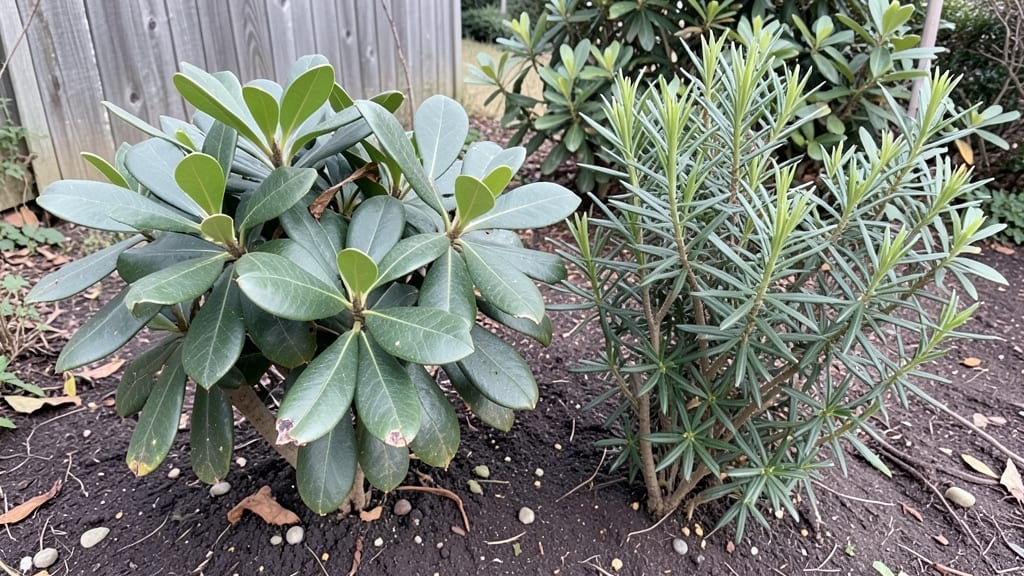
Mastering shrub identification by leaves could spare you my first garden blunder—a neighbor’s holly that mimicked my boxwood until I spotted those telltale sharp-toothed edges and glossy sheen. it away. Now I spot those differences in seconds, and so can you.
The secret lies in four key traits: leaf shape (oval, lance-shaped, or serrated), edges (smooth, jagged, or lobed), texture (leathery or fuzzy), and arrangement (alternate or opposite). A simple magnifying glass helps reveal details like tiny hairs or waxy coatings that narrow it down further.
I’ve narrowed down 20 common shrubs using just these clues.
Once you recognize the patterns, pruning and care become intuitive. Holly’s spiky leaves mean it thrives in full sun with minimal trimming, while boxwood’s dense, rounded leaves signal it prefers shade and shearing.
Mistake one for the other, and you’ll end up with leggy growth or bare patches—something I learned after a very expensive hedge trimmer mishap.
This method works year-round, from spring’s fresh foliage to winter’s bare branches (where bud shapes often reveal the identity). Start with the shrubs in your yard, then expand to new plants—your garden’s mysteries will start solving themselves.
Why Leaf Traits Vary So Widely
Understanding why shrub leaves differ in shape, texture, and arrangement is key to accurate identification. These variations aren’t random—they’re the result of evolutionary adaptations, environmental pressures, and even genetic quirks. Here’s a breakdown of the science behind leaf diversity in shrubs:
Leaves aren’t just for photosynthesis—they’re survival tools shaped by millions of years of natural selection. Here’s how:
- Sunlight Optimization: Shrubs in sunny areas often develop smaller, thicker leaves (like those of Rhododendron) to reduce water loss through transpiration.
In contrast, shade-loving shrubs (e.g., Pieris) grow larger, thinner leaves to maximize light absorption in low-light conditions. - Water Conservation: Desert-adapted shrubs (like Ceanothus) have leathery, waxy leaves or tiny scales to minimize moisture loss.
Even in temperate climates, drought-resistant shrubs (e.g., Cotoneaster) may roll their leaves to create a protective barrier. - Defense Mechanisms: Spiny leaves (common in Pyracantha or Berberis) deter herbivores, while toxic compounds in leaves (like those in Ilex—holly) act as chemical deterrents.
Some shrubs, like Mahonia, even have sharp leaf edges to make chewing difficult.
Pro Tip: 🌡️ If a shrub’s leaves feel thick and rubbery, it’s likely adapted to dry climates. Soft, delicate leaves? It probably thrives in moist, shaded spots.
A shrub’s habitat directly impacts its leaf structure. Climate, soil, and even altitude play critical roles:
- Temperature Zones:
- Cold-hardy shrubs (e.g., Viburnum) often have small, dark green leaves with thick cuticles to resist freezing.
- Tropical or subtropical shrubs (like Murraya) may have smooth, glossy leaves to reflect intense sunlight.
- Soil Nutrients:
- Poor soil? Shrubs like Calluna (heather) develop fine, needle-like leaves to conserve nutrients.
- Rich, moist soil? Shrubs like Hydrangea grow large, broad leaves to support vigorous growth.
- Wind Exposure:
- Coastal shrubs (e.g., Arbutus—strawberry tree) often have small, leathery leaves to reduce wind damage.
- Sheltered shrubs (like Forsythia) may grow larger, softer leaves without needing wind resistance.
Actionable Insight: 🔍 If you’re identifying a shrub in a high-altitude garden, look for smaller, darker leaves—they’re likely adapted to harsher conditions.
Not all leaf differences come from the environment—some are hardwired into a shrub’s DNA:
- Leaf Arrangement (Phyllotaxy):
- Alternate leaves (one per node, like Ligustrum) are common in many shrubs, while opposite leaves (paired at nodes, like Weigela) are a defining trait of specific families.
- Whorled leaves (three or more per node, rare in shrubs but seen in Deutzia) are a genetic oddity.
- Leaf Margins and Venation:
- Serrated edges (e.g., Cornus—dogwood) often indicate a shrub’s need for defense or efficient water flow.
- Pinnate venation (feather-like veins, like in Spiraea) is common in fast-growing shrubs, while palmate venation (hand-like veins, like in Hydrangea) suggests a more robust structure.
- Leaf Lifespan (Evergreen vs. Deciduous):
- Evergreen shrubs (e.g., Juniperus) retain leaves year-round to photosynthesize in winter, often with needle-like or scale leaves to reduce snow damage.
- Deciduous shrubs (e.g., Hamamelis—witch hazel) shed leaves annually to conserve water in dormancy, often regrowing larger, softer leaves in spring.
Key Takeaway: ✨ If a shrub has opposite leaves with serrated edges, it’s likely in the Caprifoliaceae family (like Abelia or Weigela). Alternate leaves with smooth margins? It might be a Rosaceae (like Rosa or Spiraea).
Sometimes, leaf traits change due to external pressures—including human activity and pests:
- Pruning and Trimming:
- Over-pruned shrubs (e.g., Buxus—boxwood) may develop smaller, denser leaves as a stress response.
- Root-bound shrubs (like Ilex in containers) often grow stunted leaves due to limited nutrients.
- Pest and Disease Damage:
- Aphids or mites can cause curled, distorted leaves (common in Rhododendron).
- Fungal infections (like powdery mildew) may lead to spotted or discolored leaves in Hydrangea.
- Herbivory (deer, rabbits) can result in notched or chewed leaves (seen in young Viburnum plants).
Quick Fix: 🛡️ If a shrub’s leaves look unusually deformed, check for pests first—healthy leaves should match the species’ natural traits.
Some shrubs develop unique leaf traits due to geographic isolation, leading to rare or localized species:
- Island Shrubs: Plants like Arbutus menziesii (Pacific madrone) have leathery, evergreen leaves adapted to foggy, coastal climates.
- Mountain Species: Shrubs like Rhododendron ferrugineum (Alpine rosebay) grow small, dark leaves to survive high-altitude UV exposure.
- Endemic Varieties: Some shrubs, like Leucadendron (South African protea relatives), have hairy or silvery leaves to reflect intense African sunlight.
Fun Fact: 🌎 If you spot a shrub with silvery-blue leaves, it’s likely adapted to arid or Mediterranean climates—think Artemisia or Santolina.
Leaf traits aren’t just random—they’re clues to a shrub’s origin, needs, and resilience. By understanding why leaves look the way they do, you can: ✅ Narrow down species based on climate adaptations. ✅ Predict care needs (e.g., drought-tolerant vs. moisture-loving). ✅ Spot abnormalities (like pests or nutrient deficiencies).
Next time you’re identifying a shrub, ask: Does this leaf make sense for its environment? The answer might just lead you to the right name! 🌿
Mastering Leaf ID: Step-by-Step Solutions
Identifying shrubs by their leaves can feel like solving a puzzle—especially when you’re staring at a dense thicket with no labels in sight. But with the right approach, you’ll unlock a foolproof method to decode even the trickiest foliage.
Below, we break down common challenges and provide practical, no-fuss solutions to sharpen your shrub ID skills.
Cause: Many shrubs share overlapping traits (e.g., oval leaves, serrated edges), making them hard to distinguish at first glance.
Solution:
- Zoom in on leaf details 🔥
- Margin madness: Count teeth per inch (e.g., holly has sharp, spiny edges; serviceberry has fine, saw-like serrations).
- Venation vibes: Check vein patterns—smooth and parallel (e.g., boxwood) vs. prominent and branching (e.g., viburnum).
- Underside secrets: Flip the leaf! Some (like rhododendron) have fuzzy or glandular hairs; others (like lilac) are smooth.
- Compare leaf arrangements 🍳
- Alternate vs. opposite: Are leaves staggered (alternate, like boxwood) or paired at nodes (opposite, like privet)?
- Cluster clues: Whorled leaves (3+ at a node) scream mock orange or wintergreen.
- Use a cheat sheet 👨🍳 Download a leaf shape guide (like the one in this article!) and overlay it with your shrub’s features. Pro tip: 💡 Take a photo of the leaf and its stem/bark—context is key!
Prevention:
- Bookmark a plant database (e.g., iNaturalist or USDA Plants) for instant cross-referencing.
- Grow a "test garden" with labeled shrubs to train your eye.
Cause: Pests, disease, or seasonal changes distort leaves, making identification unreliable.
Solution:
- Focus on undamaged growth 🥘
- Look for new shoots or leaves at the tips of branches—they’re least likely to be scarred.
- Bark and buds are your backup! Example: Crape myrtle has peeling bark; dogwood has red stems.
- Reverse-engineer the damage ⏰
- Holes? Likely Japanese beetles (targets roses, lilacs) or leaf miners (serpentine trails = viburnum or privet).
- Yellowing? Check for powdery mildew (white coating = ninebark or hydrangea) or iron deficiency (interveinal chlorosis = azalea).
- Time your visit ✨
- Spring: Leaves are fresh and vibrant.
- Fall: Colors change dramatically (e.g., smoke bush turns fiery red). Avoid winter unless you’re spotting evergreens (like inkberry holly).
Prevention:
- Prune strategically: Trim in late winter/early spring to avoid stressing the shrub mid-season.
- Quarantine new plants for 2 weeks to spot pests early.
Cause: Large shrubs or awkward branches make it hard to gauge leaf size accurately.
Solution:
- Use everyday tools 🔪
- Coin comparison: A dime-sized leaf = boxwood or dwarf yew; a quarter-sized leaf = serviceberry or elderberry.
- Ruler hack: Lay a ruler along the leaf’s edge and snap a photo for reference.
- Estimate with your hand 🎯
- Palm-sized: Oakleaf hydrangea or fothergilla.
- Fingertip to wrist: Viburnum or spirea.
- Smaller than a fingernail: Dwarf lilac or boxwood.
- Note the ratio 📊
- Length to width: A leaf 2–3x longer than wide = willow oak or witch hazel; almost round = holly or mountain laurel.
Prevention:
- Car a mini notebook (or use your phone) to jot down quick sketches of leaf shapes.
- Learn "landmark" shrubs: Memorize 5–10 iconic leaves (e.g., maple-like = smoke bush; needle clusters = juniper) to build confidence.
Cause: Dormant season, recent planting, or dieback leaves you leaf-less.
Solution:
- Inspect the twigs 🌡️
- Bud shape: Pointy = lilac; round = viburnum; scaly = pine (if it’s a conifer).
- Bark texture: Smooth = dogwood; ridged = crape myrtle; peeling = river birch (if it’s a tree-shrub hybrid).
- Check for fruit/seeds 🍎
- Berries: Red = elderberry; black = blackhaw viburnum.
- Capsules: Exploding = spirea; dry and papery = wintergreen.
- Dig deeper (literally) 🏺
- Gently scrape the soil to spot root systems (e.g., rhizomes = bamboo; taproot = honey locust).
Prevention:
- Plant a seasonal ID chart near your garden to reference year-round.
- Take "before" photos in spring/summer for winter ID backup.
- The "Three-Leaf Rule": If a shrub has three leaves per stem, it’s likely a clematis (vine) or toxic oak (avoid!).
Most shrubs have 1–2 leaves per node. - Smell test: Fragrant leaves = mock orange or sassafras; spicy scent = mountain laurel (use gloves—it’s toxic!). - Leaf rub test: Rub a leaf between your fingers—sticky residue = poison ivy (not a shrub, but critical to rule out!).
Frequently asked questions about shrub identification
What are the 3 most important leaf traits to look for when identifying shrubs?
Focus on leaf shape (oval, lance-shaped, or serrated), edge type (smooth, jagged, or lobed), and arrangement (alternate vs. opposite). For example, boxwood has small, opposite leaves with smooth edges, while holly features spiky, alternate leaves with glossy surfaces. These three traits narrow down options quickly.
Can I identify shrubs by leaves in winter when they’re bare?
Yes! Examine bud shapes (pointy for lilac, round for viburnum) and bark texture (smooth for dogwood, peeling for crape myrtle). Evergreens like inkberry holly or juniper also reveal their identity through needle-like or scale leaves. Just avoid winter for deciduous shrubs unless you’re checking for lingering buds or fruit.
Why do some shrubs have fuzzy leaves while others are smooth?
Fuzzy leaves (like rhododendron) often indicate defense mechanisms against pests or drought, while smooth leaves (like lilac) suggest moisture-loving habits. The texture also helps with climate adaptation—hairy leaves reduce water loss in dry areas, while smooth leaves maximize light absorption in shaded spots.
What’s the easiest way to tell boxwood apart from holly?
Boxwood has opposite leaves (paired at nodes) with rounded edges, while holly features alternate leaves with sharp, spiny margins. Also, holly leaves are often glossy and waxy, whereas boxwood leaves feel denser and more leathery. Check for berries too—holly has red berries; boxwood doesn’t.
How do I handle damaged or diseased leaves when identifying shrubs?
Focus on new growth at branch tips, where leaves are least likely to be scarred. If damage is severe, look at bark patterns or bud shapes instead. For pests like powdery mildew (white coating on hydrangea), note the abnormality—it’s a clue, not a dealbreaker. Always compare to healthy reference photos.