
Pruning
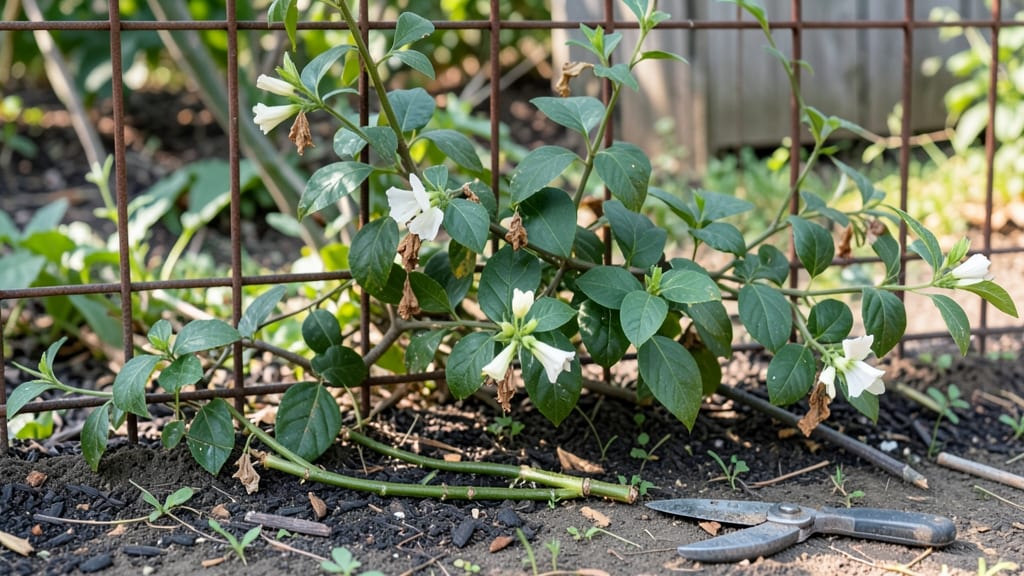
Pruning jasmine shrubs encourages denser foliage and prevents overcrowding by removing overgrown stems and spent blooms after flowering, with late winter or early spring being the ideal window before new growth starts. Always use clean shears to cut at a 45-degree angle just above a leaf node, while avoiding aggressive cuts that weaken the plant.
Jasmine shrubs thrive when pruned at the right time—this timing aligns with their natural growth cycle. 🌿 Cutting back in late winter or early spring, just before buds swell, helps the plant redirect energy to new shoots rather than supporting weak or leggy growth.
Over-pruning in summer can stress the plant, while fall cuts risk exposing it to winter damage before it hardens off. Think of it as giving your jasmine a fresh start before its active growing season kicks in.
For best results, focus on removing one-third or less of the plant's total growth at once. This maintains its shape while preventing shock. Always disinfect your shears between cuts to avoid spreading disease—jasmine is susceptible to fungal issues if tools aren't clean.
If you notice yellowing leaves or bare spots, those are your cues to target specific areas rather than doing a blanket trim.
💡 In This Article
- Best Pruning Times for Jasmine Shrubs
- Step-by-Step Jasmine Shrub Pruning Guide
Best pruning times for jasmine shrubs
Jasmine shrubs enter their most vulnerable state in fall, when temperatures drop and the plant begins preparing for dormancy. Pruning during this season forces the plant to produce fresh growth that won't harden off before winter, leaving tender new shoots exposed to frost damage.
The ideal window opens in late winter (February-March in most climates), when the plant is still dormant but just days away from breaking dormancy—this timing lets you shape the plant without triggering excessive stress.
Here's what's happening biologically: When you prune in late winter, you're removing old, weak stems while leaving the plant's energy reserves intact. The 4-6 week lead time before active growth begins allows wounds to callus over, reducing disease risk.
In contrast, summer pruning (June-August) triggers immediate regrowth that competes with the plant's energy stores, often resulting in leggy, sparse foliage. Think of it like trimming your hair before a big event—you want to do it when your hair is healthy, not when it's already stressed from heat or humidity.
The science of plant recovery shows that jasmine shrubs heal fastest when pruned during their dormant phase, when metabolic activity slows to about 10-20% of summer levels. This reduced activity means the plant can redirect resources to wound repair rather than supporting active growth.
For example, a 2-inch diameter cut in winter will heal completely by spring, while the same cut in summer might take 6-8 weeks—and during that time, the plant is more susceptible to pests and fungal infections.
What most people don't realize is that jasmine's flowering cycle directly impacts pruning timing. After blooms fade (typically in late spring), the plant enters a period where it's storing energy for next year's flowers. Cutting back after flowering removes potential bloom sites for the following season.
The key is to wait until after the last frost but before new buds form—usually 4-6 weeks after flowering ends. This gives the plant time to recover while still allowing it to establish next year's growth pattern.
There's one exception to these rules: If your jasmine becomes severely overgrown (more than 3 feet taller than desired), you may need to do two light prunings—one in late winter and a second in early summer.
The summer trim should be minimal (no more than 10-15% of total growth) and focused only on shaping, never on removing more than 1/3 of any single stem. This staged approach prevents shock while still bringing the plant back to a manageable size over time.
For those in warmer climates (USDA zones 9-11), the timing shifts slightly to early spring (March-April), as the plant may stay semi-dormant through winter. The key indicator is the leaf buds—when they're swollen but haven't yet opened, that's your perfect pruning window.
In these regions, you might even get away with light pruning in early fall (September-October), but only if temperatures stay above 50°F at night and you avoid removing more than 20% of total foliage.
Remember this golden rule: Always prune when the plant is resting but ready to wake up. This timing ensures you're working with the plant's natural rhythms rather than against them. 🌸