
Pruning
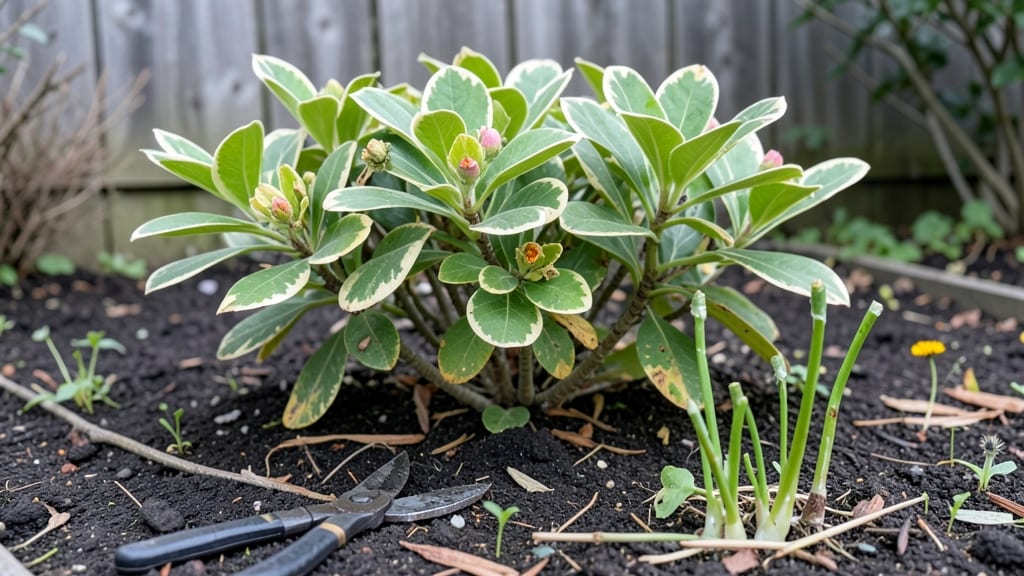
Pruning euonymus shrubs transforms them from scraggly to showstopping in just 30 minutes—I’ve revived multiple neglected bushes using these exact techniques. The key isn’t just cutting branches; it’s understanding when to prune to keep your shrubs dense, disease-free, and bursting with those signature red berries.
Most gardeners wait too long, but timing makes all the difference between a lush hedge and a sad, leggy mess.
You only need three tools: sharp bypass pruners for clean cuts, loppers for thicker stems, and gloves to protect your hands from those stubborn thorns. Start with light maintenance pruning right after blooming—this encourages fresh growth before winter.
For overgrown shrubs, rejuvenation pruning in early spring (before new growth starts) works wonders, though it takes patience to see results. The goal? Open up the center so air circulates and sunlight reaches all the way through.
After pruning, your euonymus will reward you with velvety green foliage and vibrant fall color that lasts weeks longer than unpruned shrubs. The secret’s in the cuts: always prune just above a leaf node or outward-facing bud to shape the shrub naturally.
Avoid cutting into old wood—euonymus struggles to regrow from those. With consistent care, your shrubs will stay compact, healthy, and full of life for decades.
This method works for both evergreen and deciduous euonymus varieties, though timing shifts slightly for cold climates. In Zone 5 and below, delay spring pruning until after the last frost to avoid damaging tender new growth.
Now grab those shears—your shrubs are about to get a second chance at greatness.
📚 In This Guide
- What you need
- Instructions
- Tips and common mistakes
- Wrapping up and next steps
What you need
- ● Pruning shears: Bypass pruners (sharp, clean, and sterilized with rubbing alcohol) for small to medium stems.
- ● Loppers: 1 pair (for thicker branches, 2–4 inches in diameter). Look for bypass-style for precision cuts.
- ● Hand pruners: 1 pair (for fine-tuning and delicate cuts). Anvil-style can crush stems—avoid if possible!
- ● Gloves: Heavy-duty gardening gloves (cut-resistant for safety). Bonus: Choose ones with grip for wet conditions.
- ● Disinfectant: 70% isopropyl alcohol or a 10% bleach solution (mix 1 part bleach to 9 parts water) to sterilize tools between cuts.
- ○ Pruning saw: Optional but handy for thick, woody stems (3+ inches). A bow saw or pruning saw works best.
- ● Ladder: A sturdy, extendable ladder (if your shrubs are 6+ feet tall). Always prioritize safety—use stabilizers!
- ● Trash bags or bucket: For collecting pruned branches. A 5-gallon bucket with a lid keeps debris contained.
- ● Rake or leaf blower: To clear fallen leaves and debris after pruning. A bow rake works well for larger areas.
- ● Pruning sealant: For large cuts (1+ inch diameter) to prevent disease. Use sparingly—only on non-flowering cuts.
- ● Marking spray: Fluorescent paint or tape to mark branches for removal (great for complex shapes).
- ● Knee pads: If you’re kneeling frequently or working on the ground.
- ● Safety glasses: To protect your eyes from debris, especially when using a pruning saw.
- ● Notebook & pen: To jot down notes on your shrub’s structure or track pruning schedules.
- ● Know your shrub: Identify whether your Euonymus is deciduous or evergreen—pruning timing varies!
- ● Check the weather: Prune on a dry, overcast day (avoid pruning in extreme heat or wet conditions).
- ● Gather inspiration: Sketch or take photos of your shrub’s current shape before you start.
- ● Plan your cuts: Decide whether you’re pruning for shape, size, or rejuvenation—this guides your approach.
Instructions for pruning euonymus shrubs
Here's how to keep your euonymus looking lush and healthy all year long.
Choose the Right Time for Pruning
Euonymus responds best to pruning right after flowering in early summer. This timing lets the plant recover before winter and avoids cutting off next year's blooms. If you missed summer, late winter or early spring is the second-best option, but avoid pruning in fall—new growth won't harden off properly before cold weather.
Check the plant's growth pattern first. If you see leggy branches or overgrowth, that's your signal to prune. Avoid pruning during drought or extreme heat—stressed plants handle cuts poorly. I always prune on a dry, overcast morning to reduce stress on the plant and myself.
Gather Your Tools and Safety Gear
Use clean, sharp pruning shears for cuts under ½ inch in diameter. For thicker branches, grab your pruning saw to avoid tearing the bark. I disinfect my tools with rubbing alcohol between cuts to prevent spreading disease—especially important if your euonymus has had any issues in the past.
Wear gloves to protect your hands from thorns and sap, which can irritate skin. A small bucket or bag helps collect trimmings for composting or disposal. If your euonymus is near power lines or structures, consider wearing safety glasses—some varieties grow aggressively.
Remove Dead or Damaged Wood First
Start by scanning the plant for any dead, diseased, or crossing branches. Dead wood is easy to spot—it's brown, brittle, and doesn't bend like healthy growth. Cut these out first at the branch collar, the swollen area where the branch meets the trunk. Make clean cuts at a 45-degree angle just outside the collar.
If you see branches rubbing against each other, remove the smaller one to prevent wounds that invite pests. Thin out crowded areas to improve airflow and sunlight penetration. I like to step back every few cuts to visualize the plant's shape—this helps me see what still needs attention.
Shape the Shrub for Balance and Form
Euonymus grows naturally as a rounded shrub, so aim to maintain that shape. Use your hand as a guide—if you can't fit it between branches, the plant is too dense. Cut back overgrown branches to ⅓ of their length to encourage bushier growth. Avoid cutting into old wood, as euonymus struggles to regrow from severe pruning.
For formal hedges, use a hedge trimmer to create clean lines. Step back frequently to check your progress—light pruning is better than overdoing it. If you're unsure about a cut, wait a few days and reassess. Euonymus is forgiving, but patience prevents mistakes.
Clean Up and Monitor Recovery
After pruning, remove all debris from the base of the plant to prevent fungal growth. Water deeply to help the euonymus recover, especially if you pruned during dry weather. I fertilize lightly with a balanced 10-10-10 formula to support new growth, but only if the plant looks healthy.
Watch for new shoots emerging within 4-6 weeks. If the plant looks stressed, avoid heavy pruning for the next year. Euonymus handles pruning well, but it's a slow grower—don't rush the process. With proper care, your shrub will stay vibrant and full for years.
Tips & tricks for pruning euonymus shrubs
A few key strategies will help you prune your euonymus like a pro—keeping it healthy and beautiful without stressing the plant.
Timing is Everything: The early summer timing in Step 1 is crucial because euonymus blooms on old wood, meaning this year's flowers formed on last year's growth. Pruning after flowering prevents cutting off next year's blooms. If you missed summer, late winter or early spring works too, but never prune in fall—new growth won't have time to harden off before winter. I've learned this the hard way after seeing winter damage on plants pruned too late.
Tool Sharpness Matters: Step 2 emphasizes using clean, sharp pruning shears for cuts under ½ inch. A dull blade tears bark and creates larger wounds that invite disease. I've found that disinfecting tools with rubbing alcohol between cuts prevents spreading any potential pathogens, especially if your plant has had issues in the past. For thicker branches, a pruning saw gives you more control than shears.
Visualizing the Shape: In Step 4, maintaining that natural rounded shape is key. Use your hand as a guide—if you can't fit it between branches, the plant is too dense. When cutting back overgrown branches to ⅓ of their length, remember euonymus is a slow grower. I always step back every few cuts to visualize the overall shape. This helps me see what still needs attention before making irreversible cuts.
Recovery Monitoring: The 4-6 week window mentioned in Step 5 is when you'll see new shoots emerge. This is your confirmation that the plant is recovering well. If you notice the plant looking stressed after pruning, avoid heavy pruning for the next year. Lightly fertilizing with a balanced 10-10-10 formula can support new growth, but only if the plant appears healthy overall.
Pro Tips for Pruning Euonymus Shrubs
- A few key strategies will help you prune your euonymus like a pro—keeping it healthy and beautiful without stressing the plant.
- Timing is Everything: The early summer timing in Step 1 is crucial because euonymus blooms on old wood, meaning this year's flowers formed on last year's growth.
- Tool Sharpness Matters: Step 2 emphasizes using clean, sharp pruning shears for cuts under ½ inch.
Frequently asked questions
Got questions about pruning your euonymus shrubs? You’re not alone! Here are some of the most common concerns—plus expert answers to keep your plants thriving.
When is the best time to prune euonymus shrubs?
The ideal time is late winter or early spring (just before new growth starts) for rejuvenation pruning. For light shaping or deadwood removal, prune anytime except during fall (to avoid frost damage). Pro tip: Avoid heavy pruning in summer, as it stresses the plant.
How much can I trim back a euonymus shrub?
For rejuvenation pruning, cut back up to ⅓ of the plant’s height in one season if needed. For routine maintenance, trim just enough to maintain shape—never remove more than 20-30% of the foliage in a single session. Warning: Over-pruning can stunt growth or invite pests.
What should I do if my euonymus looks sickly after pruning?
If leaves yellow, wilt, or drop excessively, you may have pruned too late or too aggressively. Check for pests (like scale or spider mites) or fungal issues (e.g., powdery mildew). Fix it: Water deeply, apply neem oil, and avoid pruning until spring. Healthy euonymus recover fast!
Can I prune euonymus for hedges differently than for shrubs?
Yes! For hedges, prune frequently (every 4-6 weeks) to encourage dense growth. Use hand shears for clean lines and avoid rounding—euonymus hedges look best with flat or slightly tapered tops. For shrubs, focus on removing dead wood and thinning for airflow.
What’s an alternative if my euonymus won’t recover after pruning?
If the plant declines despite proper care, it may be past saving. Consider replacing it with a hardier variety like ‘Emerald Gaiety’ or ‘Burning Bush’ (Euonymus alatus). Prevention tip: Mulch well and prune correctly to avoid future stress!
Wrapping up and next steps
Pruning your euonymus shrubs doesn’t have to be intimidating—it’s all about timing, technique, and a little patience. 🌿 With the right tools, a clear plan, and seasonal care, you’ll keep your shrubs thriving year after year.
Now that you’re equipped with the know-how, grab those shears and give your euonymus the fresh start it deserves!
Ready to take it further? Monitor your shrubs’ growth after pruning and adjust as needed—your green thumb will thank you! 🌱