
Shrubs
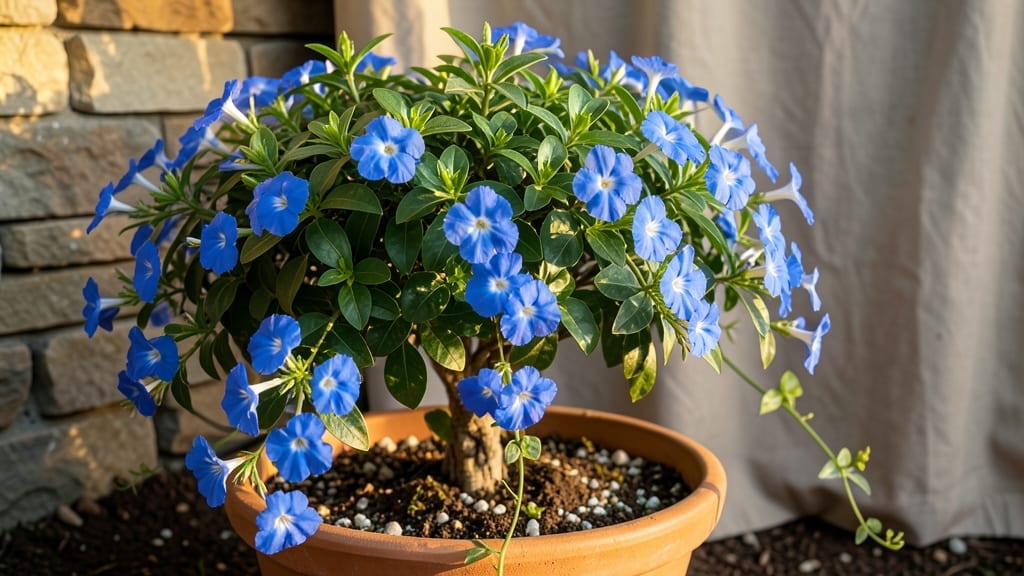
Plumbago Imperial Blue flowering shrub turns your garden into a sky-blue canvas with zero effort. 🌿 I’ve grown this drought-tolerant beauty for years, and it thrives where other plants wilt—my dry, sunny patio proves it. The secret?
It’s a low-maintenance powerhouse that blooms nonstop if you give it three basics: full sun, well-draining soil, and occasional water. This shrub isn’t picky about soil as long as it drains well—sandy or loamy works.
Plant it in spring after the last frost, and within weeks, you’ll see those signature blue flowers appearing. It handles heat like a champ, making it perfect for hot climates where other plants struggle.
Prune lightly after flowering to keep it compact, and watch it reward you with vibrant blooms all season. Imagine a cascading border of blue that never fades, or a hanging basket spilling over with color. The flowers attract butterflies too, turning your space into a living pollinator magnet.
It’s the kind of plant that makes neighbors ask, “What’s that?”—and then want one for themselves. Whether you’re filling a container, lining a fence, or adding height to a border, Plumbago Imperial Blue delivers drama with minimal care. Let’s get yours thriving!
📚 In This Guide
- What you need
- Instructions
- Tips and common mistakes
- Wrapping up and next steps
What you need
- ● Plumbago imperial blue plant: 1 nursery-grown shrub (3–5 gallons, 12–18" tall) OR
- ● Seeds (1–2 packets, 50+ seeds per packet) OR
- ● Rooted cuttings (3–5 healthy stems, 4–6" long)
- ● Well-draining soil: Native soil amended with compost (25–30%) OR
- ● Cactus/succulent mix (5 gallons, pre-mixed)
- ● Pot or planting site: Container (5–7 gallons, with drainage holes) OR
- ● Sunny, sheltered garden bed (6' x 6' minimum for mature shrub)
- ● Fertilizer: Slow-release granular fertilizer (10-10-10, 1 lb) or organic options like fish emulsion (2–3 tbsp).
- ● Watering can or hose: With a gentle spray nozzle for seedlings.
- ● Pruning shears: Sharp, sterilized (for shaping and propagation).
- ● Mulch (1–2" layer of gravel or bark to retain moisture).
- ● Epsom salt (1 tbsp/month during blooming season for magnesium boost).
- ● Garden gloves (to protect hands from thorns).
- ● Stakes or trellis (if training as a climbing shrub).
- ● Grow lights (for indoor seed-starting).
Step-by-step guide to planting and caring for Plumbago imperial blue
This hardy shrub thrives with minimal fuss—here’s how to get those stunning blue blooms established for years.
🪴 Step 1: Choose the Perfect Planting Spot
Plumbago Imperial Blue loves full sun to partial shade, so pick a location with at least 6 hours of direct sunlight daily. A south- or west-facing spot works best, but it tolerates light shade if you live in a hot climate. Avoid heavy, clay soil—this shrub hates soggy roots.
Amend the soil with compost or well-rotted manure to improve drainage. Dig a hole twice as wide as the root ball but only as deep. The top of the root ball should sit 1 inch above ground level—this prevents water from pooling around the stem.
🌱 Step 2: Plant with Proper Spacing and Support
Space plants 3-4 feet apart to allow airflow and prevent disease. Plumbago grows vigorously, so give it room to spread. If planting in a container, use a pot at least 18 inches deep and wide with drainage holes.
Water deeply after planting to settle the soil around the roots. Mulch with 2-3 inches of organic mulch (like wood chips) to retain moisture and suppress weeds. I always add a balanced fertilizer (10-10-10) at planting time to give it a nutrient boost.
☀️ Step 3: Water Wisely for Drought Tolerance
Once established, Plumbago Imperial Blue is famously drought-tolerant, but young plants need consistent moisture. Water deeply once a week during the first growing season, soaking the soil to 12 inches deep. Let the top 2 inches of soil dry out between waterings—this encourages strong root growth.
After the first year, you can reduce watering to every 2-3 weeks, unless your area experiences extreme heat or drought. Overwatering is the biggest mistake—this shrub thrives on neglect once roots are deep.
✂️ Step 4: Prune for Bushier Growth and Blooms
Prune in early spring before new growth appears. Cut back one-third of the oldest stems to encourage fresh, vigorous growth. This also keeps the shrub compact and prevents legginess. Deadhead spent blooms throughout the season to promote continuous flowering.
If your Plumbago gets too woody, do a hard prune in late winter, cutting back to 6-8 inches above the ground. It may take a season to recover, but it’ll bounce back with even more blooms. Just avoid heavy pruning in fall—new growth won’t harden off before winter.
🌿 Step 5: Protect and Maintain for Long-Term Beauty
In cold climates, Plumbago is often grown as an annual or dug up and overwintered indoors. If you live in USDA zones 8-11, it’s perennial and will return year after year with minimal care. In colder zones, cut back stems to 4-6 inches in fall and mulch heavily to protect roots.
Fertilize lightly in early spring with a slow-release granular fertilizer. Too much nitrogen leads to leafy growth at the expense of flowers—we want those stunning blue blooms! Watch for pests like spider mites, but Plumbago is generally pest-resistant if kept healthy.
Tips & tricks for perfect Plumbago imperial blue care
Took me years of trial and error to figure out these game-changers for keeping Plumbago Imperial Blue thriving with those gorgeous blue blooms.
Sunlight Secret: While the instructions mention 6 hours of sunlight, I’ve found that in hot climates, morning sun paired with afternoon shade actually produces more blooms. Watch your plants—they’ll tell you when they’re getting too much heat stress by wilting slightly in the afternoon. If this happens, consider moving them to a spot with more shade during peak heat hours.
Soil Strategy: The instructions mention amending with compost or well-rotted manure, but I’ve had the most success with a 50/50 mix of native soil and perlite. This creates the perfect drainage while still holding enough moisture for those early growth stages. For container plants, I add a handful of sand to the mix—this helps prevent root rot in those 18-inch pots.
Watering Wisdom: That 12-inch deep watering in Step 3 is crucial, but I’ve learned to check soil moisture with my finger before watering. Stick your finger about 2 inches down—if it feels dry, it’s time to water. This simple check prevents both overwatering and underwatering, especially during those first few weeks when roots are establishing. Remember, once established, these plants practically thrive on neglect!
Pruning Pro Tip: When doing that early spring prune to cut back one-third of oldest stems, I always look for stems that are woody and brown at the center. These are the ones to remove—they won’t produce new blooms and just take energy from healthier growth. Save the green stems with buds for your pruning shears, and you’ll get the most vibrant blooms all season.
Pro Tips for Plumbago Imperial Blue Flowering Shrub
- Took me years of trial and error to figure out these game-changers for keeping Plumbago Imperial Blue thriving with t...
- Sunlight Secret: While the instructions mention 6 hours of sunlight, I’ve found that in hot climates, morning sun pai...
- Soil Strategy: The instructions mention amending with compost or well-rotted manure, but I’ve had the most success wi...
Frequently asked questions
Got questions about growing and caring for your Plumbago imperial blue? Here are some of the most common ones—plus expert tips to keep your shrub thriving!
How fast does Plumbago imperial blue grow, and how big will it get?
The Plumbago imperial blue grows at a moderate pace, adding about 12–24 inches per year. With proper care, it typically reaches 6–10 feet tall and 4–6 feet wide. Pruning helps control its size and encourages bushier growth. In ideal conditions, it can even spread wider over time!
When is the best time to plant Plumbago imperial blue?
Plant your Plumbago imperial blue in early spring or fall for the best results. This gives the roots time to establish before extreme summer heat or winter frost. Avoid planting in mid-summer, as the shock of transplanting can stress the shrub in hot weather.
How often should I water my Plumbago imperial blue?
Once established, Plumbago imperial blue is drought-tolerant, but young plants need regular watering (1–2 times per week) for the first year. After that, water deeply but infrequently—about every 2–3 weeks—unless your area experiences extreme heat or drought. Overwatering can lead to root rot!
Can Plumbago imperial blue survive cold winters?
This shrub is hardy in USDA Zones 9–11 and may struggle in colder climates. If you live in Zone 8 or below, grow it as an annual or bring it indoors during winter. In milder zones, a light mulch can protect roots from freezing temperatures.
What are some alternatives if Plumbago imperial blue isn’t available?
If you’re looking for drought-tolerant, blue-flowering shrubs, consider these great alternatives:
- Salvia ‘May Night’ – Deep purple-blue blooms, heat-loving, and low-maintenance.
- Lantana ‘New Gold’ – Yellow flowers but thrives in similar conditions and attracts pollinators.
- Agapanthus – Striking blue flower clusters, though slightly less drought-tolerant.
- Ceratostigma plumbagoides – A ground cover with blue flowers and great fall color.
Why aren’t my Plumbago imperial blue flowers opening?
If your shrub isn’t blooming, check these common issues:
- Not enough sunlight – Ensure it gets full sun (6+ hours daily).
- Over-fertilizing – Too much nitrogen promotes leafy growth over flowers. Use a balanced, low-nitrogen fertilizer instead.
- Pruning at the wrong time – Avoid heavy pruning after mid-summer, as new growth may not have time to bloom.
- Stress from transplant shock – Give newly planted shrubs time to adjust before expecting blooms.
Wrapping up and next steps
The Plumbago Imperial Blue is a stunning, low-maintenance shrub that brings effortless beauty and drought resilience to any garden. With its vibrant blue blooms and adaptability, it’s perfect for both seasoned gardeners and beginners alike—just ensure it gets the right sunlight and well-draining soil.
Ready to transform your outdoor space? Start by gathering your supplies and plant with confidence!
- 🌱 Next step: Pick your spot, prep the soil, and enjoy the year-round charm of this easy-care beauty!