
Shrubs
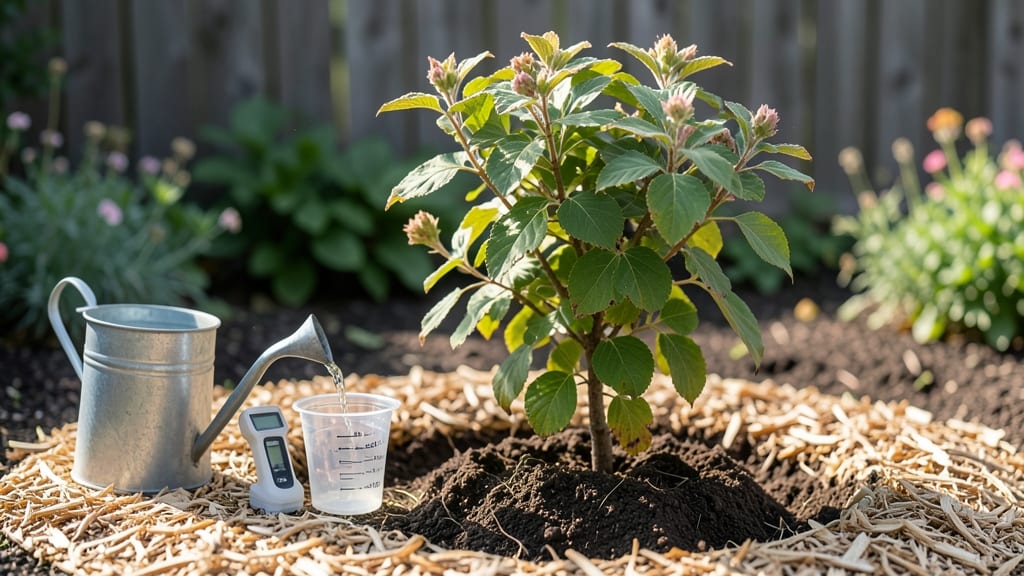
Newly planted shrubs should be watered deeply every 1-3 days in their first weeks to help roots establish—too much or too little can spell disaster for your 🌿 investment.
Picture this: you’ve just tucked those expensive shrubs into the ground, dreaming of lush foliage, only to watch them wilt or develop root rot because you guessed wrong on the watering schedule.
The good news? A few simple adjustments based on soil, climate, and shrub type can turn that guesswork into a foolproof routine.
Most gardeners overcomplicate watering, but the key is deep soaks—not just a quick sprinkle. I’ll break down exactly how often to water based on root depth, plus the telltale signs your shrubs are thirsty (or drowning) so you can adjust on the fly.
By the end, you’ll know when to back off in summer heat, how mulch saves you time, and why morning watering beats evening—no more second-guessing, just thriving shrubs that stick around for years.
Deep soak watering schedule for new shrubs by root depth (with visual guide)
Newly planted shrubs face their biggest challenge in the first year: establishing a strong root system. A deep soak watering schedule tailored to their root depth ensures they get enough moisture without drowning.
Shallow-rooted shrubs like hydrangeas need frequent, light watering, while deep-rooted varieties such as lavender thrive with less frequent but thorough watering.
Understanding your shrub’s root depth is key. Most shrubs develop roots 12-18 inches deep within the first year, but some, like boxwoods, stay shallow. The goal? Water deeply enough to encourage roots to grow downward, not just spread outward. This method also conserves water and prevents root rot.
Here’s how to perform a proper deep soak: Water until the soil is 6-8 inches deep—about 1-2 gallons per plant for small shrubs, up to 5 gallons for mature-sized plants.
Use a soil probe or your finger to check moisture levels. If the soil feels dry at 3 inches deep, it’s time to water again.
Climate plays a huge role in adjusting your schedule. In hot, dry climates, shallow-rooted shrubs may need watering daily during the first month, while cool, humid regions can stretch watering intervals to every 5-7 days.
Always check the top 2 inches of soil—if it’s dry, it’s time to water.
Mulching is a game-changer for water retention. Apply 2-3 inches of organic mulch (like shredded bark or straw) around the base of your shrubs, but keep it 6 inches away from the trunk to prevent rot.
Mulch reduces evaporation by up to 30%, meaning your shrubs stay hydrated longer between waterings.
Seasonal adjustments are crucial. In spring and fall, when temperatures are moderate, you can follow the schedule closely. But during summer heatwaves, increase frequency by 20-30% and water early in the morning to reduce evaporation. Avoid watering at night, as damp foliage invites fungal diseases.
Signs of underwatering include wilting leaves, crispy leaf edges, and soil pulling away from the pot (if potted). Overwatering shows as yellowing leaves, mushy stems, or a sour smell from the soil. If you spot these, adjust your schedule immediately—consistency is more important than strict timing.
For container-grown shrubs, the rules change slightly. Potted plants dry out faster, so check soil moisture daily in extreme heat. Use self-watering pots or add a moisture meter to track levels accurately. Drainage holes are non-negotiable—no standing water at the bottom!
Once your shrubs reach 12 months old, they’ll need 30-50% less water as their roots establish deeper. Gradually reduce frequency over 2-3 months to avoid shocking the plant. By year two, most shrubs only need deep watering every 1-2 weeks, depending on the season.
Remember, every garden is unique. Combine these guidelines with your local climate, soil type, and shrub species to create the perfect watering routine. With patience and consistency, your newly planted shrubs will thrive and reward you with years of lush growth. 🌿
Signs your new shrubs need water (and when to adjust your schedule)
Newly planted shrubs rely on you to strike the perfect balance—too little water and their roots struggle to establish, while too much can suffocate them. The key is learning how your shrubs communicate their needs through subtle (and not-so-subtle) signs.
I’ve spent years watching my hydrangeas and boxwoods wilt dramatically when thirsty, only to bounce back after a deep drink. These visual cues will help you adjust your watering schedule before damage occurs.
Start by checking the soil moisture 1-2 inches below the surface. Stick your finger in—if it feels dry, it’s time to water. Young shrubs with shallow root systems (like azaleas) need more frequent checks, while deeper-rooted varieties (such as lilacs) can go longer between waterings.
Pay attention to how quickly your soil drains; clay holds moisture longer than sandy loam, meaning you’ll need to water less often.
⚠️ How Often Should Newly Planted Shrubs Be Watered?
First 2 weeks: Water every 1-2 days (deep soak, 1-2 gallons per shrub). Weeks 3-6: Reduce to every 3-5 days if soil stays moist. After 2 months: Most shrubs need water every 7-14 days, depending on weather. Adjust for heatwaves—water daily if temps exceed 90°F.
Yellowing leaves are often the first warning sign of underwatering, but they can also indicate overwatering if the soil feels soggy. Look for crispy leaf edges or leaves that curl inward—these are classic thirst signals.
My juniper shrubs always show this when they’re parched, and a good soak revives them within days. For overwatered shrubs, watch for yellowing leaves with mushy stems or a foul odor from the soil, which means root rot is setting in.
Seasonal changes demand adjustments to your routine. In summer heat, increase watering frequency to every 2-3 days and water in the early morning to reduce evaporation. During fall, taper off to weekly waterings as shrubs prepare for dormancy.
In winter, most shrubs need minimal water—only enough to prevent soil from freezing solid. I’ve learned this the hard way with my camellias, which suffered frost damage after I kept them too wet in December.
Don’t ignore the weather forecast—a week of drought conditions can dry out soil faster than usual. If rain is predicted, hold off on watering to avoid wasting resources. Conversely, after a heavy downpour, skip your scheduled watering unless the ground is bone-dry.
Use a moisture meter for accuracy, especially if you’re unsure whether your shrubs got enough natural hydration. I keep one handy for my roses, which love deep, consistent moisture but hate soggy feet.
Pro tip: Mulch around your shrubs to lock in moisture and regulate soil temperature. A 2-3 inch layer of organic mulch (like shredded bark) can cut your watering needs by up to 30%.
I’ve seen this work miracles with my hydrangeas—they stay hydrated longer, and I spend less time fussing over water schedules. Pair mulch with deep watering sessions (soaking the soil until water runs out the bottom of the root zone) to encourage roots to grow deeper and become more resilient.
Trust your observations over rigid schedules. Every garden is unique—your soil type, microclimate, and shrub species will dictate the perfect rhythm. Start with the guidelines, but stay flexible. Within a few months, you’ll recognize the subtle cues your shrubs give you, and watering will feel like second nature.
That’s when you’ll see them truly thrive—lush, vibrant, and full of life.