
Pruning
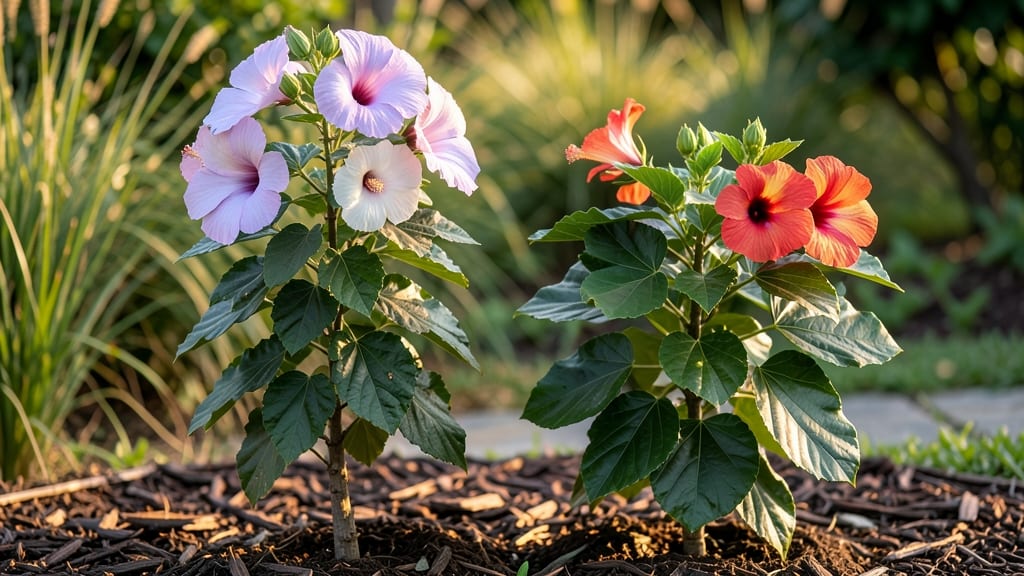
Whether hibiscus grows as a shrub or tree depends entirely on the variety, with temperate types like Hibiscus syriacus typically forming dense, multi-stemmed shrubs reaching 8–12 feet, while tropical varieties such as Hibiscus rosa-sinensis can develop into single-trunk trees up to 25 feet tall with proper support.
Hibiscus plants don't follow a one-size-fits-all growth pattern—their form is shaped by both genetics and growing conditions. 🌿 For example, the hardy Hibiscus syriacus naturally grows as a shrub with multiple woody stems, while tropical Hibiscus rosa-sinensis develops a single, sturdy trunk when given enough space and warmth.
Even within the same species, heavy pruning can encourage bushier growth, while minimal trimming allows them to stretch taller. The key difference lies in their native climates: cold-hardy varieties stay compact, while tropical species reach for the sky when conditions are ideal.
What many gardeners don't realize is that even "tree" hibiscus can be trained as shrubs through strategic pruning—simply cutting back the main stem encourages lateral branching. Conversely, shrub varieties left unpruned may eventually develop a more tree-like appearance over time.
This flexibility makes hibiscus incredibly adaptable to different garden designs, from hedges to specimen plants. The secret? Understanding your variety's natural tendencies and working with—not against—them.
💡 In This Article
- Botanical Classification: Hibiscus as Shrub vs. Tree
- Best Hibiscus Varieties for Shrub vs. Tree Growth
Botanical classification: hibiscus as shrub vs. tree
The core distinction between hibiscus shrubs and trees lies in their stem structure and growth patterns. Shrub varieties like Hibiscus syriacus develop multiple woody stems from the base, creating a dense, bushy form with lateral branches forming within 2-3 feet of the ground.
This multi-stemmed structure is a survival adaptation for temperate climates, where cold winters would kill a single trunk. 🌱 Meanwhile, tree-like hibiscus such as Hibiscus rosa-sinensis typically produce a single, sturdy main stem that can grow 10+ feet before branching occurs, mimicking the growth habit of small tropical trees.
What determines whether a hibiscus grows as a shrub or tree? The answer lies in two key factors: genetics and environmental conditions. Cold-hardy hibiscus naturally develop shrub-like growth due to their need for multiple stems to survive winter dieback.
In contrast, tropical hibiscus prioritize vertical growth to reach sunlight in dense canopies.
Even within the same species, pruning practices can dramatically alter growth form—heavy annual pruning of a tree hibiscus will force it to branch lower, while minimal pruning of a shrub variety may allow it to develop a more tree-like single trunk over 5-10 years.
The botanical term for this growth variation is habit, referring to the plant's natural growth pattern. Shrub hibiscus exhibit a deciduous woody habit with multiple stems, while tree hibiscus show a semi-evergreen habit with a dominant central leader.
This distinction becomes particularly visible in their flowering patterns: shrub varieties often produce flowers along multiple stems simultaneously, while tree hibiscus typically flower from the top downward.
The leaf arrangement also differs—shrub leaves tend to be more evenly distributed along stems, while tree hibiscus leaves cluster near the ends of branches.
Consider these specific examples: The dwarf hibiscus (Hibiscus moscheutos) typically stays under 4 feet tall with multiple stems, while the giant hibiscus (Hibiscus tiliaceus) can reach 20-30 feet with a single trunk in tropical conditions.
Even more fascinating is how climate influences this classification—some hibiscus species grown in containers may develop shrub-like growth regardless of their natural tree habit, demonstrating how environmental factors can override genetic tendencies. This plasticity is why hibiscus can adapt to everything from formal hedges to tropical landscapes.
At the cellular level, the difference comes down to meristem activity. Shrub hibiscus have more active lateral meristems (growth points along stems), while tree hibiscus concentrate growth at the apical meristem (tip of the main stem).
This biological difference explains why pruning a tree hibiscus below 1/3 of its height will trigger bushier growth by activating dormant lateral buds. Understanding these growth mechanisms allows gardeners to intentionally shape hibiscus plants to fit their desired landscape design, whether as a compact hedge or a statement tree.
One often-overlooked factor is the plant's root system. Shrub varieties develop extensive fibrous root systems that spread outward, supporting multiple stems. Tree hibiscus, however, develop a deeper, more concentrated taproot system that anchors their single trunk.
This root structure difference affects both water needs and transplanting success—shrub types recover better from division, while tree hibiscus establish more slowly when transplanted but provide greater stability once mature. 🌳