
Shrubs
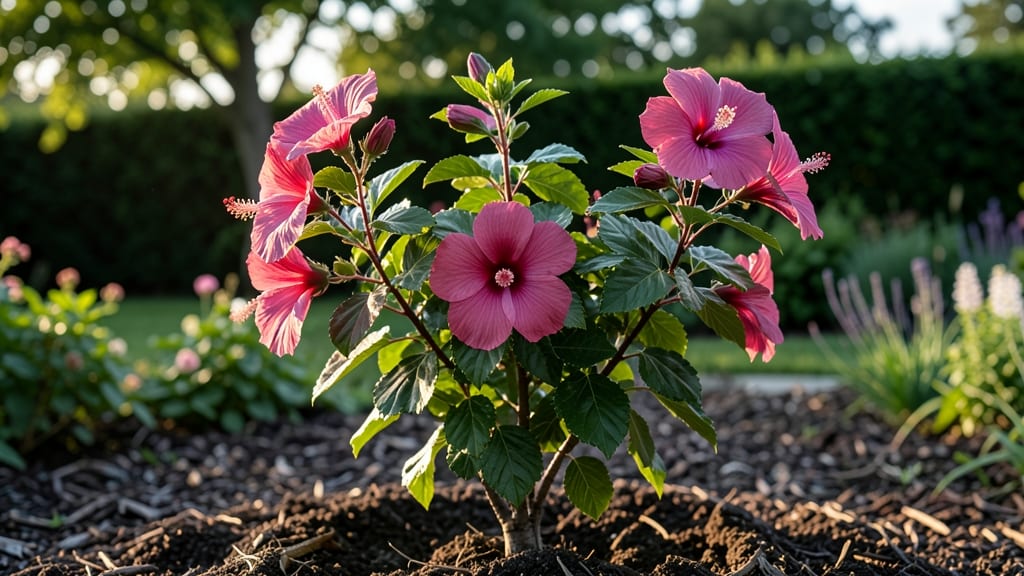
Growing flowering shrub hibiscus means bold, tropical blooms that last all season—if you prune right. ✨ I’ve battled leggy stems and sparse flowers until I learned the secret: aggressive pruning in late winter, when dormant buds hide just above the leaf nodes.
The thorns? Most modern varieties are thorn-free, so you’ll only get scratches from overzealous branches.
The key to year-round blooms starts with full sun (6+ hours daily) and well-draining soil—think sandy loam mixed with compost. Water deeply but let the top 2 inches dry between soakings; soggy roots mean fewer flowers.
Feed with a balanced fertilizer (10-10-10) every 6 weeks during growing season, but cut back in winter to force spring blooms.
After pruning, your hibiscus will reward you with glossy new growth within weeks, followed by clusters of blooms that rival tropical gardens. The flowers—deep reds, pinks, or whites—last just one day but open continuously, creating a nonstop show.
Even in colder zones (down to USDA 7), with winter protection, they’ll keep blooming.
For advanced gardeners, try topiary training or propagating cuttings in water—both work surprisingly well. Beginners should focus on pruning timing (after last frost) and avoiding overwatering. The payoff? A shrub that’s as dramatic as it is low-maintenance.
📚 In This Guide
- What you need
- Instructions
- Tips and common mistakes
- Wrapping up and next steps
What you need
- ● Hibiscus shrub: Choose a thorn-free variety like Hibiscus rosa-sinensis (e.g., 'Dwarf Red' or 'Lime Green'). Buy a 1–3 gallon container plant from a nursery.
- ● Well-draining potting mix: 50% garden soil + 50% perlite/sand (or a pre-mixed tropical blend). 2–3 cubic feet per plant.
- ● Pruning tools: Bypass pruners (for clean cuts)
- ● Sterilized shears (for shaping)
- ○ Gloves (optional but recommended—some hibiscus varieties have mild thorns!)
- ● Fertilizer: Slow-release balanced fertilizer (10-10-10) or organic options like composted manure. 1–2 tablespoons per plant every 4–6 weeks.
- ● Mulch: 2–3 inches of organic mulch (e.g., pine bark or shredded leaves) to retain moisture.
- ○ Support (optional but helpful): A small stake or trellis if your hibiscus grows tall (6+ feet).
- ● Soil tester: To check pH (hibiscus thrives in 6.0–7.0).
- ● Epsom salt: For magnesium boosts (1 tablespoon per gallon of water, monthly).
- ● Drip irrigation system: For consistent moisture (especially in hot climates).
- ● Plant food spikes: Convenient for slow-release nutrients.
- ● Decorative pots: If container-grown, choose 12–15 inch diameter pots with drainage holes.
Step-by-Step guide to pruning thorn-free flowering shrub hibiscus
Here's how I shape my hibiscus bushes for maximum blooms without the painful thorns—simple pruning that keeps them lush year-round.
🌱 Step 1: Time Your Pruning for Optimal Growth
Prune your hibiscus in early spring before new growth begins, or after flowering if you're in a mild climate. This ensures you remove dead wood while leaving plenty of time for fresh shoots to develop. I always wait until the danger of frost has passed—cold snaps can damage tender new growth.
Look for dormant branches that are brown, brittle, or completely bare of leaves. These are your first targets. Healthy branches will have green buds along their length, signaling they're ready to burst into new growth. If you prune too late in the season, you risk cutting back next year's blooms.
✂️ Step 2: Remove Dead and Weak Wood First
Start by cutting out any dead, diseased, or crossing branches at their base. Use clean, sharp pruners to make 45-degree cuts just above an outward-facing bud. This prevents water from pooling on the wound and encourages new growth to angle outward, improving air circulation.
I always work from the inside out—removing crowded branches first opens up the center of the bush. This reduces competition for nutrients and sunlight, which helps the remaining branches grow stronger. Watch for branches that rub against each other; these create weak points where disease can enter.
☀️ Step 3: Shape the Bush for Sunlight and Airflow
Step back and visualize your hibiscus as a rounded dome—this shape maximizes sunlight exposure and airflow. Cut back any branches that grow inward or downward to create an open center. Aim to reduce the bush's height by about one-third if it's overgrown, but never remove more than one-third of the plant's foliage in a single pruning session.
For a thorn-free experience, wear thick gardening gloves and use long-handled pruners. Focus on cutting just above the first set of leaves where new growth will emerge. You'll notice fewer thorns on younger shoots, so encouraging fresh growth through proper pruning reduces prickly encounters.
🌿 Step 4: Encourage New Growth with Strategic Cuts
Make your final cuts just above a leaf node where you see a bud forming. This ensures the plant knows exactly where to send energy for new shoots. I like to leave 3-5 strong branches as the main structure, pruning back any weaker stems to their base.
After pruning, give your hibiscus a light fertilizer to support new growth. Water deeply but avoid soaking the fresh cuts, which can invite rot. Within 4-6 weeks, you should see fresh green shoots emerging from the pruned areas—this is your reward for a job well done.
⏰ Step 5: Maintain Through the Growing Season
Throughout the year, remove spent blooms by cutting the stem back to the nearest leaf node. This encourages the plant to produce more flowers instead of setting seed. I also keep an eye out for suckers—those weak, thin shoots growing at the base—and remove them promptly to prevent them from draining energy from the main plant.
In late summer or early fall, give your hibiscus a light pruning to tidy up any straggly growth. This keeps the shape clean and prepares the plant for winter. With consistent care, your hibiscus will reward you with bold, continuous blooms from spring through fall.
Tips & tricks for pruning flowering hibiscus
These simple strategies will transform your hibiscus into a thorn-free, blooming powerhouse—without the frustration of tangled branches.
Timing is Everything: The early spring timing in Step 1 is non-negotiable for tropical hibiscus varieties. If you're in a mild climate, the "after flowering" alternative works beautifully—but only if your winters are frost-free. I've seen hibiscus in Zone 9 recover perfectly from summer pruning, while those in colder zones need that spring window. Watch for the first flush of new buds as your cue to begin.
The 45-Degree Cut Secret: That precise 45-degree angle in Step 2 isn't just about aesthetics—it's horticultural science. The sloped cut creates a natural barrier that prevents water from pooling on the wound, which dramatically reduces rot risk. Use a sharp pruner to make clean cuts, and always cut just above an outward-facing bud. Pro tip: If you're working with thick branches, make a second cut slightly deeper to avoid tearing the bark.
Shape Matters More Than You Think: The rounded dome shape in Step 3 isn't arbitrary—it's about airflow and sunlight distribution. I've seen hibiscus that looked full from the front but had bare spots on the sides where branches blocked light. Step back every few cuts to visualize your bush as a three-dimensional structure. For large bushes, consider removing entire branches rather than just trimming—they'll regrow from the base with fewer thorns.
Post-Pruning Care Wins the Game: That 4-6 week window in Step 4 is when your hibiscus decides whether it's worth the effort. After pruning, I always apply a balanced, slow-release fertilizer (10-10-10 ratio) to give the new growth everything it needs. Water deeply but avoid soaking the fresh cuts—think of it like giving your plant a drink without drowning its wounds. The first new shoots will appear as small red buds, then unfurl into vibrant green leaves within weeks.
Pro Tips for Flowering Shrub Hibiscus
- These simple strategies will transform your hibiscus into a thorn-free, blooming powerhouse—without the frustration of tangled branches.
- Timing is Everything: The early spring timing in Step 1 is non-negotiable for tropical hibiscus varieties.
- The 45-Degree Cut Secret: That precise 45-degree angle in Step 2 isn't just about aesthetics—it's horticultural science.
Frequently asked questions
Got questions about growing and caring for your flowering shrub hibiscus? You’re not alone! Here are answers to the most common concerns—from pruning to pests and everything in between.
When is the best time to prune my hibiscus for year-round blooms?
Prune your Hibiscus syriacus (hardy hibiscus) right after flowering (late summer to early fall) to encourage new growth and blooms for next season. For tropical hibiscus (Hibiscus rosa-sinensis), prune lightly after frost risk has passed (spring) to shape the plant. Avoid heavy pruning in late fall—it can damage cold-sensitive varieties!
Why aren’t my hibiscus flowers lasting long, and how can I fix it?
Short-lived blooms often mean overwatering, poor drainage, or nutrient deficiencies. Ensure your hibiscus gets well-draining soil and water only when the top 1–2 inches of soil are dry. Feed with a balanced, acidic fertilizer (10-10-10 or 8-3-9) in spring and summer. Deadhead spent blooms to redirect energy to new flowers!
What pests commonly attack hibiscus shrubs, and how do I treat them?
Watch for aphids, spider mites, and whiteflies—they love hibiscus leaves! For mild infestations, spray with water or insecticidal soap. Severe cases may need neem oil or horticultural oil. Scale insects (bumpy brown spots) require scraping + systemic insecticide. Pro tip: Encourage ladybugs and lacewings as natural predators!
Can I grow hibiscus in colder climates, and how do I protect it from frost?
Yes! Hardy hibiscus (H. syriacus) thrives in USDA Zones 5–9, while tropical varieties need Zones 10–11. For cold snaps, mulch heavily (3–4 inches), wrap the base with burlap or frost cloth, and water deeply before freeze. Never prune in winter—wait until spring to assess frost damage.
What’s a great low-maintenance alternative to hibiscus for full sun?
If hibiscus seems too high-maintenance, try butterfly bush (Buddleia) (drought-tolerant, attracts pollinators) or abutilon (Chinese lantern) (colorful, thrives in heat). For thorn-free options, roses like ‘Knock Out’ or hydrangeas (with occasional pruning) are excellent picks!
Wrapping up and next steps
Growing a thorn-free flowering shrub hibiscus is a rewarding journey that brings vibrant color and life to your garden year-round! With the right care—like proper pruning, well-drained soil, and consistent watering—you’ll enjoy stunning blooms while keeping your space safe and thriving. Don’t wait—start your hibiscus adventure today!
Ready to transform your garden? Pick your favorite variety, gather your tools, and get pruning! For extra inspiration, browse hibiscus pruning tips or explore seasonal care guides to keep those flowers coming.