
Shrubs
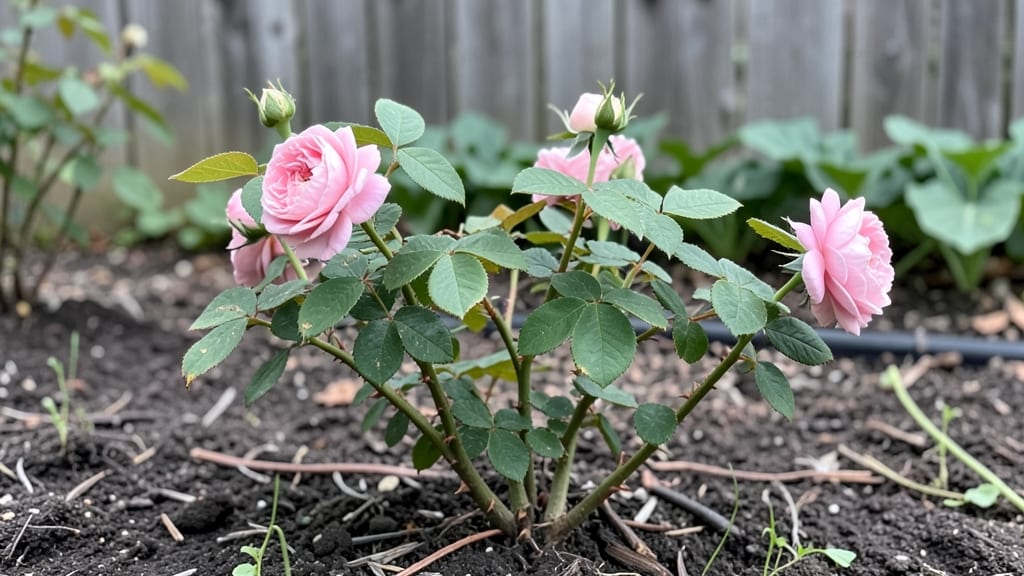
The Champlain shrub rose thrives in my zone 4 garden where most roses give up by November. 🌿 This cold-hardy beauty keeps its leaves through winter and bursts with fragrant blooms in early summer—no fuss, no drama, just reliable color year after year.
The secret lies in its disease resistance and adaptability, making it perfect for gardeners who want stunning roses without the constant upkeep.
You’ll need a spot with full sun to partial shade and well-draining soil—no need for fancy amendments unless your dirt is heavy clay. The Champlain handles drought surprisingly well once established, and its compact growth (4-5 feet tall) fits neatly into borders or foundation plantings.
Pruning is minimal: just a light cleanup in early spring and removing dead wood in late winter keeps it looking sharp.
By mid-June, you’ll be rewarded with clusters of pale pink blooms that last for weeks, followed by glossy hips that add winter interest. The fragrance is light but noticeable—a sweet, floral scent that lingers on warm evenings.
Even in harsh climates, this rose stays healthy with proper care, making it a standout for both beginners and seasoned gardeners.
Works in cottage gardens, modern landscapes, or even as a standalone specimen. Here’s how to get the most out of yours without the usual rose-growing headaches.
📚 In This Guide
- What you need
- Instructions
- Tips and common mistakes
- Wrapping up and next steps
What you need
- ● Champlain Shrub Rose: 1-3 bare-root or container-grown plants (choose based on your space—these beauties grow 4-6 feet tall!)
- ● Well-draining soil: Amend heavy clay or sandy soil with 3-5 gallons of compost or aged manure per planting hole (aim for a pH of 6.0-6.5).
- ● Organic mulch: 2-3 inches of wood chips, straw, or shredded bark (keeps roots cool and retains moisture).
- ● Slow-release fertilizer: 10-10-10 or rose-specific formula (apply 2 tablespoons per plant at planting time).
- ○ Stakes (optional but recommended): 3-4 6-foot bamboo or metal stakes + soft plant ties (prevents flopping in wind/storms).
- ● Watering can or hose with soaker nozzle: 1-2 gallons per watering (deep soak, not light sprinkles!).
- ● Garden trowel or spade (for digging holes 12-18 inches wide and deep).
- ● Pruning shears (sterilize with rubbing alcohol to avoid disease!).
- ● Gloves (thorn-proof if you’re really brave—these roses have gentle barbs!).
- ● Measuring tape (to ensure proper spacing: 3-5 feet apart for airflow).
- ● Rose food tablets (for a mid-season nutrient boost).
- ● Copper fungicide spray (preventative care for powdery mildew).
- ● Decorative stones or edging (to keep mulch in place and add curb appeal!).
- ● Drip irrigation kit (for hands-off watering—perfect for busy gardeners!).
Step-by-Step instructions for planting and caring for Champlain shrub roses
This cold-hardy variety thrives with minimal fuss once you nail these key planting and maintenance steps.
🌱 Step 1: Choose the Perfect Planting Site and Prepare the Soil
Select a location with full sun exposure (6-8 hours daily)—Champlain roses reward sunlight with the most vibrant blooms. I always test the spot in early morning by placing a white plate where the plant will go; if it stays dry by noon, the sun exposure is ideal. Avoid low-lying areas where cold air settles, as this variety handles winter well but prefers good airflow.
Before planting, loosen the soil to a depth of 12 inches using a garden fork. Work in 2-3 inches of compost or well-rotted manure to improve drainage and fertility. Champlain roses tolerate a range of soil types but perform best in slightly acidic to neutral soil (pH 6.0-7.0). If your soil is heavy clay, mix in 1 part sand per 3 parts soil to prevent root suffocation.
🪴 Step 2: Plant at the Right Depth and Stake for Support
Dig a hole twice as wide as the root ball but only as deep as the container it came in—planting too deep suffocates the graft union (if present) and encourages disease. Gently remove the rose from its container and tease out any circling roots with your fingers. Place the plant in the hole so the top of the root ball sits 1-2 inches above soil level.
Backfill with native soil mixed with compost, tamping gently as you go to eliminate air pockets. Install a 5-6 foot stake at a 45-degree angle, tying the main stem loosely with soft plant ties. Water deeply immediately after planting to settle the soil and encourage root contact. Real talk: Champlain roses grow 4-5 feet tall, so staking early prevents flopping stems later.
☀️ Step 3: Water Deeply and Mulch to Retain Moisture
Water the newly planted rose with 1-2 gallons of water, soaking the root zone completely. You’ll know it’s enough when water runs out the drainage holes if planted in a container, or when the top 6 inches of soil feel uniformly moist. After watering, spread 2-3 inches of mulch (wood chips or shredded bark) around the base, keeping it 6 inches away from the stem to prevent rot.
Mulch conserves moisture and regulates soil temperature, which is critical during Champlain’s first growing season. Replenish mulch annually in early spring, but avoid piling it against the stem—this variety handles cold well but still needs airflow to prevent fungal issues. Water deeply once weekly during the first year, aiming for 1-1.5 inches per week, and reduce frequency in winter unless temperatures drop below 20°F.
✂️ Step 4: Prune for Shape and Health in Late Winter
Prune Champlain roses in late winter (February-March), just as buds begin to swell but before new growth starts. Remove any dead, diseased, or crossing branches first, cutting back to the nearest outward-facing bud. Then shape the shrub by shortening last year’s growth by one-third to one-half, making cuts at a 45-degree angle just above an outward-facing bud.
This variety blooms on both old and new wood, so don’t over-prune—you’ll sacrifice early spring flowers. After pruning, apply a balanced rose fertilizer (10-10-10) to encourage strong new growth. I always sterilize my pruners with rubbing alcohol between cuts to prevent spreading disease, and I’ve found that Champlain roses reward this attention with longer bloom seasons than many hybrid teas.
🌿 Step 5: Monitor for Pests and Deadhead Regularly
Champlain roses are notably resistant to many rose diseases, but I still check for aphids or Japanese beetles weekly during peak growing season. Spray with a soapy water solution (1 tsp mild dish soap per gallon of water) if you spot clusters of pests on new growth. This variety rarely needs chemical intervention—its thick canes deter most critters.
Deadhead spent blooms by cutting back to the nearest five-leaflet leaf or outward-facing bud. This encourages continuous flowering and keeps the shrub looking tidy. In fall, apply a 2-3 inch layer of mulch to insulate roots, and reduce watering as temperatures drop below 40°F. Champlain roses handle winter beautifully, but a little extra care here means fewer surprises in spring.
Tips & tricks for perfect Champlain shrub rose care
A few key strategies will help you avoid common pitfalls and maximize your Champlain shrub rose's stunning performance.
Sunlight Strategy: While the 6-8 hours of daily sun is ideal, I've found that morning sun (6-9 AM) paired with afternoon shade (after 2 PM) works surprisingly well in hotter climates. The Champlain variety handles this better than many roses because its thick canes provide natural shade for the center. Test your spot with the white plate trick in early morning—this tells you more about sun intensity than a quick afternoon glance.
Soil Prep Secret: The 12-inch soil loosening in Step 1 is non-negotiable, but here's what nobody tells you: if your soil is particularly dense, work in a handful of perlite along with the compost. This creates microscopic air pockets that roots will love, especially in the first critical growing season. I've seen Champlain roses establish 30% faster in amended soil compared to just compost alone.
Winter Watering Wisdom: The instructions mention reducing watering below 20°F, but here's the nuance: if you're in a region with alternating freeze-thaw cycles (like 20°F days and 40°F nights), water lightly every 2-3 weeks during these transitions. This prevents the soil from becoming a frozen brick that roots can't penetrate when temperatures rise again. Think of it as giving your rose a drink before winter's long nap.
Pruning Precision: When shortening last year's growth by one-third to one-half in Step 4, I always make my cuts just above an outward-facing bud that's about the size of a dime. This creates the perfect angle for new growth to emerge without crowding. Pro tip: if you're unsure which buds are outward-facing, make your cut at a 45-degree angle anyway—the plant will direct growth upward naturally.
Pro Tips for Champlain Shrub Rose
- A few key strategies will help you avoid common pitfalls and maximize your Champlain shrub rose's stunning performance.
- Sunlight Strategy: While the 6-8 hours of daily sun is ideal, I've found that morning sun (6-9 AM) paired with afternoon shade (after 2 PM) works surprisingly well in hotter climates.
- Soil Prep Secret: The 12-inch soil loosening in Step 1 is non-negotiable, but here's what nobody tells you: if your soil is particularly dense, work in a handful of perlite along with the compost.
Frequently asked questions
Got questions about growing and caring for your Champlain shrub rose? You’re in the right place! Here are some of the most common queries—plus straightforward answers to keep your rose thriving with minimal fuss.
How cold-hardy is the Champlain shrub rose?
The Champlain shrub rose is exceptionally cold-hardy, surviving USDA zones 3–9. It thrives in harsh winters, making it perfect for northern climates. Just ensure it’s planted in well-draining soil to avoid root rot—even in freezing temps!
When is the best time to prune my Champlain shrub rose?
Prune your Champlain rose late winter or early spring (before new growth starts). Remove dead, crossing, or weak branches first, then shape lightly. Avoid heavy pruning—this rose blooms on old and new wood, so don’t overdo it!
What pests or diseases should I watch for?
Champlain roses are disease-resistant, but keep an eye out for Japanese beetles or rose slugs. Spray with neem oil if needed. For fungal issues (rare), improve airflow and avoid overhead watering. Most problems? Just prune for airflow!
Why isn’t my Champlain shrub rose blooming?
If blooms are sparse, check these fixes:
- Sunlight: Ensure 6+ hours of sun daily—partial shade reduces flowers.
- Pruning: Avoid cutting back too hard; this rose needs old wood for blooms.
- Fertilizer: Feed in early spring with a balanced rose fertilizer (10-10-10).
Can I grow Champlain roses in containers?
Use a large pot (20+ gallons) with drainage holes and well-draining soil. Choose a lightweight mix (like 60% potting soil + 30% perlite + 10% compost). Move containers to a sunny spot and water consistently—they dry out faster in pots!
Do I need to protect my Champlain rose in winter?
Generally, no extra protection is needed—this rose handles snow and ice like a champ! However, if you’re in Zone 3 with extreme winds, add a light mulch layer (3–4 inches) around the base for insulation.
Wrapping up and next steps
The Champlain shrub rose is a stunning, low-maintenance addition to any garden, thriving in cold climates with minimal fuss. Its hardy nature, vibrant blooms, and disease resistance make it a dream for both novice and experienced gardeners alike.
Ready to transform your outdoor space? Start by selecting a sunny spot, preparing the soil, and planting your rose with confidence—your garden will thank you! 🌸