
Shrubs
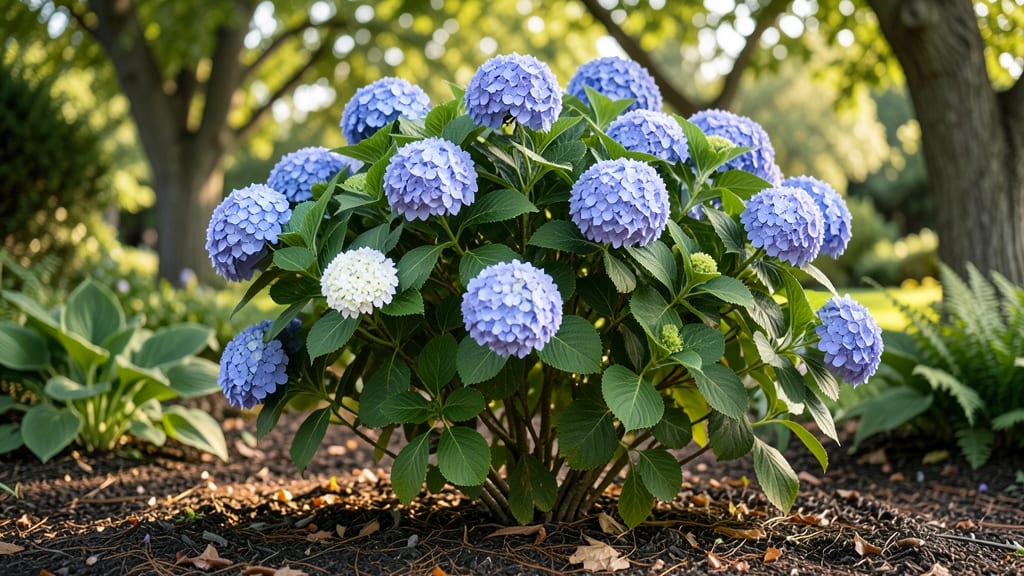
What does a shrub mean? It refers to a woody plant that stays smaller than trees—usually between 3 to 10 feet tall—with multiple stems growing close to the ground. These plants thrive in landscaping for hedges, privacy barriers, or decorative accents, and they recover quickly after pruning.
What does a shrub mean? A shrub stands out from trees and herbaceous plants because of its unique growth structure.
Unlike trees with a single trunk, shrubs develop several stems from the base, creating a bushy appearance. 🌿 This branching pattern allows them to spread horizontally while maintaining a compact height, making them ideal for garden borders or foundation plantings.
Many shrubs also have the advantage of being evergreen, providing year-round interest, while others bloom spectacularly in specific seasons.
What makes shrubs particularly valuable in gardening is their adaptability. They can thrive in various soil types and climates, from sun-drenched landscapes to shaded corners. Some varieties even attract pollinators or offer fragrant foliage, adding another layer of functionality beyond their visual appeal.
Whether you're designing a formal hedge or a wildflower-friendly garden, shrubs serve as the backbone of many outdoor spaces.
💡 In This Article
- Botanical Characteristics of Shrubs vs Trees
- Best Shrubs for Landscaping by Climate and Purpose
Botanical characteristics of shrubs vs trees
Shrubs and trees share woody stems, but their structural differences create distinct growth habits. Shrubs typically grow between 3 to 10 feet tall with multiple stems emerging from the base, while trees develop a single, dominant trunk that supports a taller, more vertical structure.
This branching pattern allows shrubs to spread horizontally, creating dense foliage that's perfect for hedges or privacy screens. 🌿 The stems of shrubs are often thinner and more flexible, enabling them to bend under snow or wind without breaking.
The root systems also differ significantly. Shrubs develop shallow, fibrous root networks that spread outward, helping them anchor to the ground while absorbing water efficiently. Trees, in contrast, have deep taproots that penetrate the soil vertically, providing stability for their greater height.
This root structure explains why shrubs recover so well after pruning—their ability to regenerate from multiple stems means they can bounce back quickly after being trimmed or damaged.
Leaf structure plays a key role in identifying shrubs. Many shrubs are evergreen, meaning they retain their leaves year-round, providing consistent color and texture in landscapes. Others are deciduous, shedding leaves seasonally.
The leaves themselves are often smaller and more numerous than those of trees, contributing to the dense, bushy appearance. For example, a rhododendron shrub might have 2-inch-long leaves arranged in a spiral pattern along its stems, while an oak tree's leaves are larger and spaced farther apart.
Another defining feature is growth rate and lifespan. Shrubs generally grow more slowly than trees, typically adding only 6 to 12 inches per year, which makes them easier to manage in smaller gardens.
Their lifespan varies widely—some, like boxwoods, can live for decades, while others, like annual flowering shrubs, may only last a few years. This slower growth also means shrubs require less frequent pruning compared to fast-growing trees, making them low-maintenance choices for many gardeners.
Consider the botanical example of a lilac shrub versus a maple tree. The lilac's multiple woody stems arise from the ground, creating a rounded shape that rarely exceeds 10 feet, while the maple's single trunk supports a broad canopy that can reach 40 feet or more.
The lilac's flowers appear along the stems in clusters, while the maple's flowers are less conspicuous but produce distinctive seeds. These differences highlight how shrubs and trees occupy distinct ecological niches within landscapes.
The versatility of shrubs lies in their ability to adapt to various conditions. Unlike trees, which often require more space and specific soil conditions, shrubs can thrive in tight spaces, along fences, or even in containers.
Their compact size makes them ideal for urban gardens where space is limited. Additionally, many shrubs produce flowers, berries, or fragrant foliage, adding sensory appeal that trees often lack. 🌸