
Plants
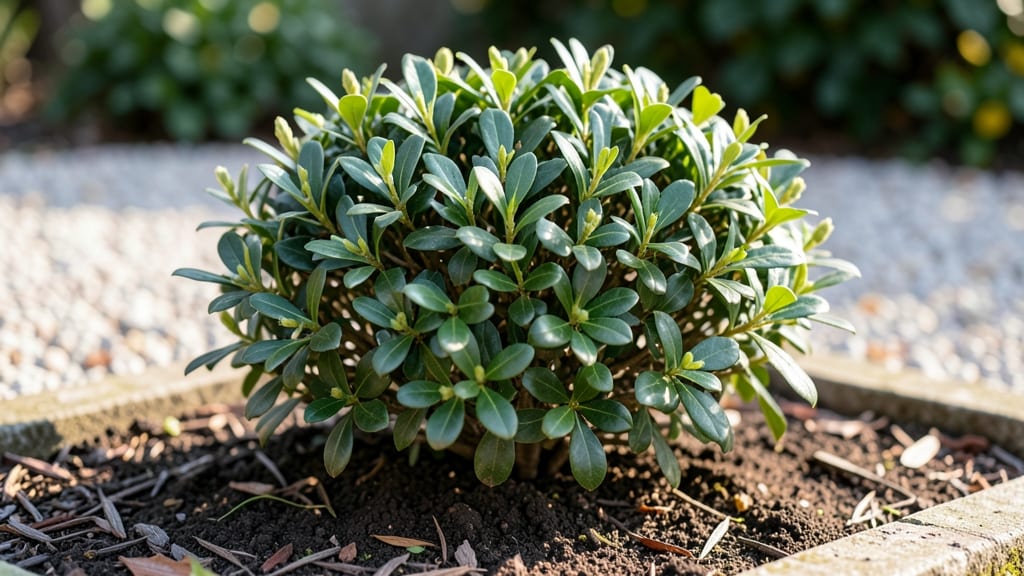
A boxwood shrub looks like a compact evergreen shrub with small, glossy oval leaves arranged in dense clusters. Its growth is naturally bushy and rounded, often shaped into formal hedges, and features tiny white spring blooms followed by bright red berries in autumn.
A boxwood shrub's signature appearance starts with its dark green, leathery leaves that stay vibrant year-round, making it a standout in winter landscapes. 🌿 The leaves grow in opposite pairs along the stems—a key identifier—with smooth edges and a slightly pointed tip.
What really sets it apart is how neatly it maintains its shape, whether naturally rounded or meticulously trimmed into geometric forms. These shrubs thrive in both formal gardens and naturalistic settings, offering both structure and softness to outdoor spaces.
Beyond its foliage, boxwoods deliver seasonal interest with tiny white flowers in spring that give way to red berries in fall, adding pops of color when other plants are fading. The dense branching creates a lush, almost impenetrable look that makes them perfect for privacy screens or foundation plantings.
Their slow growth rate means they require minimal maintenance while still delivering maximum visual impact.
💡 In This Article
- Boxwood Leaf and Stem Identification Guide
- Boxwood Growth Habits and Pruning Tips
Boxwood leaf and stem identification guide
Boxwood leaves are one of its most defining features, with their small, glossy, oval shape measuring about 1-2 inches long and ½-¾ inch wide.
The edges are smooth and slightly rolled under, giving them a leathery texture that feels firm to the touch. 🌿 This texture comes from the thick cuticle layer that helps them retain moisture, which is why boxwoods thrive in both dry and humid conditions.
The leaves grow in opposite pairs along the stems—a key distinguishing feature when comparing to holly (which has alternate leaves) or yew (which has scale-like leaves).
The stems are slender but sturdy, typically growing at 45-degree angles before branching outward to form that signature dense habit. New growth emerges with a slight reddish tint that fades to green as it matures.
What's fascinating is how the leaf arrangement creates a uniform, almost quilted appearance when viewed from above, thanks to the overlapping leaves. This dense foliage is what makes boxwoods so effective for hedges—they block light and wind while maintaining a clean, polished look year-round.
One way to tell boxwood apart from similar evergreens is by examining the leaf underside. Boxwood leaves have prominent veins that are visible even from the back, while holly leaves have a more waxy surface.
The stems also lack the sharp spines found on holly branches. 🌿 Another clue is the way boxwood leaves grow directly from the stem without a noticeable petiole (leaf stalk), creating that seamless, compact appearance. This close growth pattern is what allows boxwoods to be shaped so precisely through pruning.
When boxwoods produce their tiny white flowers in spring (about ¼-inch wide), they grow in clusters at the stem tips, adding a delicate contrast to the dense foliage. These flowers lack petals but have four sepals that give them a star-like appearance.
After flowering, the red berries that appear in fall are actually drupes (fleshy fruits with a single seed), measuring about ½-inch in diameter. These berries provide winter interest and are a favorite of birds, though they're not as showy as holly berries.
For gardeners, recognizing these features helps in selecting healthy plants. Look for boxwoods with leaves that are uniformly green without yellowing or brown edges—signs of stress or disease.
The stems should be firm and green, not woody or brittle. 🌿 When comparing boxwood to other evergreens, remember that its opposite branching, leathery leaves, and dense growth habit are its signature traits that set it apart in any landscape.
Understanding these identification markers makes it easier to care for boxwoods properly. Their dense growth means they cast shade, which is why they often grow well under trees. The leathery leaves also mean they're drought-tolerant once established, though they still appreciate regular watering during their first year in the ground.