
Plants
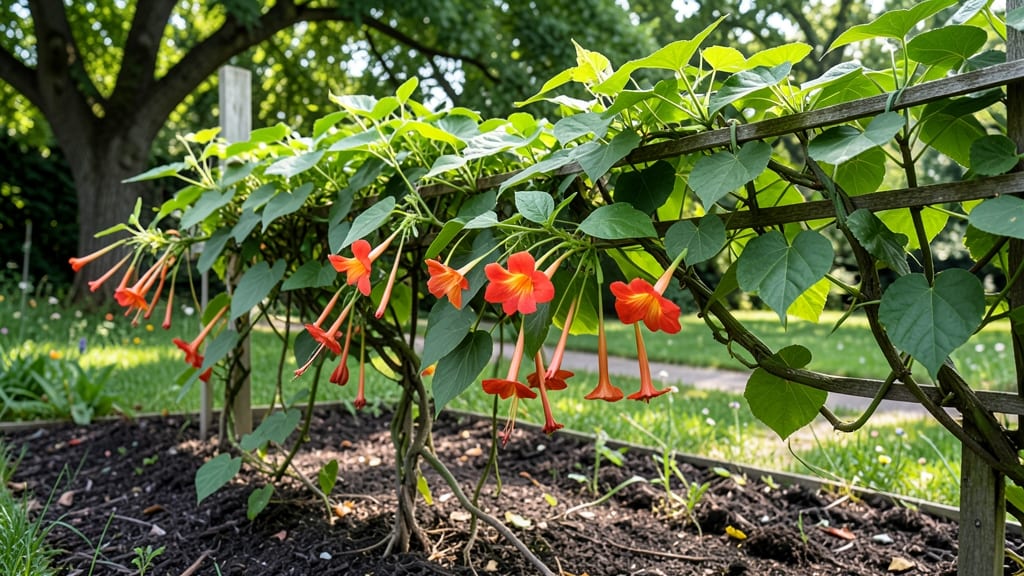
Your fragrant trumpet vine shrub can transform a sun-drenched wall into a vertical jungle of trumpet-shaped blooms by next summer. 🌿 I planted mine last spring, and within months, it became the star of my backyard—though I’ll admit, its aggressive growth caught me off guard.
This fast-growing vine thrives in full sun and well-draining soil, but it’s not picky about soil type. Just avoid heavy clay, and space it 10-15 feet from structures to give its roots room to spread.
Water deeply once established, but don’t drown it—consistent moisture is key, especially during the first year. By late summer, you’ll be rewarded with clusters of orange-red flowers that hum with pollinators. The scent? Intoxicatingly sweet, like a cross between jasmine and honey.
Prune in late winter to shape it and encourage new growth. Perfect for trellises, fences, or even as a standalone shrub. Just brace for its bold personality—it grows fast, but the blooms are worth it.
📚 In This Guide
- What you need
- Instructions
- Tips and common mistakes
- Wrapping up and next steps
What you need
- ● Trumpet Vine Shrub: Choose between: Seeds (5–10 per planting site, Campsis radicans or Campsis grandiflora)
- ● Cuttings (3–4 healthy 6-inch stems with nodes)
- ● Nursery-grown plant (1–3 gallon container, 1–2 feet tall)
- ● Soil: Well-draining, slightly acidic to neutral soil (pH 6.0–7.5). Amend with compost (1–2 gallons per planting hole).
- ● Fertilizer: Balanced, slow-release fertilizer (10-10-10 or 5-10-5, 1–2 tablespoons per plant).
- ● Mulch: Organic mulch (2–3 inches of shredded bark or pine straw) to retain moisture.
- ● Hand trowel or small shovel
- ● Garden gloves (to protect from thorns and soil)
- ● Pruning shears (for trimming or shaping)
- ● Watering can or hose with a gentle spray nozzle
- ● Measuring tape (to mark planting depth)
- ○ Stakes or trellis (optional, for climbing varieties—2–3 per plant)
- ● Full sun location (6+ hours of direct sunlight daily)
- ● Support structure (trellis, fence, or arbor) if growing as a vine
- ● Patience! Trumpet vines grow aggressively—plan for 10+ feet of spread in ideal conditions.
Step-by-step guide to planting and caring for trumpet vine shrubs
Here's how to establish a fragrant, sun-loving trumpet vine that thrives year after year.
🌱 Step 1: Choose the Right Location and Prepare the Soil
Trumpet vines need full sun—at least 6-8 hours of direct sunlight daily. Pick a spot with sturdy support like a trellis, fence, or arbor, since mature vines can grow 30-40 feet long. I always test the soil first with a simple pH test kit; trumpet vines prefer 6.0-7.0 pH.
Loosen the soil to a depth of 12-18 inches to encourage root spread. Mix in 2-3 inches of compost to improve drainage and fertility. If your soil is heavy clay, add a 5-gallon bucket of coarse sand per planting hole to prevent waterlogging. The key is well-draining soil—these vines hate soggy roots.
🪴 Step 2: Plant Your Trumpet Vine Properly
Dig a hole twice as wide as the root ball but only as deep as the container. Gently remove the vine from its pot and loosen any circling roots with your fingers. Place the vine in the hole so the top of the root ball sits 1 inch below soil level—this prevents stem rot from settling soil.
Backfill with native soil mixed with a handful of slow-release fertilizer, tamping lightly as you go. Water deeply to eliminate air pockets, then create a 2-inch-high soil berm around the base to direct water toward the roots. Mulch with 2-3 inches of shredded bark, keeping it 3 inches away from the stem to prevent rot.
☀️ Step 3: Provide Support and Initial Care
Immediately after planting, install your trellis or support structure. Trumpet vines climb using tendrils, so position the main stem 6-12 inches from the support to encourage upward growth. Use soft garden twine or flexible ties to guide the vine gently—never force it, or you'll snap tender new growth.
Water deeply 2-3 times per week for the first month, keeping the soil evenly moist but not soggy. You'll know it's right when water drains through within 30 minutes. After establishment, trumpet vines tolerate drought but bloom best with consistent moisture. Fertilize monthly during growing season with a balanced 10-10-10 formula.
✂️ Step 4: Prune for Health and Abundant Blooms
Prune trumpet vines in late winter or early spring before new growth begins. Remove any dead, damaged, or crossing branches first. Then cut back 1/3 of the previous year's growth to encourage bushier, more vigorous growth. I always sterilize my pruners with rubbing alcohol between cuts to prevent disease spread.
After the first flush of blooms fades, trim back 50% of the spent flower stems to promote a second bloom cycle. Never prune in fall—you'll cut off next year's flower buds. The goal is to maintain an open, airy shape that lets sunlight reach all parts of the vine for even flowering.
🌿 Step 5: Maintain Through the Seasons
In summer, watch for aphids or spider mites on new growth. I treat infestations immediately with a strong spray of water or insecticidal soap—these vines are tough but hate being stressed. Water at the base in the morning to prevent fungal issues from evening moisture.
Fall is the time to reduce watering gradually as temperatures drop. When leaves yellow and drop, cut back any dead growth but leave the structure intact. Trumpet vines are semi-deciduous in colder climates, so don't panic when they lose foliage—they'll rebound beautifully in spring.
Tips & tricks for perfect trumpet vine growth
Common pitfalls—and how to sidestep every one when nurturing this sun-loving beauty.
Sunlight Strategy: While trumpet vines thrive on 6-8 hours of direct sunlight daily, morning sun is ideal for preventing leaf scorch. If your location gets intense afternoon sun, consider a light shade cloth during peak hours—especially in summer. I learned this the hard way after watching leaves crisp up on a hot afternoon. Position your trellis to capture morning rays while providing afternoon relief.
Soil Science: The 12-18 inch deep soil preparation isn't just about loosening—it's about creating an airy environment for roots. For heavy clay soils, that 5-gallon bucket of coarse sand per hole makes all the difference. I always mix in a handful of compost too, but here's the secret: spread it evenly throughout the hole, not just at the bottom. This ensures consistent moisture and nutrient distribution from top to root zone.
Watering Wisdom: Those 2-3 deep waterings per week for the first month should feel like a drink, not a shower. The soil should drain completely within 30 minutes—if it pools, you're overdoing it. After establishment, let the top inch dry between waterings. I've found trumpet vines are surprisingly drought-tolerant once established, but they reward consistent moisture with more abundant blooms.
Pruning Precision: When cutting back 1/3 of last year's growth in late winter, focus on removing the oldest, thickest stems first. These are the ones that produce fewer flowers and take up valuable energy. For the 50% spent bloom trim, cut just above a leaf node to encourage new growth. I sterilize my pruners between cuts because trumpet vines are surprisingly susceptible to bacterial infections through open wounds.
Pro Tips for Trumpet Vine Shrub
- Common pitfalls—and how to sidestep every one when nurturing this sun-loving beauty.
- Sunlight Strategy: While trumpet vines thrive on 6-8 hours of direct sunlight daily, morning sun is ideal for preventing leaf scorch.
- Soil Science: The 12-18 inch deep soil preparation isn't just about loosening—it's about creating an airy environment for roots.
Frequently asked questions
Got questions about growing and caring for trumpet vine shrubs? You're not alone! Here are some of the most common queries—and answers—to help you cultivate a thriving, fragrant canopy in your sunny spaces.
How fast does trumpet vine grow, and when can I expect flowers?
Trumpet vine (Campsis radicans) is a fast grower, often shooting up 3–5 feet per year in ideal conditions. With proper care, you can expect vibrant orange or red trumpet-shaped blooms as early as the first year, typically from late spring through summer. Patience pays off—older vines produce even more dramatic displays!
Is trumpet vine invasive? Should I be worried about it spreading?
Yes, trumpet vine is considered highly invasive in many regions (like the Southeast U.S.). It spreads aggressively via roots and seeds, choking out native plants. If containment is a concern, plant it in containers or raised beds with root barriers. Always check local regulations before planting!
Can trumpet vine survive in partial shade, or does it need full sun?
While trumpet vine thrives in full sun (6+ hours daily), it can tolerate partial shade (4–6 hours), though growth and flowering may be less vigorous. In shadier spots, expect slower growth and fewer blooms. For best results, plant it where it gets maximum sunlight—especially in cooler climates.
How do I prune trumpet vine to control its size or shape?
Prune trumpet vine in late winter or early spring before new growth starts. To control size, cut back 1/3 of the oldest stems to encourage bushier growth. For shaping, trim just above a leaf node (where new buds form). Avoid heavy pruning in fall—it can stimulate tender new growth that may freeze in winter.
Are trumpet vine flowers toxic to bees or other pollinators?
Great news! Trumpet vine flowers are not toxic to bees, butterflies, or hummingbirds—they’re a pollinator magnet! In fact, their bright blooms attract swallowtail butterflies, making them a fantastic addition to pollinator gardens. Just avoid pesticides to keep these visitors happy!
What are some low-maintenance alternatives to trumpet vine?
If trumpet vine’s invasiveness concerns you, consider these fragrant, sun-loving alternatives:
- Clematis – Climbing, low-maintenance, and blooms in abundance.
- Honeysuckle (Lonicera) – Fragrant, attracts hummingbirds, and less aggressive.
- Star Jasmine (Trachelospermum) – Evergreen, fragrant, and great for trellises.
- Passionflower (Passiflora) – Unique flowers and edible fruits (in some varieties).
Wrapping up and next steps
Transforming your sunny garden into a vibrant, fragrant oasis with trumpet vine shrubs is easier—and more rewarding—than you think! 🌿 With their hardy nature and stunning blooms, they’re the perfect choice for adding drama and color to any outdoor space.
Whether you’re a gardening novice or a seasoned pro, now’s the time to plant, nurture, and enjoy this sun-loving beauty.
Ready to dive in? Grab your gloves, pick a sunny spot, and start growing! Your future garden will thank you—one fragrant bloom at a time. 🌸