
Blooming
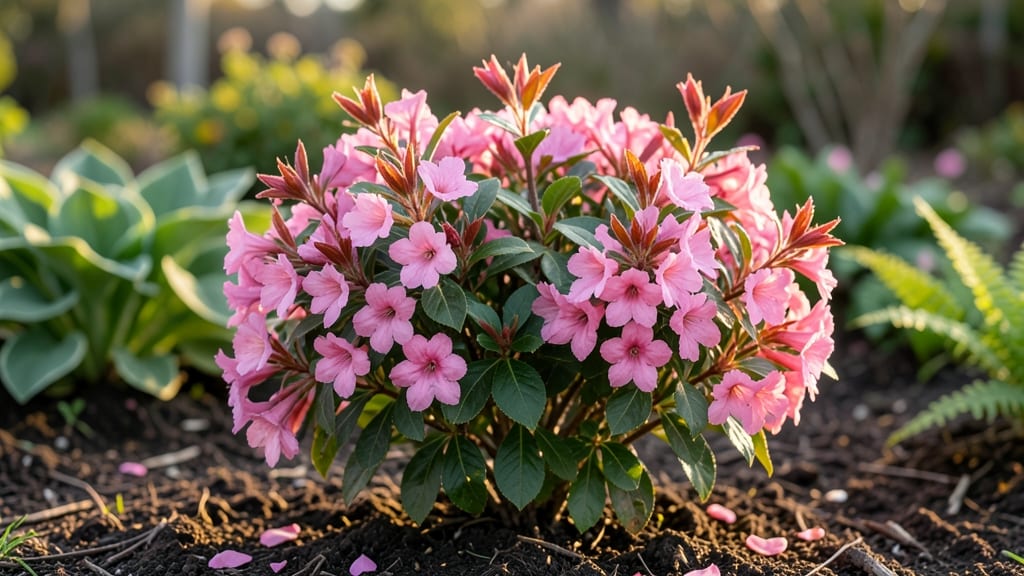
The Sonic Bloom Pink Weigela shrub blooms like a dream in spring—it’s my go-to for fragrant, low-maintenance color that thrives even when I forget to water. 🌸 The secret lies in its hardy nature and those showstopping pink clusters that last for weeks, plus its ability to grow in less-than-perfect conditions.
This shrub loves full sun but handles partial shade, and it’s happy in almost any well-draining soil—even rocky or slightly alkaline. Plant it in early spring or fall, and within a year, you’ll have a lush, blooming screen that hummingbirds adore.
The key is spacing them 3-4 feet apart to give them room to grow into their full, bushy shape. Pruning is where the magic happens: cut back old stems in late winter to encourage fresh, vibrant blooms.
A quick trim after flowering keeps the shape tidy, and you’ll get even more flowers next season. Even if you miss a watering or two, it bounces back—perfect for busy gardeners.
Whether you’re lining a fence, adding privacy, or just craving a burst of pink, this Weigela delivers year after year with almost no fuss. Let’s get yours planted!
📚 In This Guide
- What you need
- Instructions
- Tips and common mistakes
- Wrapping up and next steps
What you need
- ● Sonic Bloom Pink Weigela shrub – 1 mature plant (3-5 gallons, 2-3 feet tall) or 3-5 young plants (1-gallon containers) for a fuller screen.
- ● Well-draining potting soil or garden soil mix – 5-10 cubic feet (depending on planting size). Amend with compost (2-3 gallons) for nutrient-rich soil.
- ● Organic mulch – 2-3 inches (e.g., shredded bark or pine straw) to retain moisture and suppress weeds.
- ● Balanced, slow-release fertilizer – 10-10-10 or 20-20-20 (1-2 pounds per plant) for initial planting.
- ● Watering can or hose with a gentle spray nozzle – For deep watering (1-2 gallons per plant after planting).
- ● Garden gloves – To protect your hands while handling soil and plants.
- ● Pruning shears – Sharp, clean shears (sterilized with rubbing alcohol) for shaping and maintenance.
- ○ Stakes or plant supports (optional but helpful) – If planting in windy areas, use 3-4 stakes per plant.
- ● Trowel or spade – For digging planting holes (12-18 inches wide and deep).
- ● Measuring tape – To ensure proper spacing (3-5 feet apart for shrubs, 5-6 feet for a privacy screen).
- ● Soil pH test kit – Weigelas thrive in slightly acidic to neutral soil (pH 6.0-7.0). Adjust with lime or sulfur if needed.
- ● Epsom salt (magnesium sulfate) – 1 tablespoon per gallon of water (monthly during blooming season for extra pink pops!).
- ● Drip irrigation system or soaker hose – For efficient watering (especially in hot climates).
- ● Plant food or bloom booster – Like fish emulsion or rose fertilizer (every 4-6 weeks during growing season).
- ● Decorative garden flags or labels – To mark your new Weigela and track growth!
Step-by-step instructions for planting Sonic Bloom Pink Weigela
Here's the straightforward method I use to establish fragrant, blooming privacy screens that thrive year after year.
🪴 Step 1: Choose the Perfect Planting Location
Sonic Bloom Pink Weigela thrives in full sun to partial shade, with at least 6 hours of direct sunlight daily for best blooming. I always plant mine where they'll receive morning sun and afternoon shade—this prevents leaf scorch in hot climates. The shrub grows 5-6 feet tall and wide, so space plants 6-8 feet apart for a lush privacy screen.
Check the soil drainage before planting. Weigela hates soggy roots, so if your yard holds water after rain, amend the area with 2-3 inches of compost mixed into the top 12 inches of soil. The ideal spot is slightly elevated or on a gentle slope to encourage drainage. Look for existing plants nearby—if they're thriving, your Weigela will too.
🌱 Step 2: Prepare the Planting Hole and Soil
Dig a hole twice as wide as the root ball but no deeper. This extra width encourages roots to spread outward instead of circling, which weakens the plant. Gently loosen the roots if they're tightly bound—just tease them apart with your fingers. I always check the root ball for any circling roots or signs of girdling before planting.
Mix the removed soil with half a bucket of compost and a handful of slow-release fertilizer (look for one with balanced NPK like 10-10-10). This gives your Weigela a nutrient boost without overwhelming it. Fill the hole halfway with this amended soil, then place the plant so the top of the root ball sits 1 inch above ground level. Weigela needs this slight elevation to prevent water from pooling around the stem.
💧 Step 3: Plant and Water Thoroughly
Backfill the hole with the remaining amended soil, pressing gently to remove air pockets but not compacting too firmly. Water deeply right after planting—this helps settle the soil and removes air gaps around the roots. You'll know you've watered enough when the soil 1 inch down feels damp but not soggy. I always water slowly to avoid displacing the soil around the roots.
Add a 2-3 inch layer of mulch around the base, keeping it 3 inches away from the stem to prevent rot. Use organic mulch like shredded bark or pine straw—this helps retain moisture and regulates soil temperature. After planting, give your Weigela another deep watering to help it establish quickly. The first few weeks are critical, so keep the soil consistently moist but never waterlogged.
☀️ Step 4: Provide Ongoing Care for First Season Growth
Weigela establishes best with 1 inch of water weekly during the first growing season, especially if your area experiences dry spells. Check moisture by sticking your finger 1 inch into the soil—if it feels dry, it's time to water. Avoid overhead watering once the plant is established, as wet foliage can encourage fungal diseases. Water at the base instead.
Fertilize lightly in early spring with a balanced fertilizer (like 10-10-10) to encourage new growth. I skip summer fertilizing—too much nitrogen now can reduce blooming. Prune lightly in late winter or early spring to shape the plant and remove any dead or crossing branches. The first year is about establishing strong roots, so resist the urge to prune heavily until you see vigorous new growth.
Tips & tricks for planting a thriving Sonic Bloom Pink Weigela
Between us, these little details make all the difference between a plant that just survives and one that thrives with vibrant blooms year after year.
Location Matters More Than You Think: That 6 hours of sunlight rule is non-negotiable for maximum blooming, but here's what nobody tells you—morning sun and afternoon shade is the sweet spot. I've seen Weigelas planted in full afternoon sun get crispy edges on their leaves, even when they had enough total sunlight. If your yard gets intense afternoon heat, consider planting on the north side of a fence or building to give those leaves some relief.
Root Ball Rescue: When you're loosening those roots in Step 2, pay special attention to any roots circling the root ball. These are called "girdling roots" and they'll strangle your plant's growth if left unchecked. Use your fingers or a small knife to gently cut through any roots that are wrapped tightly around the center—just enough to break the circle. This simple step prevents years of stunted growth.
Watering Wisdom: The "1 inch of water weekly" guideline is perfect, but here's how to make it foolproof: Use a rain gauge or even a straight-sided can to measure your water. Set it out in your planting area before watering—when it collects 1 inch of rain, you're done for the week. This prevents both underwatering and overwatering. And remember, that 3-inch mulch ring isn't just decoration—it helps maintain consistent moisture levels without you having to think about it every day.
First-Year Fertilizer Strategy: That early spring fertilizer application is key, but timing matters. I apply mine right when I see the first signs of new growth in early spring—usually when the buds start to swell. And here's my secret: I mix in a little extra compost with that fertilizer to give the roots a gentle, slow-release boost. The Weigela will thank you with bigger, brighter blooms that first season.
Pro Tips for Sonic Bloom Pink Weigela Shrub
- Between us, these little details make all the difference between a plant that just survives and one that thrives with vibrant blooms year after year.
- Location Matters More Than You Think: That 6 hours of sunlight rule is non-negotiable for maximum blooming, but here's what nobody tells you—morning sun and afternoon shade is the sweet spot.
- Root Ball Rescue: When you're loosening those roots in Step 2, pay special attention to any roots circling the root ball.
Frequently asked questions
Got questions about growing and caring for your Sonic Bloom Pink Weigela shrub? Here are some of the most common ones—plus expert answers to help you keep this fragrant beauty thriving!
How fast does the Sonic Bloom Pink Weigela grow?
The Sonic Bloom Pink Weigela is a fast grower, typically adding 12–24 inches per year under ideal conditions. With proper pruning and care, you can establish a lush privacy screen in just 2–3 years. Mulching and consistent watering will encourage even faster growth!
When is the best time to plant Sonic Bloom Pink Weigela?
Plant your weigela in early spring or fall when temperatures are mild (between 40°F–60°F). Avoid extreme heat or frost, as these can stress the roots. If planting in summer, water deeply and provide shade for the first few weeks to help it establish.
How and when should I prune my Sonic Bloom Pink Weigela?
Prune your weigela right after flowering (late spring to early summer) to encourage bushier growth and more blooms next year. Remove dead, crossing, or overcrowded branches first, then trim back up to 1/3 of the plant’s height if needed. Avoid heavy pruning in fall or winter.
What pests or diseases should I watch for with Sonic Bloom Pink Weigela?
Weigelas are generally low-maintenance, but keep an eye out for aphids, spider mites, or scale insects. Treat infestations early with neem oil or insecticidal soap. Fungal issues like powdery mildew can occur in humid climates—ensure good airflow and avoid overhead watering to prevent problems.
Can Sonic Bloom Pink Weigela grow in full shade?
While it tolerates partial shade (4–6 hours of sun daily), full shade will limit blooming and growth. For the best results, plant in full sun to partial shade. If your yard is shady, choose a spot with the brightest light available—even dappled sunlight helps!
Wrapping up and next steps
The Sonic Bloom Pink Weigela isn’t just a shrub—it’s a burst of color, fragrance, and effortless beauty that transforms any garden into a springtime haven. With its vibrant blooms, low-maintenance care, and privacy-screen potential, it’s the perfect choice for gardeners who crave both style and simplicity.
Ready to elevate your outdoor space? Grab your gloves, pick a sunny spot, and let this stunning shrub work its magic!
🌱 Next step: Sketch your garden layout, gather your tools, and get planting—your fragrant oasis awaits! 🌸