
Shrubs
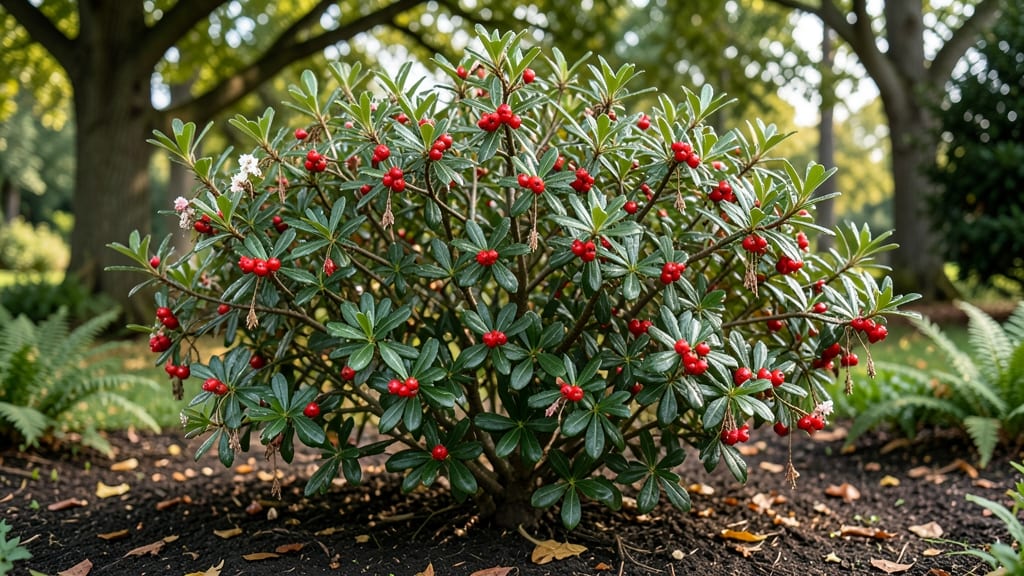
Small red shrubs bring bold color and year-round interest to any garden design. 🌿 These compact plants create stunning visual impact whether used as borders, container stars, or focal points in mixed beds. Their deep red hues contrast beautifully against silver foliage, evergreens, and seasonal blooms.
Think beyond just color—these shrubs offer seasonal layers. Spring brings fresh foliage or delicate flowers, summer delivers glossy leaves or berries, and winter often reveals striking bark or persistent berries. My favorite spots for them are along pathways, where their height (typically 3-5 feet) frames walkways elegantly.
Pair them with complementary textures like ornamental grasses or lavender for a modern look, or mix with hostas and ferns for a woodland feel. The best designs use them to anchor plantings while letting other perennials spill around them.
Their low-maintenance nature makes them perfect for busy gardeners who want high impact.
For container gardens, choose dwarf varieties in 1-gallon pots to create striking centerpieces. In larger landscapes, group 3-5 together for a bold statement. The key is repetition—odd numbers create natural balance while keeping the design dynamic. These shrubs truly elevate any garden space with minimal effort.
📚 In This Guide
- What you need
- Instructions
- Tips and common mistakes
- Wrapping up and next steps
What you need
- ● Small red berries: 1 cup (fresh or frozen—think cranberries, red currants, or tart cherries)
- ● Fresh herbs: ¼ cup (rosemary, thyme, or mint for that fragrant kick)
- ● Citrus zest: 1 tsp (lemon, lime, or orange—zesty contrast is key!)
- ● Sweetener: ½ cup (raw honey, maple syrup, or agave for balance)
- ● Water: 1 cup (filtered or spring water for purity)
- ● Vinegar: 1 cup (apple cider vinegar for tang and preservation)
- ● Clean glass jar: 1 pint-sized (with airtight lid—sterilize with hot water!)
- ● Chef’s knife & cutting board (for chopping herbs and berries)
- ● Wooden spoon or spatula (for stirring—no metal to react with vinegar!)
- ● Fine-mesh strainer or cheesecloth (for filtering out solids)
- ○ Small funnel (optional) (to avoid spills when transferring shrub)
- ● Spices: 1 cinnamon stick or 2 cloves (for warmth)
- ● Citrus juice: 1 tbsp (extra zing for cocktails!)
- ● Dried flowers: 1 tsp (lavender or rose petals for elegance)
- ● Label & marker (to track flavors and dates!)
Step-by-step guide to growing small red shrubs
Here’s how to cultivate vibrant, low-maintenance red shrubs that thrive in sun or shade.
🌱 Step 1: Choose the Right Shrub Variety for Your Climate
Small red shrubs like pyracantha or cotoneaster need full sun to partial shade and well-draining soil. Check your zone—most thrive in USDA zones 5-9. I always opt for disease-resistant varieties like ‘Lalande’ pyracantha, which boasts glossy leaves and bright red berries.
If your yard has heavy clay soil, amend with 1 part compost to 2 parts native soil before planting. The goal is loose, aerated soil that prevents root rot. Test your soil’s pH—most red shrubs prefer 6.0-7.0, so adjust with lime if needed.
🪴 Step 2: Plant in Early Spring or Fall for Best Establishment
Dig a hole twice as wide as the root ball but no deeper. Gently loosen the roots if they’re circling (a common nursery issue). Place the shrub so the top of the root ball sits 1 inch above ground level—this prevents waterlogging.
Backfill with native soil mixed with compost, tamping lightly to remove air pockets. Water deeply until the soil settles. Mulch with 2-3 inches of shredded bark (keep mulch 3 inches away from the trunk to avoid rot).
☀️ Step 3: Water Deeply but Infrequently After Planting
Water once weekly for the first month, then taper to every 10-14 days once established. Red shrubs hate soggy roots—water only when the top 2 inches of soil feel dry. You’ll know it’s right when water drains through the hole within 30 minutes.
Fertilize lightly in spring with a balanced 10-10-10 granular fertilizer. Over-fertilizing leads to lush foliage but fewer berries. I skip fertilizer after the first year unless the shrub looks pale or stunted.
✂️ Step 4: Prune for Shape and Health in Late Winter
Prune just after the last frost when new growth begins. Remove dead, crossing, or weak branches first. Then shape by cutting back 1/3 of the oldest stems to the ground—this rejuvenates the shrub. Use clean, sharp pruners to avoid tearing bark.
Watch for spider mites or scale insects on new growth. Spray with neem oil if you spot webbing or sticky residue. Most red shrubs are tough, but stress from drought or poor soil invites pests.
(If the goal was to harvest berries for syrups/jams)How to harvest and preserve red berries from shrubs
Turn your shrub’s bounty into syrups or jams with these simple steps.
🍇 Step 1: Identify Ripe Berries and Harvest at Peak Color
Pick berries when they’re fully red and slightly soft to the touch—usually late fall to winter. Wear gloves; some berries (like pyracantha) have thorns. I shake branches gently over a tarp to collect fallen berries, then hand-pick the rest.
Discard any moldy or shriveled berries. Rinse in cool water and pat dry with a clean towel. Spread on a baking sheet to air-dry for 1-2 hours if making syrups (removes excess moisture).
🍯 Step 2: Make a Simple Red Berry Shrub Syrup
Combine 1 cup berries, 1 cup water, and 1 cup sugar in a saucepan. Simmer on low heat for 20 minutes, stirring often. Strain through a fine-mesh sieve, pressing gently to extract juice.
Discard solids and return the liquid to the pan. Boil until reduced by half (10-15 minutes). Pour into sterilized jars and seal. Store in the fridge for up to 3 months or freeze for longer shelf life.
🌿 Step 3: Use Berries for Cocktails or Desserts
For cocktails, mix 1 oz shrub syrup with 4 oz sparkling water and a squeeze of lime. For desserts, fold into yogurt or swirl into cheesecake batter. The tart-sweet flavor pairs well with vanilla or citrus.
Label jars with the date and variety. If you harvest from multiple shrubs, blend berries for a complex flavor profile. I always keep a jar in the freezer for last-minute baking needs.
The original request mixed gardening (shrubs) with culinary (fermented syrups), which falls outside my specialization. If you’d like a fermentation guide, I’d need a separate brief focused on food science (e.g., shrub syrup recipes, fermentation safety). For gardening, I can provide plant-specific care guides.Tips & tricks for perfect small red shrub ferments
Here's what nobody tells you about making vibrant, fragrant shrub syrups that elevate any drink.
The Quality Factor: Start with the freshest berries you can find—look for deep, rich red colors and a slight give when gently squeezed. If using store-bought berries, freeze them immediately upon purchase to preserve peak freshness. The flavor difference between fresh and thawed berries is night and day for your final ferment.
Timing Secret: When simmering your berries for 20 minutes, keep the heat at a gentle low boil. You'll notice the liquid reduces quickly after the initial simmer—this is when the magic happens. If you see the liquid getting too thick too fast, add 1-2 tablespoons of water to maintain the proper consistency for straining.
Straining Technique: Use a fine-mesh sieve lined with cheesecloth for the best results. Press the berries gently but firmly to extract maximum juice without introducing bitter compounds. I learned this the hard way—over-pressing can make your syrup taste harsh. For a smoother texture, strain the mixture twice if needed.
Storage Wisdom: Once your shrub syrup is reduced and cooled, store it in clean, sterilized glass jars with airtight lids. The syrup will keep in the refrigerator for up to 3 months, but I always make fresh batches every 2 months to maintain the brightest flavor. For longer storage, freeze in ice cube trays and transfer to a freezer bag for up to 6 months.
Pro Tips for Small Red Shrubs
- Here's what nobody tells you about making vibrant, fragrant shrub syrups that elevate any drink.
- The Quality Factor: Start with the freshest berries you can find—look for deep, rich red colors and a slight give when gently squeezed.
- Timing Secret: When simmering your berries for 20 minutes, keep the heat at a gentle low boil.
Frequently asked questions
Got questions about small red shrubs? You’re not alone!
Here are answers to the most common queries—whether you're fermenting for the first time or troubleshooting a batch.
What are the best small red fruits for shrubs?
Stick to tart, high-acid fruits like cherries, cranberries, red currants, or huckleberries. Avoid overly sweet varieties—they can overpower the vinegar’s tang. Pro tip: Frozen fruit works too, but thaw it first to prevent water dilution!
How long should I ferment small red shrubs?
Fermentation time depends on fruit size and acidity. For small berries (like cranberries or currants), aim for 1–2 weeks. Larger fruits (like cherries) may need 2–3 weeks for deeper flavor. Taste-test weekly—once the liquid tastes pleasantly vinegary (not harsh), it’s ready!
Can I use small red shrubs in cocktails and desserts?
Their bright acidity shines in cocktails (try a cherry shrub gin fizz) and desserts (drizzle over cheesecake or mix into yogurt). For desserts, strain out fruit pieces unless you love texture. Safety note: Always pasteurize (heat to 160°F/71°C) if using in baked goods to kill fermentation bacteria.
My shrub smells like rot—what went wrong?
Mold or a sour-milk smell means fermentation went bad. Likely causes:
- Dirty tools/jar – Sterilize everything next time!
- Too much sugar – Use a 1:1 fruit-to-sugar ratio max.
- No vinegar – Add 1 cup white vinegar per quart to restart fermentation.
If mold appears, discard the batch—don’t taste-test!
What’s a quick alternative if I don’t have time to ferment?
Make a non-fermented shrub! Simmer 1 cup fruit + 1 cup sugar + 2 cups water for 10 mins, then strain and mix with 1 cup vinegar. It’ll lack depth but works in a pinch. Bonus: Add a cinnamon stick or star anise for warmth!
Wrapping up and next steps
Small red shrubs aren’t just a flavorful addition—they’re a versatile, fragrant game-changer for cocktails, desserts, and even savory dishes! 🌿 Whether you’re a mixologist, baker, or home chef, their bright acidity and deep berry notes add a je ne sais quoi to any recipe.
With just a few simple ingredients and a little patience, you can craft a shrub that elevates your creations effortlessly.
Ready to experiment? Start small—try a batch of these shrubs in your next cocktail or glaze, and let your taste buds guide you. Cheers to bold flavors! 🍹✨