
Container Gardens
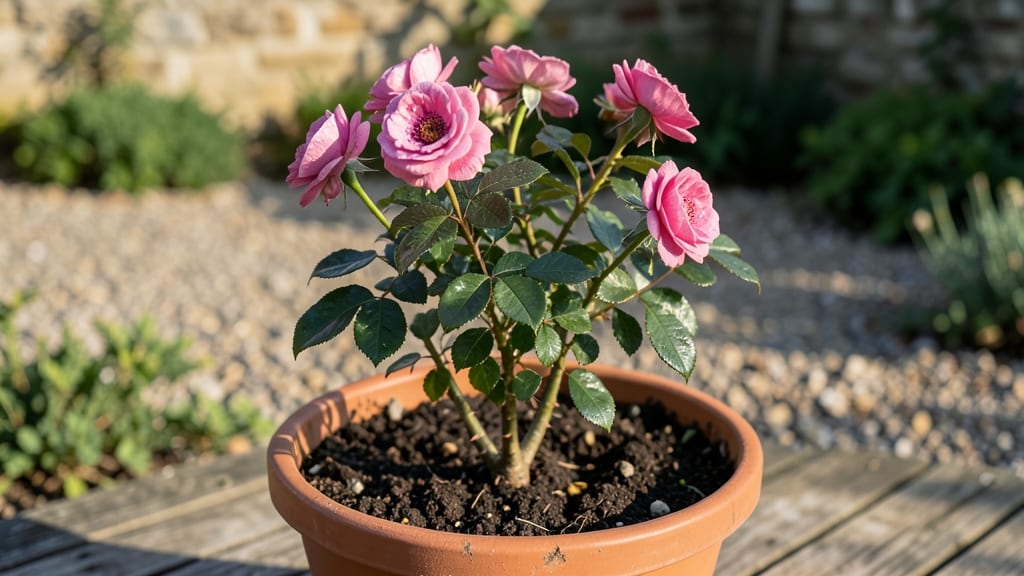
Growing shrub roses in containers turns your patio into a fragrant, thorn-free oasis with minimal yard space. 🌿 I've filled balconies and porches with varieties like 'Knock Out' and 'Dr. Huey' that thrive in pots—no sprawling garden required.
These roses love room to grow, so choose containers at least 18-24 inches wide with drainage holes. A well-draining potting mix with compost keeps roots happy, and regular pruning keeps them compact. The payoff? Blooms from early summer until frost with minimal fuss.
You'll need consistent watering (about 1-2 gallons per week) and monthly fertilizer during growing season. Deadheading spent blooms encourages more flowers, and winter protection with burlap or frost cloth keeps them safe. Perfect for small spaces, urban gardens, or anyone who wants roses without the maintenance of in-ground planting.
Let's get those containers blooming!
📚 In This Guide
- What you need
- Instructions
- Tips and common mistakes
- Wrapping up and next steps
What you need
- ● Container: A 5-gallon or larger pot (18"+ deep) with drainage holes. Terracotta or fiberglass works best for heat retention.
- ● Shrub Rose: 1-2 dwarf or patio varieties (e.g., 'Knock Out,' 'Dr. Huey,' or 'Flower Carpet'). Check local climate zones!
- ● Potting Soil: A high-quality, well-draining mix (e.g., 60% potting soil + 30% perlite + 10% compost). 10-12 lbs per container.
- ● Fertilizer: Slow-release rose fertilizer (e.g., 10-10-10 or organic options like fish emulsion). 1 tbsp per plant at planting.
- ● Mulch: Organic mulch (e.g., shredded bark or pine straw) to retain moisture. 1-2 inches after planting.
- ● Gloves & Pruners: Heavy-duty gardening gloves and sterilized pruners for trimming.
- ● Drainage Layer: Pebbles or broken pottery (1-2 inches) at the container’s base.
- ○ Support Stake: Optional but helpful for taller varieties (e.g., 3-4 ft bamboo stakes).
- ● Watering Can: With a rose or spray nozzle for gentle hydration.
- ● Plant Ties: Soft fabric or Velcro ties to secure stems to stakes.
Step-by-step guide to growing thriving shrub roses in containers
Here’s how to cultivate lush, fragrant shrub roses in pots—no thorns, no fuss, just stunning blooms.
🪴 Step 1: Select the Right Containers and Drainage
Choose containers with a minimum 18-inch diameter and depth to accommodate deep roots and prevent crowding. I prefer unglazed terra cotta because it breathes, helping roots stay aerated and reducing rot risk. Ensure each pot has multiple drainage holes—at least three—placed near the bottom. If your pots lack them, drill holes yourself using a ½-inch bit for optimal drainage.
Line the bottom with 2-3 inches of gravel or broken pottery to create a reservoir for excess water. This layer prevents soil from clogging the drainage holes while allowing water to escape freely. Skipping this step leads to soggy roots and fungal diseases, which can kill your roses within weeks. Test your setup by filling the pot with water—it should drain completely within 10-15 minutes. If it pools, adjust the drainage layer.
🌱 Step 2: Use the Perfect Soil Mix for Container Roses
Fill your pots with a well-draining potting mix designed for roses or a blend of equal parts potting soil, perlite, and compost. I avoid garden soil—it compacts in containers and suffocates roots. Mix in a slow-release rose fertilizer (look for one with a 10-10-10 or 12-12-12 NPK ratio) to provide steady nutrients over 3-4 months. This prevents the need for frequent feeding and keeps roses blooming consistently.
Moisten the mix until it’s evenly damp but not soggy—think of a wrung-out sponge. Press it lightly into the pot to eliminate air pockets, then create a small mound in the center. This ensures the roots spread outward rather than circling the edges, which weakens the plant over time. If you’re planting bare-root roses, soak the roots in lukewarm water for 1-2 hours before planting to rehydrate them.
☀️ Step 3: Plant and Stake for Support
Remove your shrub rose from its container and loosen the roots gently if they’re circling. Position it so the graft union (the swollen area near the base) sits 1-2 inches below the soil line—this protects the plant from temperature fluctuations and encourages stronger growth. Backfill with soil, pressing lightly to remove air pockets, and water deeply to settle everything.
Install a 5-6 foot bamboo stake or metal cage immediately after planting. Shrub roses grow 3-5 feet tall and need support to prevent flopping, especially in windy conditions. Tie the main stems loosely to the stake using soft plant ties or strips of old T-shirt fabric—avoid wire or plastic ties, which can cut into the bark as the plant grows. Water again until the soil is saturated to a depth of 6 inches, checking by inserting your finger into the mix.
💧 Step 4: Water and Feed for Continuous Blooms
Water your container roses deeply 2-3 times per week, aiming for 1-2 gallons per watering depending on pot size. The key is consistency—let the top 2 inches of soil dry out between waterings, but never let the roots dry completely. Overwatering is just as harmful as underwatering; you’ll know you’re doing it right when water runs freely from the drainage holes but the soil remains moist, not waterlogged.
Feed every 4-6 weeks during the growing season (spring through fall) with a liquid rose fertilizer diluted to half-strength. This prevents root burn and provides the phosphorus and potassium needed for strong blooms. I also add 1 tablespoon of Epsom salt to the soil monthly to boost magnesium levels—this keeps the foliage vibrant and prevents yellowing leaves. Stop fertilizing in late summer to encourage hardier growth before winter.
✂️ Step 5: Prune and Maintain for Year-Round Health
Prune your shrub roses twice a year: once in early spring (just as new growth begins) and again in late winter (before buds swell). Remove dead, diseased, or crossing branches first, cutting back to a healthy outward-facing bud. Then, shape the plant by trimming 1/3 of the oldest stems to encourage new growth. Use clean, sharp pruners and make cuts at a 45-degree angle just above a bud to promote faster healing.
Watch for aphids, spider mites, or black spot fungus—common pests and diseases in container roses. Treat aphids with a strong spray of water or neem oil, and apply fungicide at the first sign of black spot. Mulch the soil surface with 2-3 inches of bark or pine needles to retain moisture, suppress weeds, and regulate soil temperature. In fall, move pots to a protected location (like a garage or shed) or wrap them in burlap to shield roots from freezing temperatures. This simple step extends their lifespan by years.
Tips & tricks for thriving container-grown shrub roses
Container roses are a game-changer for small spaces—but only if you nail the details. Here’s what I’ve learned after watching dozens of potted roses thrive (and just as many struggle).
Container Size and Drainage: That 18-inch minimum diameter isn’t just a suggestion—it’s non-negotiable for shrub roses. I’ve seen 16-inch pots work for smaller varieties, but for the 3-5 foot tall shrubs we’re growing, anything less leads to root-bound misery. And when testing your drainage setup, fill the pot completely with water—if it doesn’t drain within 10-15 minutes, either add more gravel or drill additional holes. I once left a pot with inadequate drainage for a weekend, and by Monday, the roots were already turning brown. Don’t make my mistake.
Soil Mix Secrets: The equal parts potting soil, perlite, and compost blend is your foundation, but here’s the pro move: add 1/4 cup of coarse sand to each bushel of mix. This prevents compaction in containers where roots can’t expand naturally. For bare-root roses, that 1-2 hour soak is crucial—it rehydrates roots that may have dried during shipping, giving them a fighting chance. I keep a bucket of lukewarm water ready with a splash of rose fertilizer to speed up the process.
Pruning Precision: When you’re shaping those stems in Step 5, look for outward-facing buds—these will grow away from the center, creating a fuller plant. I mark these with a pencil before cutting to avoid accidental mistakes. And here’s a trick: after your first spring pruning, collect the clippings and compost them. Those stems are packed with nutrients your roses can reuse next season. Just avoid pruning in fall—you want the plant to harden off before winter.
Winter Protection: That protected location in fall isn’t just about temperature—it’s about sheltering from wind and temperature swings. I’ve had pots survive winters in unheated garages with just a layer of burlap, but for extra insurance, add 2-3 inches of straw mulch around the base. This creates an insulating barrier that keeps roots from freezing. In extreme climates, move pots to a north-facing wall where they’ll catch minimal direct sunlight during winter dormancy.
Pro Tips for Shrub Roses In Containers
- Container roses are a game-changer for small spaces—but only if you nail the details.
- Container Size and Drainage: That 18-inch minimum diameter isn’t just a suggestion—it’s non-negotiable for shrub roses.
- Soil Mix Secrets: The equal parts potting soil, perlite, and compost blend is your foundation, but here’s the pro move: add 1/4 cup of coarse sand to each bushel of mix.
Frequently asked questions
Got questions about growing shrub roses in containers?
You’re not alone! Here are answers to the most common queries to help you cultivate a thriving, fragrant display without the hassle.
What’s the best container size for shrub roses?
Shrub roses need room to grow—aim for at least 15-20 gallons per plant (think large pots or half whiskey barrels). Smaller containers (under 5 gallons) will stunt growth and limit blooms. Add drainage holes and a sturdy saucer to prevent root rot. Pro tip: Wider pots encourage bushier growth, while deeper ones support taller varieties.
When is the best time to plant shrub roses in containers?
Plant in early spring or fall when temperatures are mild (50–75°F). Avoid extreme heat or cold, which stresses roots. Container-grown roses adapt faster than bare-root plants, so you can even transplant lightly in summer—just water deeply and shade them for a week to reduce shock.
How often should I water containerized shrub roses?
Containers dry out fast—check soil moisture daily in summer! Water when the top inch feels dry, aiming for 1–2 inches per week. Use a drip irrigation system or water at the base (not leaves) to prevent fungal diseases. Mulch with bark or straw to retain moisture and regulate temperature.
Can I grow shrub roses in containers year-round?
In zones 7–10, yes! Move pots to a sheltered spot in winter (like a garage or under eaves) to protect from frost. In colder zones, dig up containers and store them in a cool, dark place (like a basement) with slightly moist soil. Warning: Avoid freezing temperatures—roses are tender perennials in containers!
Why aren’t my container shrub roses blooming?
Common culprits: overcrowded roots, poor soil, or lack of sunlight (6+ hours daily). Prune dead wood in late winter, fertilize monthly with rose-specific food, and repot every 2–3 years. Yellow leaves? Could be overwatering—let soil dry slightly between waterings.
What’s a low-maintenance alternative to shrub roses in containers?
Try dwarf Knock Out roses (thornless, disease-resistant) or lantana for long blooms with less fuss. Hydrangeas (like ‘Endless Summer’) or butterfly bush also thrive in containers with minimal pruning. All offer color and fragrance—just check their sunlight and water needs!
Wrapping up and next steps
Growing shrub roses in containers is a rewarding way to enjoy fragrant blooms and lush greenery without the fuss of traditional roses. With the right container, soil, and care, you can create a stunning vertical garden that thrives year after year.
Whether you're a beginner or a seasoned gardener, these tips will help you cultivate a thriving, low-maintenance rose display that brings joy to any space! 🌸
Now that you’re armed with knowledge, pick your favorite variety and get planting—your container garden awaits! For extra inspiration, explore design ideas or join a gardening community to share your progress. Happy growing! 🌱