
Shrubs
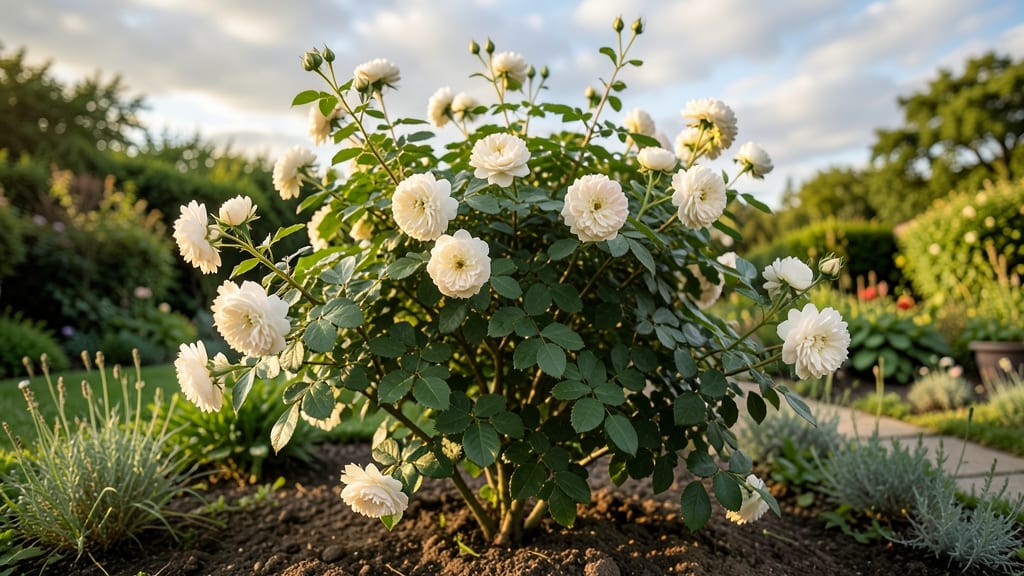
The Rosa Iceberg shrub brings neighborhood-stopping blooms that last from spring until frost—if you plant it right. 🌸 This isn’t just a rose; it’s a low-maintenance powerhouse that thrives in hedges, borders, or as a standalone specimen, with fragrant white flowers that never quit.
I’ve grown it for years, and it’s the only rose that actually begs to be pruned because it blooms so prolifically.
Start with full sun to partial shade (at least 6 hours of sunlight) and well-draining soil—sandy loam or amended clay works best. The key is consistent moisture without soggy roots; mulch helps retain water while keeping weeds at bay.
Unlike fussy roses, Rosa Iceberg tolerates drought once established and resists black spot better than most, making it perfect for beginners or busy gardeners.
Prune in late winter or early spring to shape your shrub and encourage dense blooms. Cut back one-third of the oldest canes to the ground and trim side branches to open the center.
With the right care, you’ll end up with a fluffy, cloud-like bush that’s as sturdy as it is stunning—ideal for cutting gardens or privacy screens.
Watch for rose slugs (those ugly sawfly larvae) and Japanese beetles—handpick or spray with neem oil early in the season. Deadhead spent blooms to prolong flowering, and fertilize lightly in early spring and mid-summer with a balanced rose food.
This shrub rewards patience with years of effortless beauty, proving that roses don’t have to be high-maintenance headaches.
📚 In This Guide
- What you need
- Instructions
- Tips and common mistakes
- Wrapping up and next steps
What you need
- ● 1 cup fresh Rosa Iceberg rose petals (organic, pesticide-free, and food-safe—avoid decorative varieties!)
- ● 1 cup organic granulated sugar (or raw sugar for a deeper flavor)
- ● 1 cup freshly squeezed lemon juice (about 4–5 lemons, organic preferred)
- ● ½ cup fresh orange juice (or blood orange for extra drama!)
- ● 1 cup filtered water (or rose-infused water for extra floral notes)
- ● A sterilized glass jar (quart-sized, with an airtight lid)
- ● A fine-mesh strainer or cheesecloth (for filtering petals)
- ● A wooden spoon or silicone spatula (gentle on glass)
- ○ Optional: A citrus juicer (for effortless juice extraction)
- ○ Optional: A food thermometer (to monitor fermentation temps)
- ● Access to organic rose petals (check specialty grocers or online stores—here’s a trusted supplier 🌹)
- ● Patience! Fermentation takes 4–6 weeks (longer = tangier flavor).
- ● Sterile workspace (wash tools/jar with hot, soapy water to prevent mold).
How to grow a thriving Rosa Iceberg shrub
This classic rose thrives with the right care—here’s how to coax its signature blooms year after year.
🌱 Step 1: Choose the Perfect Planting Site
Rosa Iceberg loves full sun—at least 6 hours daily—so pick a south- or west-facing spot where it gets morning light and afternoon warmth. I always test the area first by placing a white sheet of paper in the sun for an hour; if it stays cool to the touch, the light is too weak. This variety also needs shelter from harsh winds, which can tear delicate petals.
Check soil drainage by digging a 12-inch hole and filling it with water. If it drains completely within 2 hours, the site is ideal. Amend heavy clay soil with 3 inches of compost mixed into the top 12 inches of soil—this prevents root rot while keeping moisture consistent. Iceberg roses hate soggy roots, so avoid low-lying areas where water pools.
🪴 Step 2: Plant at the Right Depth and Spacing
Dig a hole twice as wide as the root ball but no deeper—Iceberg roses grow best when planted 1 inch higher than their container level. This prevents water from pooling around the stem. Gently loosen the roots if they’re circling the pot, then position the plant so the graft union (visible as a slight bulge near the base) sits 2 inches above soil level.
Backfill with native soil mixed with 1 cup of bone meal to encourage strong root growth. Water deeply until moisture reaches 6 inches down, then mulch with 2 inches of wood chips to retain moisture and suppress weeds. Space plants 3-4 feet apart—crowding leads to fewer blooms and more disease pressure.
☀️ Step 3: Water Deeply and Consistently
Iceberg roses need 1-1.5 inches of water weekly, but never let the soil dry out completely. I check moisture by sticking my finger 2 inches deep—if it feels dry, it’s time to water. Deep, infrequent watering encourages roots to grow downward rather than staying shallow. Water at the base in the morning to reduce fungal risks from evening moisture.
During the first growing season, I water every 3-4 days until the plant establishes a strong root system. You’ll know it’s settled when new growth appears and the plant stops wilting in heatwaves. Avoid overhead sprinklers—they can spread fungal diseases like black spot, which Iceberg roses are prone to.
✂️ Step 4: Prune for Bushier Growth and More Blooms
Prune Iceberg roses in early spring before new growth starts. Remove any dead, diseased, or crossing branches first, then cut back last year’s growth by one-third to encourage bushier growth. I always make cuts just above an outward-facing bud to promote airflow and reduce disease. Avoid heavy pruning in fall—it stimulates tender new growth that won’t survive winter.
Deadhead spent blooms regularly to redirect energy into new flowers. Pinch back leggy stems to maintain a compact shape. Iceberg roses bloom repeatedly, so consistent pruning keeps them looking full and vibrant. Never prune in wet weather—clean tools with rubbing alcohol between cuts to prevent spreading pathogens.
🌿 Step 5: Feed and Protect for Long-Term Health
Fertilize Iceberg roses in early spring with a balanced 10-10-10 fertilizer spread evenly around the base. Lightly scratch it into the top 2 inches of soil, then water deeply. Repeat every 6-8 weeks during the growing season, but avoid fertilizing in fall—it encourages tender growth that won’t winter over well.
Watch for pests like aphids or spider mites, which love the tender new growth. Spray with neem oil at the first sign of trouble, and apply a 2-inch layer of mulch in late fall to protect roots from freezing temperatures. Iceberg roses are hardy in zones 4-9, but a thick mulch layer helps them survive colder winters with fewer issues.
Tips & tricks for perfect Rosa Iceberg shrub
To maximize your citrus-infused Rosa Iceberg shrub's bold flavor and longevity, these simple yet impactful strategies will help you avoid common pitfalls and elevate every batch.
Harvest Timing: Pick your Rosa Iceberg petals in the early morning when their essential oils are at peak concentration. Avoid harvesting after rain or when dew is present—moisture encourages mold growth during fermentation. I aim for a sunny, dry morning after the dew has evaporated completely.
Citrus Selection: For the most vibrant flavor profile, use a mix of blood oranges and Meyer lemons—their natural sweetness and acidity complement the floral notes beautifully. Peel the citrus just before adding to the jar to prevent oxidation, which dulls the bright citrus flavors. I always use organic citrus when possible to avoid wax coatings that can interfere with fermentation.
Sterilization Strategy: Don't skip sterilizing your equipment! I use a mix of equal parts water and white vinegar in a large pot, submerging all jars, lids, and tools for at least 10 minutes. After sterilizing, rinse thoroughly with hot water and let air-dry completely. This critical step prevents contamination that can ruin your entire batch—trust me, I've learned this the hard way after losing three fermentations to mold.
Storage Wisdom: Once your shrub is fermented and ready, store it in the refrigerator where it'll keep for up to 6 months. The cold temperature slows fermentation and preserves the vibrant color. I like to use dark glass bottles to protect from light exposure, which can degrade the delicate flavors over time. Always leave at least 1 inch of headspace in the container to allow for natural expansion during fermentation.
Pro Tips for Rosa Iceberg Shrub
- To maximize your citrus-infused Rosa Iceberg shrub's bold flavor and longevity, these simple yet impactful strategies will help you avoid common pitfalls and elevate every batch.
- Harvest Timing: Pick your Rosa Iceberg petals in the early morning when their essential oils are at peak concentration.
- Citrus Selection: For the most vibrant flavor profile, use a mix of blood oranges and Meyer lemons—their natural sweetness and acidity complement the floral notes beautifully.
Frequently asked questions
Got questions about crafting the Rosa Iceberg Shrub? You’re not alone—fermenting citrus and floral shrubs can feel tricky at first! Here are answers to the most common queries to help you nail this bold, citrus-infused recipe every time.
How long should I let the Rosa Iceberg Shrub ferment?
The ideal fermentation time is 4–6 weeks at room temperature (65–75°F). Taste it after 3 weeks—if the flavors are too sharp, let it ferment longer. Once it smells tangy-sweet with a hint of floral depth, it’s ready! Store it in the fridge afterward to slow fermentation.
Can I speed up the fermentation process?
While you can’t truly rush fermentation, you can optimize conditions. Keep the jar in a warm, dark spot (like a pantry) and stir it gently every few days to distribute yeast and bacteria. Avoid heat sources—consistent warmth (not hot!) speeds things up naturally. Patience pays off, though!
What if my shrub smells “off” or has mold?
If you spot fuzzy mold or a sour, rotten smell, discard it immediately—it’s unsafe. To prevent this, use sterilized jars, clean tools, and a thin layer of brine (like 1–2 tbsp salt per cup of water) to inhibit bad bacteria. If it smells yeasty (like sourdough) or vinegary, that’s normal!
How long does the finished shrub last in the fridge?
Once fermented, your Rosa Iceberg Shrub will stay fresh for 6–12 months in an airtight container in the fridge. The flavors evolve over time—some cocktail enthusiasts love the deeper tang after 3–6 months! Label it with the date and give it a quick sniff before using.
What can I substitute if I can’t find Rosa Iceberg lemons?
No worries! Use regular lemons or Meyer lemons for brightness, or swap in grapefruit for a sharper twist. For floral notes, add 1 tsp rose water or a few dried rose petals (food-grade!) to the brine. Just adjust sweetness/salt to taste—experimentation is key!
Pro Tip:
For a boozy shrub, add 1 oz vodka or gin to the brine before fermenting—it preserves flavors and adds a subtle kick to cocktails. Just remember: alcohol won’t replace proper fermentation, but it’s a fun shortcut!
Wrapping up and next steps
Ready to elevate your cocktails with a bright, citrusy twist? The Rosa Iceberg Shrub is your secret weapon—packed with floral depth and zesty tang, it’s perfect for spritzes, sours, or even non-alcoholic mocktails.
Whether you’re a fermentation newbie or a seasoned mixologist, this recipe is simple, versatile, and endlessly creative.
👉 Next step: Grab your ingredients, follow the steps, and experiment! Tag us in your cocktail creations—we’d love to see what you whip up! Cheers to bold flavors! 🍊✨