
Shrubs
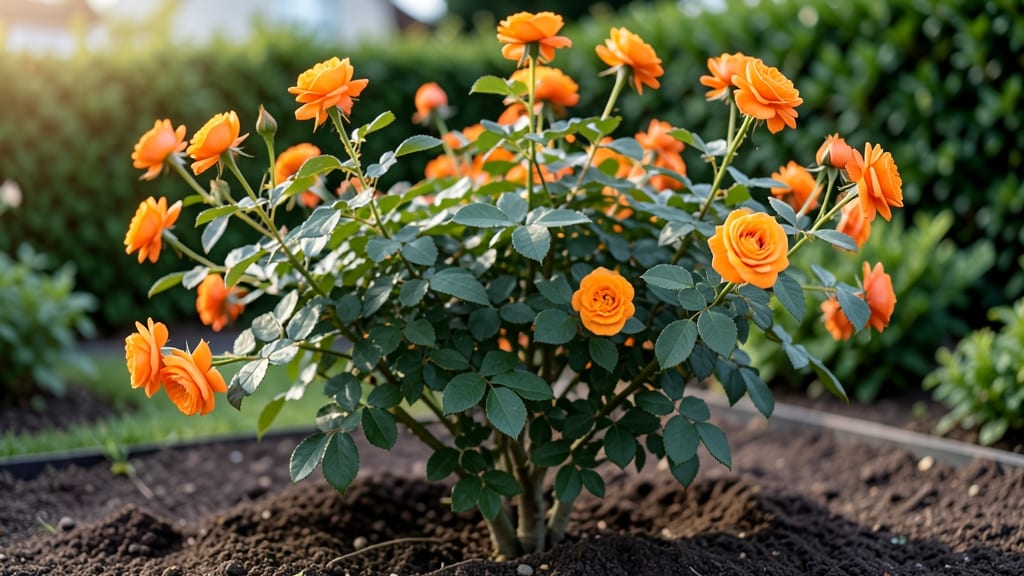
Growing an orange rose shrub means your garden will smell like a summer sunset. 🌸 These vibrant blooms aren’t just stunning—they’re packed with fragrance so intense you’ll want to bottle it.
My Rosa 'Orange Triumph' thrives in full sun, and with the right care, it’ll reward you with bold, citrusy blooms for years. The secret to success? Well-draining soil and consistent watering—never soggy roots.
I’ve learned that pruning after the first flush of blooms keeps the shrub compact and encourages nonstop flowering. A balanced fertilizer in spring kickstarts growth, and a light trim in fall tidies things up for winter.
You’ll harvest petals for syrups, teas, or garnishes by midsummer, their scent lingering long after the blooms fade. The shrub’s glossy foliage stays disease-resistant with proper airflow, and deer tend to leave it alone—unlike many roses. Perfect for borders, containers, or as a standalone focal point.
Once established, it’s low-maintenance but high-reward. Let’s get yours growing!
📚 In This Guide
- What you need
- Instructions
- Tips and common mistakes
- Wrapping up and next steps
What you need
- ● 1 cup fresh orange blossoms (or 2 tbsp dried orange blossoms, if fresh aren’t available)
- ● 1 cup fresh rose petals (preferably orange-hued or deep pink roses for color; avoid sprays treated with pesticides)
- ● 1 cup granulated sugar (ensure it’s fine and pure for best dissolution)
- ● 1 cup water (distilled or filtered for clarity)
- ○ 1 cinnamon stick (optional but adds warmth—break in half for easier removal later)
- ● A large glass jar (quart-sized, with a tight-sealing lid)
- ● A fine-mesh strainer or cheesecloth (for filtering)
- ● A wooden spoon or silicone spatula (for stirring)
- ○ A small funnel (optional, for transferring syrup to bottles)
- ● Clean glass bottles (4-6 oz size, for storage—sterilize with hot water)
- ● Labels & markers (to note the date and ingredients)
- ● A food processor (to finely chop petals if they’re tough or woody)
- ● Vanilla bean or cardamom pods (for depth of flavor)
- ● Citrus zest (orange or bergamot, for a brighter twist)
- ● A muslin bag or coffee filter (for double-filtering clarity)
Step-by-Step guide to planting and cultivating an orange rose shrub
Here's how I prepare the perfect spot and nurture vibrant orange roses that burst with fragrance.
🌱 Step 1: Select and Prepare the Planting Site
Orange roses thrive in full sun—choose a location that receives at least 6-8 hours of direct sunlight daily. I always test the soil pH first; roses prefer 6.0-6.5. If your soil is too alkaline, amend it with sulfur or peat moss before planting. Dig a hole twice as wide as the root ball but only as deep as the container it came in—burying too deep suffocates the roots.
Loosen the native soil around the hole with a garden fork to encourage root spread. Mix the removed soil with 2-3 inches of compost to improve drainage and fertility. This ensures your orange rose gets a nutrient-rich foundation right from the start. Avoid planting in low spots where water pools—roses hate soggy roots.
☀️ Step 2: Plant and Stake for Support
Gently remove the rose from its container and tease the roots outward if they're circling. Place the shrub in the hole so the graft union (the swollen area near the base) sits 2-3 inches above soil level. This prevents disease from splashing water onto vulnerable tissue. Backfill with the amended soil, pressing lightly to eliminate air pockets but not compacting too firmly.
Install a 5-6 foot stake at least 6 inches away from the main stem to avoid damaging roots. Tie the rose to the stake with soft plant ties, leaving room for growth—too-tight ties strangle stems as they thicken. Water immediately after planting to settle the soil and remove any air gaps around the roots. You’ll know it’s right when water drains evenly without pooling.
💧 Step 3: Water and Mulch for Retention
Water deeply once a week for the first month, ensuring the soil is moist 6 inches down. Orange roses are drought-tolerant once established, but young plants need consistent moisture to develop strong roots. I check moisture by inserting a 6-inch probe—if it comes out dry, water again. Avoid wetting the foliage to prevent fungal diseases like black spot.
Apply a 3-inch layer of mulch (like wood chips or pine straw) around the base, keeping it 2-3 inches away from the stem. Mulch conserves moisture and regulates soil temperature, but too much against the trunk invites rot. Replenish mulch annually to maintain its protective layer. This step is non-negotiable—skipping it leads to soil erosion and temperature swings that stress roots.
✂️ Step 4: Prune and Fertilize for Vibrant Blooms
Prune in early spring before new growth begins. Remove dead, diseased, or crossing branches first, then cut back remaining stems by one-third to encourage bushier growth. Make cuts at a 45-degree angle just above an outward-facing bud. This shape improves airflow and sunlight penetration, which is critical for preventing mildew on orange roses.
Fertilize with a rose-specific formula (high in phosphorus for blooms) every 4-6 weeks during the growing season. I use a slow-release granular fertilizer spread evenly over the root zone, followed by a deep watering to activate it. Avoid high-nitrogen fertilizers—they produce lush foliage at the expense of flowers. Watch for new buds forming within 6-8 weeks after pruning; that’s your cue everything’s on track.
🌿 Step 5: Maintain Through the Seasons
In late fall, reduce watering and remove any remaining blooms to redirect energy to root development. Apply a thick layer of mulch (4-6 inches) to insulate roots during winter. Orange roses are hardy but benefit from protection in colder climates. I also tie stems loosely to prevent wind damage and mark the plant’s location with stakes—new growth in spring can be hard to spot under mulch.
Resume regular care in early spring with a fresh round of pruning and fertilizer. Deadhead spent blooms throughout the season to encourage continuous flowering. If you notice yellowing leaves, it’s often a sign of overwatering or nutrient deficiency—adjust your routine accordingly. With consistent care, your orange rose will reward you with fragrant blooms from early summer through fall.
Tips & tricks for cultivating vibrant orange rose shrubs
Here's what I've learned from years of growing these fragrant beauties—tricks that make all the difference between a struggling bush and one bursting with color.
Sunlight Strategy: While 6-8 hours of sunlight is ideal, I've found that orange roses actually tolerate slightly less light than other varieties—just not too much shade. In Step 1, if your location only gets 5 hours of direct sun, supplement with a reflective surface like a white wall or garden mirror to maximize light exposure. This helps maintain that signature vibrant orange hue in the blooms, which can fade in low-light conditions.
Soil Science: The 6.0-6.5 pH range is crucial, but I always go one step further by testing soil moisture content too. In Step 1, mix in 1 part perlite to your 2-3 inches of compost—this improves aeration while preventing waterlogging. Orange roses are sensitive to soggy roots, and this blend helps maintain that perfect balance between moisture retention and drainage.
Pruning Precision: When cutting back stems by one-third in Step 4, I look for the fifth leaf node from the base as my target cut point. This ensures you're removing enough old growth while leaving enough new growth potential. The 45-degree angle cut is important too—it prevents water from pooling on the wound, which can lead to fungal infections. I always sterilize my pruners with rubbing alcohol between cuts for extra protection.
Seasonal Care: The late fall mulch layer of 4-6 inches is your winter insulation, but I've learned that timing matters too. In colder climates, apply mulch after the first hard frost when soil temperatures drop below 40°F. This prevents early winter temperature shocks that can damage roots. In Step 5, I also recommend wrapping young plants with burlap for added protection during harsh winters.
Pro Tips for Orange Rose Shrub
- Here's what I've learned from years of growing these fragrant beauties—tricks that make all the difference between a struggling bush and one bursting with color.
- Sunlight Strategy: While 6-8 hours of sunlight is ideal, I've found that orange roses actually tolerate slightly less light than other varieties—just not too much shade.
- Soil Science: The 6.0-6.5 pH range is crucial, but I always go one step further by testing soil moisture content too.
Frequently asked questions
What’s the best ratio of flowers to sugar for an orange rose shrub?
The classic ratio is 1 cup tightly packed orange rose petals to 1 cup granulated sugar. For a stronger flavor, some makers use 1.5 cups of petals per cup of sugar. Adjust based on your petals’ potency—dried petals often need less sugar than fresh ones.
How long does it take to make orange rose shrub?
Active prep takes about 15–20 minutes, but the magic happens during steeping! Let the shrub sit for 4–6 weeks (longer = deeper flavor). Stir it weekly to keep the sugar dissolving. Patience pays off—don’t rush it!
Can I substitute orange blossoms for orange rose petals?
Yes! Orange blossoms work beautifully—they’re sweeter and floral, with a hint of citrus. Use the same ratio, but expect a lighter, more delicate flavor. For extra zing, add a strip of orange peel to the jar while steeping.
My shrub turned moldy—what went wrong?
Mold usually means moisture or improper sealing. Always use a sterilized jar, pack petals tightly (to minimize air gaps), and ensure the lid seals tightly. If mold appears, discard it—never salvage it. Store in a cool, dark place to prevent this.
How do I use orange rose shrub in cocktails vs. desserts?
- Cocktails: Stir 1–2 tsp of shrub into syrups, sodas, or mixers (try it in a rose spritz with gin and tonic!). Rim glasses with shrub for a floral kick.
- Desserts: Drizzle over panna cotta, fruit tarts, or yogurt. Reduce shrub with water into a glaze for pastries.
Wrapping up and next steps
Transforming your orange rose shrub into delicious cocktails and desserts is easier—and more rewarding—than you think! With just a few simple ingredients and a splash of creativity, you can elevate everyday treats into fragrant, show-stopping delights.
Whether you’re a mixologist or a baking enthusiast, this floral syrup opens doors to endless possibilities.
Ready to bloom in the kitchen? Grab your ingredients, follow the steps, and let your orange rose shrub shine—your taste buds will thank you! 🌸✨