
Flowers
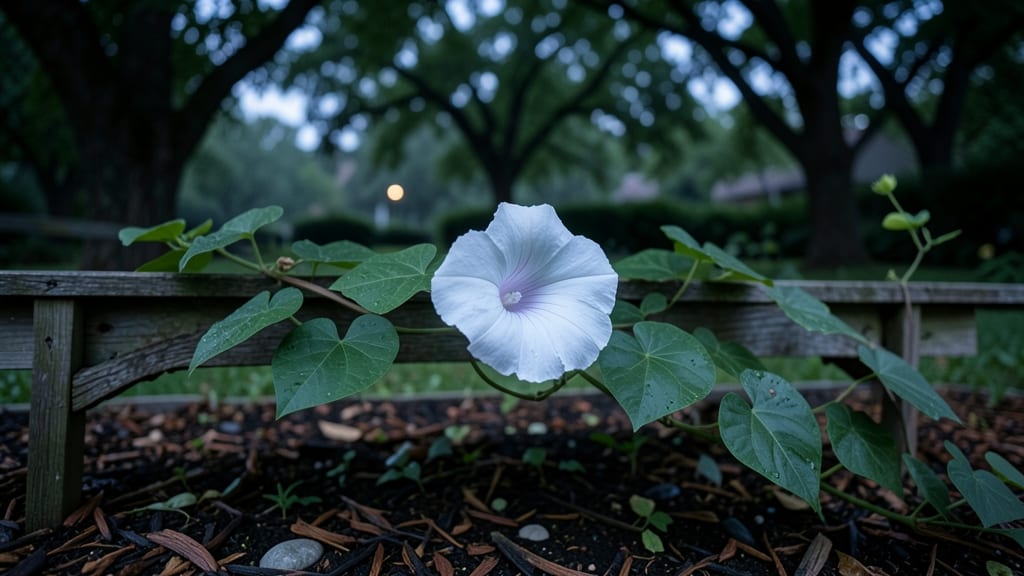
My moon flower shrub (Ipomoea alba) transformed my backyard into a twilight sanctuary—its intoxicating fragrance and silvery-white blooms only open after dark. 🌙 The secret to growing this night-blooming beauty lies in replicating its tropical roots: rich, well-draining soil, 6+ hours of full sun daily, and consistent moisture without soggy roots.
I learned the hard way that impatient gardeners often give up too soon—these vines need time to establish before they reward you with their magical evening display.
Start with a well-amended planting hole (mix in compost and a handful of organic fertilizer) and space plants 6-10 feet apart—they'll climb trellises or sprawl gracefully along fences. Varieties like 'Moonlight' and 'Starlight' are the most fragrant, while 'Purple Moon' adds a deep contrast.
The key is even moisture: water deeply 2-3 times per week in summer, then taper off in winter when growth slows. Mulch helps retain moisture and keeps roots cool during hot afternoons.
By midsummer, you'll have a lush, fragrant canopy that hums with nighttime pollinators. The blooms last just one evening but produce new buds daily, creating a continuous show.
Prune lightly in early spring to shape the plant and remove dead growth, but avoid heavy pruning—this shrub relies on established vines for its best display. The real magic happens at dusk when the garden comes alive with scent and the soft rustle of petals unfurling.
Pair moon flowers with jasmine, gardenia, or tuberose for a sensory overload of evening fragrance. Watch for aphids on new growth—spray with soapy water if you spot clusters—and ensure good air circulation to prevent powdery mildew.
With the right conditions, your moon flower will become the centerpiece of your garden's nightly performance, turning evenings into a fragrant, starry experience you won't want to miss.
📚 In This Guide
- What you need
- Instructions
- Tips and common mistakes
- Wrapping up and next steps
What you need
- ● Moon flower seeds or young plants: Choose Ipomoea alba seeds or 6-inch potted seedlings from a trusted nursery.
- ● Well-draining potting mix: 2–3 gallons (for containers) or loamy garden soil amended with compost (for in-ground planting).
- ● Fertilizer: A balanced 10-10-10 NPK granular fertilizer (1–2 tbsp per plant) or slow-release organic options like fish emulsion.
- ● Support structure: A trellis, fence, or sturdy bamboo stake (6–10 ft tall) for climbing vines.
- ● Watering can or hose with a gentle spray nozzle: Moon flowers love moisture but hate soggy roots!
- ● Garden trowel or transplant spade (for planting seeds/saplings).
- ● Pruning shears (sharp, sterilized) for trimming and shaping.
- ○ Mulch (optional but helpful): Straw or wood chips (2–3 inches) to retain soil moisture.
- ● Sunlight access: A full-sun location (6+ hours/day)—this shrub thrives in heat!
- ● Patience! 🌙 Moon flowers take 3–4 months to bloom but reward you with magical night-blooming flowers.
- ● Epsom salt (magnesium sulfate) (1 tbsp/month) for lush foliage.
- ● Slow-release fertilizer spikes for low-maintenance nutrition.
- ● String lights or solar-powered garden lights to highlight those moonlit blooms!
Step-by-step guide to cultivating a thriving moon flower shrub
This fragrant beauty thrives with the right placement and care—here’s how to coax its stunning blooms to life.
🌱 Step 1: Select the Perfect Planting Site
Moon flower shrubs (Ipomoea alba) demand full sun exposure—at least 6-8 hours daily—for robust growth and abundant blooms. Choose a location sheltered from strong winds, as their delicate vines can snap easily. The soil should drain well but retain moisture; amending heavy clay with compost or sand improves aeration and prevents root rot.
I always test the soil pH before planting—ideal range is 6.0-7.0. A simple soil test kit from your local garden center makes this easy. If your soil is too acidic, work in lime to adjust. Avoid low-lying areas where cold air pools, as these shrubs are frost-sensitive even as established plants.
☀️ Step 2: Prepare the Soil and Plant
Dig a hole twice as wide as the root ball but only as deep—planting too deep suffocates roots. Loosen the sides of the hole with a shovel to encourage root spread. Mix the removed soil with compost (about 1 part compost to 3 parts soil) to enrich nutrients. Place the shrub in the hole, ensuring the top of the root ball sits level with the surrounding soil—never buried.
Backfill gently, tamping down lightly to eliminate air pockets. Water deeply to settle the soil around roots. I like to add a 2-inch layer of mulch (wood chips or straw) over the soil surface to retain moisture and suppress weeds. Keep mulch 3-4 inches away from the stem to prevent rot.
💧 Step 3: Water and Fertilize for Initial Growth
Water deeply once weekly during the first month to establish roots, then taper to every 10-14 days once established—unless your region experiences extreme heat. Overwatering is the fastest way to kill these shrubs; let the top 2 inches of soil dry out between waterings. Signs of underwatering include drooping leaves or yellowing edges, while overwatering causes mushy stems or yellowing foliage.
Feed with a balanced, slow-release fertilizer (10-10-10) at half-strength when new growth appears in spring. Avoid high-nitrogen fertilizers—they promote leafy growth at the expense of blooms. I also sprinkle bone meal around the base in early spring to boost phosphorus for flowering.
✂️ Step 4: Prune and Train for Optimal Shape
Prune in late winter or early spring before new growth starts. Remove dead, diseased, or crossing branches first, then shape the shrub by cutting back overly long stems to encourage bushier growth. Never cut more than one-third of the plant’s height in a single season—this stresses the shrub. I also pinch back new growth tips in early summer to promote branching and more blooms.
Train vines on a trellis or arbor if growing vertically—this supports the weight of heavy blooms and improves air circulation. Secure vines with soft garden ties, checking monthly to adjust as they grow. Deadhead spent blooms regularly to redirect energy into new flowers rather than seed production.
🌿 Step 5: Maintain Through Seasons
In summer, watch for aphids or spider mites—common pests on moon flowers. Spray with neem oil or insecticidal soap at the first sign of infestation. Reduce watering slightly in late summer to harden off the plant before fall. In winter, protect young shrubs with burlap wraps if temperatures drop below 20°F, though mature plants tolerate 15°F with minimal protection.
Every 2-3 years, fertilize again in spring and refresh the mulch layer. If the shrub outgrows its space, prune aggressively in late winter to rejuvenate growth. With consistent care, your moon flower will reward you with scented, nocturnal blooms for decades—just like the one I’ve had thriving on my patio for eight years.
Tips & tricks for perfect moon flower shrub growth
Here's what nobody tells you about keeping your moon flower thriving—these are the details that separate a struggling plant from one that blooms like crazy every summer.
Sunlight Strategy: The 6-8 hours of full sun requirement isn't just about light—it's about timing. Position your moon flower to receive morning sun and gentle afternoon light to prevent leaf scorch. I've learned the hard way that intense midday sun can burn delicate foliage, especially in hot climates. If you notice crispy leaf edges, provide afternoon shade temporarily until the plant acclimates.
Soil Science: That 6.0-7.0 pH range is non-negotiable for optimal growth. I recommend using a digital pH meter for accuracy—kit tests can be inconsistent. If your soil tests outside this range, don't panic: lime raises pH gradually, while sulfur lowers it. For heavy clay soils, mix in 2-3 inches of sand or perlite to improve drainage, which prevents the dreaded root rot that can kill these plants overnight.
Watering Wisdom: The first month's weekly deep watering is crucial—this establishes a strong root system that can handle drier conditions later. To check moisture levels, stick your finger 2 inches into the soil; if it feels dry, water. I've found that drip irrigation systems work best for moon flowers, delivering water directly to the roots while keeping foliage dry to prevent fungal diseases.
Pruning Precision: When you're pinching back those new growth tips in early summer, aim to remove just the top set of leaves. This encourages branching at the base where sunlight reaches the soil level. I also recommend sterilizing your pruning shears with rubbing alcohol between cuts to prevent spreading any potential diseases hiding in your garden tools.
Pro Tips for Moon Flower Shrub
- Here's what nobody tells you about keeping your moon flower thriving—these are the details that separate a struggling plant from one that blooms like crazy every summer.
- Sunlight Strategy: The 6-8 hours of full sun requirement isn't just about light—it's about timing.
- Soil Science: That 6.0-7.0 pH range is non-negotiable for optimal growth.
Frequently asked questions
Got questions about growing and caring for your moon flower shrub? You’re not alone! Here are some of the most common queries—plus straightforward answers to help you cultivate a thriving, fragrant garden centerpiece.
How fast does a moon flower shrub grow, and how big will it get?
A moon flower shrub (Ipomoea alba) typically grows 6–10 feet tall and spreads 5–8 feet wide with proper care. Growth is moderate to fast—expect 1–2 feet per year under ideal conditions (full sun, well-drained soil, and regular watering). Prune annually to control size and encourage bushier blooms!
Can moon flower shrubs survive in full sun, or do they need shade?
Moon flower shrubs thrive in full sun (6+ hours daily) and produce the most vibrant blooms when exposed to direct sunlight. However, in hot, dry climates, provide afternoon shade to prevent wilting. Mulch around the base to retain moisture and protect roots.
How often should I water a moon flower shrub, and what’s the best method?
Water deeply 2–3 times per week during the first growing season to establish roots, then taper to once a week (or more in extreme heat). Use drip irrigation or soaker hoses to deliver water at the soil level—avoid overhead sprinklers to prevent fungal diseases like powdery mildew. Pro tip: Let the top 2 inches of soil dry out between waterings.
What are some common pests or diseases, and how do I treat them?
Moon flower shrubs are generally low-maintenance, but watch for:
- Aphids or spider mites: Spray with neem oil or insecticidal soap.
- Powdery mildew: Improve airflow, avoid overhead watering, and treat with baking soda spray (1 tsp baking soda + 1 quart water + a drop of dish soap).
- Root rot: Ensure well-draining soil and avoid soggy conditions.
When is the best time to prune a moon flower shrub for more blooms?
Prune your moon flower shrub twice a year:
- Early spring (before new growth): Remove dead or weak branches to shape the plant.
- After flowering (late summer/early fall): Trim back up to 1/3 of the plant to encourage a bushier habit and next year’s blooms.
Are there any non-toxic alternatives if I have pets or small children?
While moon flower shrubs are non-toxic to pets and humans, if you’re concerned, consider these fragrant, pet-safe alternatives:
- Lavender (drought-tolerant, calming scent)
- Dwarf Gardenia (creamy blooms, low-maintenance)
- Butterfly Bush (Buddleia) (attracts pollinators, fast-growing)
Wrapping up and next steps
The moon flower shrub is a dreamy addition to sun-drenched gardens, blending beauty, fragrance, and low-maintenance charm. With its delicate blooms and hardy nature, it’s perfect for gardeners eager to create a serene, pollinator-friendly space—whether you’re a beginner or a seasoned green thumb. 🌙✨
Ready to transform your garden? Start by selecting the ideal spot, gathering your supplies, and planting with confidence. Soon, you’ll be rewarded with a fragrant, thriving canopy that brings joy for years to come!