
Shrubs
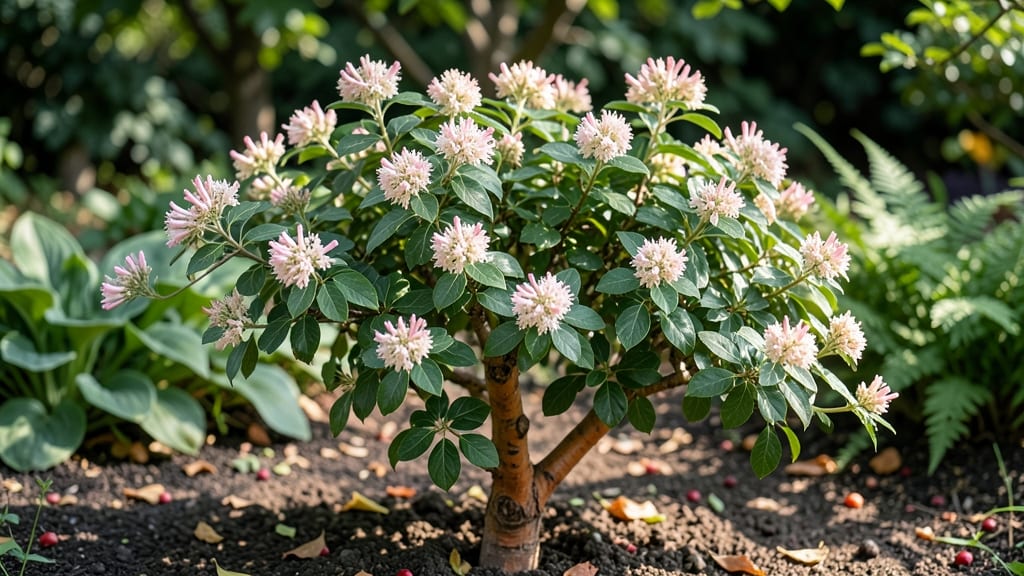
Growing Korean Spice Viburnum (Viburnum carlesii) transforms your garden into a fragrant sanctuary with its spicy-scented leaves and clusters of pink buds. 🌿 This deciduous shrub thrives in zones 3-8, offering year-round interest with its striking foliage and winter exfoliating bark.
Unlike many shrubs, it handles partial shade and urban pollution, making it perfect for small yards or city landscapes.
The secret to its success lies in well-draining soil—mix in compost at planting to encourage strong root growth. Water deeply once established, as this drought-tolerant shrub prefers moisture only at its base.
Prune lightly in late winter to shape and remove dead wood, but avoid heavy pruning, as it blooms on old wood.
By spring, you'll be rewarded with fragrant, pink flowers that attract pollinators, followed by red berries that birds adore. The spicy aroma of its foliage makes it a sensory standout, while its compact size (6-10 feet tall) fits neatly into mixed borders or as a standalone specimen.
Propagation is simple—layer stems in summer or divide mature plants in early spring. With minimal care, this shrub becomes a low-maintenance centerpiece that brightens any garden season after season.
📚 In This Guide
- What you need
- Instructions
- Tips and common mistakes
- Wrapping up and next steps
What you need
- ● Viburnum berries: 1 cup (fresh or frozen, preferably Korean viburnum like Viburnum opulus or Viburnum plicatum for depth)
- ● Spices: 1 cinnamon stick (3-inch)
- ● 3 whole cloves
- ● 1 star anise pod
- ● ½ tsp ground Korean red pepper flakes (gochugaru) – adjust for heat preference!
- ● Sweetener: ½ cup raw honey or brown sugar (for balance)
- ● Acid: ½ cup apple cider vinegar (or white vinegar for a sharper tang)
- ● Water: ½ cup (for hydration during fermentation)
- ● 1 quart-sized mason jar (or airtight container) with lid
- ● Cheesecloth or fine-mesh strainer
- ● Wooden spoon or spatula (for stirring)
- ● Small saucepan (for sterilizing jars, if needed)
- ○ Funnel (optional, for easy pouring)
- ○ Glass bottles (4–8 oz) for storage (optional, for serving)
- ● 1 tsp grated fresh ginger (for zing!)
- ● 1 tsp toasted sesame seeds (for nutty depth)
- ● 1 tbsp soy sauce or mirin (for umami richness)
- ● Citrus zest (lemon, yuzu, or orange) – 1 tsp (brightens flavor)
Step-by-step guide to growing Korean Spice Viburnum shrubs
Korean Spice Viburnum thrives with minimal fuss—here’s how to grow it boldly.
🌱 Step 1: Choose the Right Location and Plant
Pick a site with full sun to partial shade—this shrub tolerates both but shines brightest in 6+ hours of morning sun. I always plant mine where the afternoon shade naturally kicks in, especially in hotter climates. The soil should drain well; if yours is heavy clay, mix in 2-3 inches of compost before planting.
Dig a hole twice as wide as the root ball but only as deep. Place the shrub so the top of the root ball sits just ½ inch below soil level. Korean Spice Viburnum hates sitting too deep—it’ll struggle to establish properly. Backfill with native soil mixed with a handful of organic matter, then water deeply to settle everything.
☀️ Step 2: Water and Mulch for Establishment
Water once weekly for the first 2 months after planting, ensuring the soil stays 2-3 inches deep and moist. You’ll know it’s right when the top layer feels damp but not soggy. After that, this drought-tolerant shrub needs water only when the soil feels dry to the touch down to 4 inches deep.
Spread 2-3 inches of mulch around the base, keeping it 3 inches away from the trunk. I use wood chips because they break down slowly and improve soil over time. Mulch helps retain moisture and keeps roots cool during summer heat—critical for young plants.
✂️ Step 3: Prune for Shape and Health
Prune in late winter or early spring before new growth appears. Remove any dead, diseased, or crossing branches first—this keeps the shrub open and airy. Then, shape it by cutting back overgrown stems to just above a outward-facing bud. Never cut into old wood; Korean Spice Viburnum blooms on new growth, so pruning too late reduces next year’s flowers.
You’ll see fresh, vibrant green growth within 2-3 weeks of pruning. This is your cue that the shrub is recovering well. If you notice any yellowing leaves, it’s usually a sign of overwatering—adjust your schedule to water only when the soil feels dry.
🌿 Step 4: Fertilize and Monitor for Pests
Apply a balanced, slow-release fertilizer in early spring, following package instructions. I prefer organic options like fish emulsion or compost tea because they feed the soil, not just the plant. Avoid high-nitrogen fertilizers—they promote leafy growth at the expense of those stunning red berries.
Keep an eye out for spider mites or scale insects, which occasionally target Viburnum. If you spot webbing or sticky residue on leaves, spray with a mix of 1 teaspoon mild dish soap and 1 quart water. Korean Spice Viburnum is generally pest-resistant, but early intervention prevents bigger problems.
⏰ Step 5: Enjoy Year-Round Interest
In spring, you’ll get fragrant white flowers that attract pollinators. By summer, the foliage turns a fiery red, and in fall, clusters of bright red berries appear—these are edible and add a tart-sweet flavor to cocktails or jams. The berries persist through winter, offering structure and color to your landscape even when everything else is dormant.
This shrub is low-maintenance once established, but I always check it in early spring for any winter damage. If you notice any brown, crispy branches, prune them out immediately to encourage fresh growth. With proper care, your Korean Spice Viburnum will thrive for decades, becoming a standout feature in your garden.
Tips & tricks for cultivating Korean Spice Viburnum shrubs
Here's what nobody tells you about growing this vibrant shrub—these tricks will set your plant up for long-term success.
Location is Everything: While Korean Spice Viburnum tolerates partial shade, I've noticed the most striking red foliage and berries develop when planted in morning sun with afternoon shade. In hotter climates, afternoon shade becomes even more critical—think of it as the plant's built-in air conditioning. If your yard only gets full sun, consider planting near a building or tall trees that provide natural afternoon shade.
Planting Depth Matters: That half-inch below soil level isn't just arbitrary—it's crucial for proper root establishment. When I first planted mine too deep, the roots struggled to breathe and the plant took twice as long to establish. Use a level to check the depth, and remember that the root flare (where roots meet the trunk) should be visible above the soil line after planting.
Watering Wisdom: The first two months are critical for root development, so stick to that weekly watering schedule religiously. I've learned the hard way that skipping even one week can set your plant back months. After establishment, let the soil dry between waterings—you'll know it's time when the top 4 inches feel dry to the touch. This drought tolerance is one of the plant's superpowers once established.
Pruning Pro Tip: When shaping your shrub in Step 3, always cut just above an outward-facing bud. This simple technique encourages fuller growth rather than leaving gaps. I like to prune in early spring when new growth is just starting to appear—you'll see fresh green leaves emerging within 2-3 weeks, which is your reward for timing it right.
Pro Tips for Korean Spice Viburnum Shrub
- Here's what nobody tells you about growing this vibrant shrub—these tricks will set your plant up for long-term success.
- Location is Everything: While Korean Spice Viburnum tolerates partial shade, I've noticed the most striking red foliage and berries develop when planted in morning sun with afternoon shade.
- Planting Depth Matters: That half-inch below soil level isn't just arbitrary—it's crucial for proper root establishment.
Frequently asked questions
Got questions about harnessing the bold, spicy vibes of Korean Spice Viburnum Shrub? Here are some answers to help you master this fermented gem—whether you're mixing cocktails, marinating meats, or just diving into the world of shrubs!
How long does it take for the Korean Spice Viburnum Shrub to ferment fully?
The fermentation process typically takes 4–6 weeks at room temperature (70–75°F). Taste it weekly—once the flavors deepen and the fizz slows, it’s ready! If it’s too tangy, let it ferment another week. Pro tip: Store it in the fridge after opening to slow fermentation and preserve freshness.
Can I adjust the spice level in this shrub?
If you love heat, double the Korean red pepper flakes or add a pinch of cayenne. For a milder kick, reduce the pepper or swap it for a pinch of gochugaru (Korean chili flakes) for a sweeter, fruitier spice. Pro tip: Start with half the amount and taste as you go!
What’s the best way to store leftover shrub?
Transfer your shrub to a clean, airtight glass jar or bottle and store it in the fridge for up to 6 months. The cold slows fermentation, keeping flavors vibrant. For long-term storage (up to a year), freeze it in ice cube trays—perfect for small cocktail batches!
Can I use this shrub in non-alcoholic drinks?
Yes! This shrub shines in sparkling water, iced tea, or even homemade sodas. Mix 1–2 tbsp per 8 oz of liquid and adjust to taste. For a creamy twist, stir into horchata or matcha lattes. Pro tip: Add a squeeze of lime for brightness!
What if my shrub smells or looks “off” during fermentation?
If you notice mold, a rotten smell, or excessive bubbles, toss it—fermentation gone wrong can spoil the shrub. To prevent issues, use sterilized jars, clean tools, and a fermentation weight (like a sanitized stone) to keep veggies submerged. Pro tip: Work in a clean space to avoid contaminants!
Are there substitutes for Korean red pepper flakes in this recipe?
If you can’t find Korean red pepper flakes, try cayenne pepper, chipotle powder, or even a dash of sriracha (reduce liquid slightly to compensate). For a smoky depth, add a pinch of smoked paprika. Pro tip: Toast whole peppers before grinding for extra aroma!
Wrapping up and next steps
The Korean Spice Viburnum Shrub is a game-changer for adding a bold, tangy-sweet kick to cocktails, marinades, and even dressings. Its vibrant flavors—thanks to fermented viburnum, gochugaru, and citrus—elevate everyday dishes into something extraordinary.
Whether you're a home chef or a mixology enthusiast, this shrub is your secret weapon for depth and complexity.
Ready to level up your recipes? Grab your ingredients, ferment a batch, and start experimenting—your taste buds (and guests) will thank you! 🍸✨ Next step: Share your creations on social media with #KoreanSpiceShrub and tag us for a chance to be featured!