
Shrubs
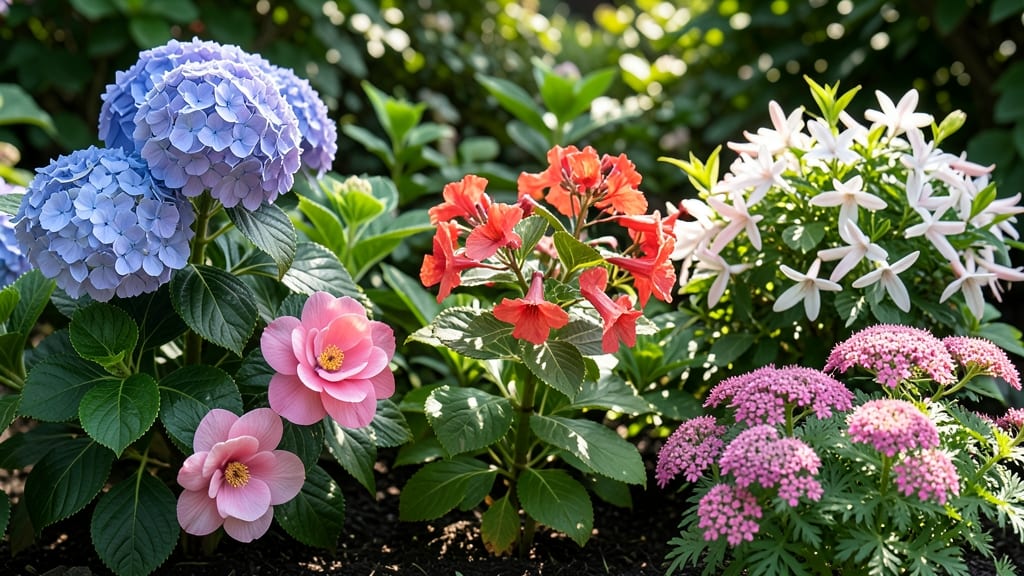
Flowering shrubs bring instant drama to any garden with their images of flowering shrubs bold blooms and lush foliage—no pruning marathon required. 🌸 I’ve curated my favorite varieties that deliver year-round interest, from early spring lilacs to frost-kissed hydrangeas, all while demanding minimal upkeep.
These aren’t just pretty faces; they’re the backbone of low-maintenance landscapes that still feel like a million bucks.
Think of them as your garden’s superstars: azaleas for vibrant spring color, butterfly bush for summer pollinator action, and camellias for winter’s last hurrah. Pair them with gravel paths or evergreen hedges to create structure, or let them take center stage as a solitary focal point near your patio.
The key is mixing heights and bloom times—tall lilacs behind shorter roses, for example—so your garden never looks bare.
You’ll end up with a four-season show that requires less pruning than most lawns. The secret? Choosing disease-resistant varieties (like Knock Out roses) and spacing them properly for airflow.
Even in small yards, these shrubs pack a punch—imagine a 6-foot hydrangea framing your front door or a 3-foot abelia spilling over a planter.
For quick inspiration, start with three varieties: one for spring, one for summer, and one for fall/winter. Mix textures too—glossy leaves of boxwoods or the feathery foliage of Russian sage—to keep things dynamic. Now, let’s dive into the best performers for your space!
📚 In This Guide
- What you need
- Instructions
- Tips and common mistakes
- Wrapping up and next steps
What you need
- ● Flowering shrubs: Choose 3–5 varieties (e.g., Hydrangea, Azalea, Camellia, or Weigela) with contrasting blooms (colors, shapes, or textures). Ensure they’re in full bloom for best results!
- ● Camera or smartphone: A DSLR/mirrorless camera (with macro lens for details) or a high-resolution smartphone (e.g., iPhone 13+, Google Pixel 7+) with a minimum 12MP sensor.
- ○ Tripod (optional but recommended): A lightweight, adjustable tripod (e.g., Manfrotto Pixi or Joby GorillaPod) for steady shots and long exposures.
- ● External flash or ring light: A softbox light (e.g., Neewer 10-inch) or a portable LED panel (e.g., Lume Cube) for even lighting on overcast days.
- ● Reflector (5-in-1, 24-inch): A collapsible reflector (e.g., Neewer 5-in-1) to bounce light and reduce harsh shadows.
- ● Pruning shears (small, sharp): Bypass pruners (e.g., Fiskars) to trim dead blooms or shape shrubs for framing.
- ● Gloves & long sleeves: Garden gloves (e.g., Wet & Forget) and lightweight long sleeves to protect from thorns or sap.
- ● ND filters (e.g., 3-stop or 6-stop): For silky water effects in nearby streams or creative long exposures.
- ● Macro lens (e.g., 60mm or 100mm): To capture intricate details like pollen or dew on petals.
- ● Backdrop cloth (muslin or seamless paper): A 5x7 ft neutral-colored backdrop (e.g., white or gray) for studio-style shots.
- ● Spray bottle with water: Lightly mist blooms to enhance freshness and reflect light for a dewy look.
- ● Color swatches or props: A small palette of complementary colors (e.g., pastel blues, greens) to add depth to compositions.
How to select and style flowering shrubs for year-round visual impact
Here's the approach I use to curate a low-maintenance, high-impact flowering shrub collection that thrives with minimal pruning.
🌿 Step 1: Choose Shrubs With Complementary Bloom Times
Select varieties that stagger their flowering seasons to ensure continuous color. I focus on four key categories: early spring bloomers like viburnum (March-April), summer performers such as hydrangeas (June-August), fall bloomers like crape myrtle (September-October), and winter interest plants like winter daphne (December-February). This creates a natural progression where one shrub's blooms fade just as another begins.
Consider your hardiness zone when selecting plants. For example, camellias thrive in zones 7-10, while potentilla handles zones 3-8. I always check the mature height and spread to ensure they'll fit your space without overcrowding. A good rule is to plant shrubs 3-5 feet apart depending on their mature size, allowing for both air circulation and future growth.
☀️ Step 2: Position for Optimal Sunlight and Seasonal Interest
Most flowering shrubs need 6+ hours of sunlight daily, but some varieties tolerate partial shade. For example, azaleas and rhododendrons prefer morning sun and afternoon shade, while butterfly bush thrives in full sun. I always observe the sun patterns in your yard before planting—what looks like full sun in summer may become partial shade in winter when trees leaf out.
Consider foliage color and texture too. Shrubs like smoke bush offer stunning purple foliage in fall, while ornamental cherry provides vibrant red stems in winter. I group plants with similar light requirements together to create cohesive garden "rooms" that flow seamlessly from season to season.
✂️ Step 3: Implement Strategic Pruning for Shape and Health
Flowering shrubs generally require minimal pruning, but strategic cuts encourage better blooming. For spring-flowering shrubs like forsythia, prune immediately after flowering to maintain shape and promote next year's blooms. Summer-flowering varieties like abutilon benefit from light pruning in early spring to shape the plant before new growth begins.
I never remove more than 1/3 of the plant's volume in a single pruning session. Use clean, sharp pruners to make cuts just above a leaf node or bud. For larger shrubs, I remove dead or crossing branches first, then shape the plant by cutting back to an outward-facing bud. This creates a natural, open structure that allows sunlight to penetrate to the center of the plant.
🪴 Step 4: Layer with Complementary Plants for Year-Round Appeal
Surround your flowering shrubs with perennials and annuals that bloom at different times. For example, plant spring bulbs like daffodils at the base of early blooming shrubs, then add summer-blooming perennials like coneflowers, and finish with fall mums. This creates a layered effect where each plant has its moment to shine.
Don't forget about winter interest. Incorporate plants with persistent seed heads, like coneflower, or those with colorful bark, such as dogwood. I also add evergreen ground covers like creeping thyme or heuchera to provide year-round texture and prevent soil erosion between shrubs.
💧 Step 5: Establish a Simple Watering and Mulching Routine
Newly planted shrubs need consistent moisture for the first 1-2 years to establish strong root systems. I water deeply 2-3 times per week during the first growing season, ensuring the soil is moist 6-8 inches deep. Once established, most flowering shrubs are drought-tolerant and only need supplemental watering during prolonged dry spells.
Apply 2-3 inches of mulch around each shrub, keeping it 3-4 inches away from the trunk to prevent rot. I use organic mulch like shredded bark or pine straw, which breaks down over time and improves soil quality. Replenish mulch annually in early spring to maintain its protective layer and suppress weeds.
Tips & tricks for perfect year-round flowering shrub designs
Creating a stunning, low-maintenance shrub collection takes thoughtful planning—and these are the details that make all the difference.
Seasonal Layering: When planning your spring bulbs and fall mums in Step 4, consider adding winter pansies for early spring color. These cold-hardy annuals bridge the gap between dormant shrubs and emerging spring blooms like viburnum. I plant them around the base of early bloomers to create instant color when other plants are still dormant.
Pruning Precision: In Step 3, when shaping your forsythia or abutilon, focus cuts on removing branches that grow inward or cross others. These "hidden" branches steal energy from your plant's best blooms. I always make cuts at a 45-degree angle just above an outward-facing bud—this encourages new growth in the direction you want, creating a fuller, more balanced shape over time.
Sunlight Mapping: Before planting, walk your yard at different times of day to observe sunlight patterns. What appears as full sun in summer may become partial shade in winter when deciduous trees leaf out. I mark these changes with stakes and plant butterfly bush in the sunniest spots while tucking azaleas where morning sun gives way to afternoon shade—this ensures each plant gets exactly what it needs year-round.
Mulch Maintenance: That 2-3 inches of mulch in Step 5 isn't just decoration—it's a living layer. I replenish mine annually in early spring, but I also check for compaction. If it's packed down to less than 1 inch, I fluff it with a rake to maintain proper insulation and moisture retention. A well-maintained mulch layer prevents weeds, regulates soil temperature, and even improves soil quality as it breaks down.
Pro Tips for Images Of Flowering Shrubs
- Creating a stunning, low-maintenance shrub collection takes thoughtful planning—and these are the details that make a...
- Seasonal Layering: When planning your spring bulbs and fall mums in Step 4, consider adding winter pansies for early ...
- Pruning Precision: In Step 3, when shaping your forsythia or abutilon, focus cuts on removing branches that grow inwa...
Frequently asked questions
Got questions about choosing, caring for, or styling flowering shrubs? You’re not alone! Here are answers to the most common queries to help you create stunning, low-maintenance displays with images of flowering shrubs that keep your landscape vibrant year-round.
What are the best low-maintenance flowering shrubs for beginners?
Start with hardy, resilient options like Hydrangea macrophylla (for lush blooms), Butterfly Bush (Buddleia) (drought-tolerant and pollinator-friendly), or Weigela (fast-growing with bold flowers). These thrive with minimal pruning and offer seasonal color. Pro tip: Check your USDA hardiness zone to match shrubs to your climate!
When is the best time to plant flowering shrubs for maximum blooms?
Plant in early spring or fall when temperatures are mild. This gives roots time to establish before extreme heat or cold. Avoid planting in summer—heat stress can stunt growth. For container-grown shrubs, plant anytime (just water deeply afterward!). Mulch around the base to retain moisture and protect roots.
How do I prune flowering shrubs without ruining next year’s blooms?
Timing is key! Prune after flowering for spring-bloomers (like lilacs) and in late winter for summer-bloomers (like hydrangeas). Remove dead or crossing branches first, then shape lightly. Avoid heavy cuts—never trim more than 1/3 of the shrub at once. Use sterilized tools to prevent disease!
Can I use flowering shrubs in containers, or are they only for gardens?
Shrubs like Dwarf Gardenia, Abelia, or Compact Hydrangea thrive in containers. Choose pots with drainage holes and use well-draining soil. Container shrubs may need more frequent watering and winter protection (like burlap wraps) in cold zones. Rotate pots for even growth!
Why aren’t my flowering shrubs blooming as much as they should?
Common culprits include over-fertilizing (too much nitrogen = leafy growth, fewer flowers), poor sunlight, or stress from drought/overwatering. Check your shrub’s light needs (most need full sun to partial shade) and feed with a balanced bloom booster in early spring. Yellowing leaves? Test soil pH—some shrubs (like azaleas) need acidic soil!
How can I style flowering shrubs for year-round interest?
Layer shrubs by height and bloom time! Pair early spring bloomers (like Pieris) with summer stars (like Spirea) and fall/winter interest plants (evergreens or berry-producing shrubs). Use odd-numbered groupings (3 or 5 plants) for natural looks. Add mulch in contrasting colors (like dark brown or red) to highlight blooms!
Wrapping up and next steps
Transforming your outdoor space into a vibrant, low-maintenance haven is easier than you think! 🌸 Flowering shrubs offer year-round color with minimal effort, making them the perfect choice for busy gardeners or anyone craving beauty without the fuss.
Whether you’re drawn to hydrangeas, azaleas, or camellias, these stunning shrubs bring joy and life to any landscape.
Ready to get started? Pick your favorite flowering shrubs, gather your tools, and dive into creating a garden that blooms effortlessly. Happy gardening! 🌿