
Watering
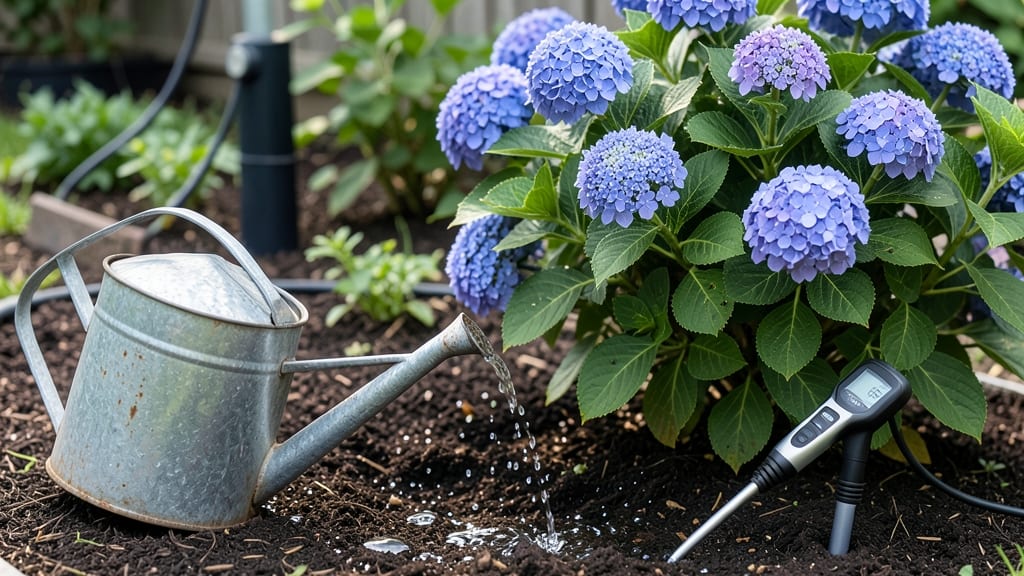
Watering shrubs the right way means giving them deep, infrequent soaks—not light sprinkles—that encourage strong roots and healthy growth.
Most gardeners drown their shrubs by watering too often, thinking more is better. But the truth? Overwatering kills more shrubs than underwatering, and the key is reading your plants’ needs instead of sticking to a rigid schedule.
In this guide, I’ll break down how often to water based on your shrubs’ type—whether they’re drought-tolerant lavender or thirsty hydrangeas—and how to adjust for your climate, soil, and season.
You’ll learn the exact signs of over- or underwatering, how to fix mistakes, and a seasonal watering calendar that keeps your shrubs thriving with minimal effort.
Seasonal watering schedule for shrubs: what to follow each month
Mastering the seasonal watering schedule for your shrubs means adapting to nature’s rhythm—not sticking to a rigid calendar. I’ve seen gardeners drown their hydrangeas in summer or let rosemary dry out in winter, both mistakes that could’ve been avoided with a flexible approach.
The key is understanding how monthly rainfall, soil moisture, and plant dormancy change your watering needs.
Start by checking your local climate zone—USDA Zone 6, for example, has distinct wet and dry seasons. In my Zone 6 garden, I adjust watering every 4-6 weeks to match rainfall patterns.
For instance, June’s 1-2 inches of rain often means I skip watering entirely, while August’s heat demands deep soaks every 3-5 days. Your shrubs will thank you for this seasonal flexibility.