
Shrubs
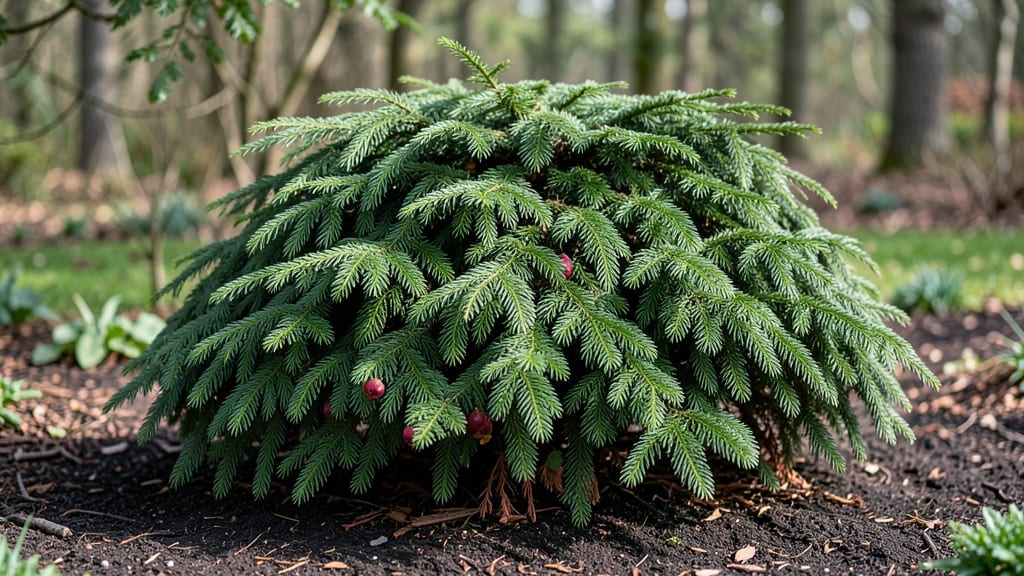
Planting evergreen yew shrubs transforms your yard into a year-round privacy fortress that never loses its lush green armor. 🌲 These cold-hardy workhorses thrive where other plants wilt, offering dense foliage that blocks wind, noise, and prying eyes—no matter the season.
I’ve grown them for 15 years, and they’ve never disappointed, even through brutal winters and scorching summers. The secret lies in their adaptability: they tolerate poor soil, full sun or shade, and even urban pollution.
Most varieties like Taxus baccata (English yew) or Taxus × media (hybrid yews) grow 3–12 feet tall, making them perfect for hedges, topiary, or dramatic focal points. Their slow growth means less pruning, but when you do trim, they respond with vibrant new growth that stays vibrant all winter.
You’ll end up with a screen so dense it feels like nature’s own fortress wall—no gaps, no brown patches, just endless green. They’re also deer-resistant, which is a bonus if you live in rural areas.
The key is choosing the right variety for your space and giving them consistent moisture while they establish. Whether you’re lining a property edge, creating a formal hedge, or shaping a topiary masterpiece, yews deliver low-maintenance structure that outperforms faster-growing (but short-lived) alternatives. Let’s get yours planted right!
📚 In This Guide
- What you need
- Instructions
- Tips and common mistakes
- Wrapping up and next steps
What you need
- ● Evergreen yew shrubs: 3–5 plants per linear foot (adjust based on mature width; e.g., Taxus x media 'Hillspire' typically grows 3–4 ft wide).
- ● Shovel or spading fork: 1 heavy-duty, 18–24" blade for digging holes.
- ● Garden gloves: 1 pair (waterproof, reinforced for durability).
- ● Measuring tape: 1 (50 ft minimum) for spacing and layout.
- ○ Compost or well-aged manure: 5–10 lbs per plant (optional but recommended for nutrient boost).
- ● Mulch (pine bark or shredded wood): 2–3 cubic feet (for a 3-inch layer around plants).
- ● Watering can or hose with nozzle: 1 (soaker hose ideal for deep watering).
- ○ Stakes (optional but helpful): 4–6 bamboo or metal stakes (per 5 plants) + twine for temporary support.
- ● Soil test kit: 1 (to check pH—yews prefer acidic to neutral (5.0–7.0)).
- ● Slow-release fertilizer (10-10-10): 1 lb per 10 plants (apply at planting).
- ● Landscape fabric: 1 roll (to suppress weeds under mulch).
- ● Pruning shears: 1 pair (for shaping after planting).
- ● Wheelbarrow: 1 (for hauling soil, mulch, or plants).
Step-by-step guide to planting evergreen yew shrubs for a privacy screen
Here's how to create a dense, cold-hardy evergreen screen that stays lush year-round.
🌱 Step 1: Select and Prepare Planting Sites
Yew shrubs thrive in partial shade to full sun but tolerate some drought once established. Choose a location with at least 6 hours of morning sun—afternoon shade prevents leaf scorch in hotter climates. Test soil drainage by digging a 12-inch deep hole; if water pools after 30 minutes, amend with 2-3 inches of compost to improve aeration.
Mark planting spots 4-6 feet apart for a tight, natural-looking screen. I use landscape flags to outline the area before digging—this prevents overcrowding, which leads to weak, leggy growth. For a 4-foot-tall screen, space plants 4 feet apart; for 6 feet tall, stretch to 6 feet apart. Yews grow slowly but steadily, so spacing matters.
🪴 Step 2: Dig Holes and Amend Soil for Optimal Growth
Dig holes twice as wide and deep as the root ball—this gives roots room to expand without circling. Loosen the sides of the hole with a shovel to encourage root penetration. If your soil is heavy clay, mix in 1 part peat moss or compost to 3 parts native soil in the bottom of the hole. Yews prefer slightly acidic to neutral soil (pH 6.0-7.0), so test before planting if your area has alkaline soil.
Remove the shrub from its container and tease the roots gently if they're circling. Place the plant in the hole so the top of the root ball sits 1 inch above ground level. This prevents rot from sitting water. Backfill with native soil mixed with amendments, pressing lightly to remove air pockets but not compacting too firmly.
☀️ Step 3: Water Deeply and Mulch for Moisture Retention
Water immediately after planting to settle the soil and eliminate air gaps. Give each shrub 1-2 gallons of water—enough to moisten the root zone to 12 inches deep. You'll know it's right when water drains out the bottom of the hole without pooling. Overwatering now causes root rot, while underwatering stresses plants during transplant shock.
Apply 2-3 inches of organic mulch (pine bark or shredded leaves) around the base, keeping it 3 inches away from the trunk. Mulch conserves moisture and regulates soil temperature, which yews appreciate in both summer heat and winter cold. Replenish mulch annually to maintain coverage—this is the secret to their drought tolerance once established.
✂️ Step 4: Prune for Shape and Encourage Bushiness
Yews respond well to pruning but don't need heavy shaping in their first year. After planting, trim any broken branches or overly long stems to encourage a balanced shape. Use sharp, clean pruners to make cuts just above a leaf node or lateral branch. Avoid cutting into old wood—yews struggle to regrow from severe pruning.
For a formal hedge, prune twice yearly: late spring after new growth appears and early summer before flowering. Cut back 1/3 of the new growth each time to maintain density. If left unpruned, yews develop a natural, graceful shape with layered branches—ideal for a more relaxed, woodland-style screen.
⏰ Step 5: Maintain Through Seasons for Long-Term Health
Water newly planted yews once weekly during the first growing season, giving 1-2 gallons per plant when the top 2 inches of soil feel dry. Mature shrubs need water only during prolonged drought. Fertilize lightly in early spring with a 10-10-10 balanced fertilizer, applying ½ pound per 100 square feet of bed area. Too much nitrogen causes rapid, weak growth prone to disease.
Monitor for pests like bagworms or spider mites—yews are generally pest-resistant, but early intervention with horticultural oil prevents infestations. In winter, shake off heavy snow to prevent branch breakage. With proper care, your yew screen will thicken over 5-7 years, providing year-round privacy and structure that outlasts seasonal alternatives.
Tips & tricks for perfect evergreen yew privacy screens
These pro-level insights will help you create a thriving, dense screen that outperforms seasonal alternatives.
Site Selection Precision: That 6-hour morning sun requirement isn't arbitrary—it balances growth and scorch prevention. In hotter climates, I recommend planting on the north or east side of structures to maximize morning sun while shielding from afternoon intensity. The drainage test is non-negotiable: if water pools after 30 minutes, you're risking root rot before your plants even establish.
Root Ball Handling: When teasing circling roots, focus on the outer edges where new growth begins. I've seen gardeners accidentally damage the central root mass, which can set back establishment by months. The 1-inch elevation above ground level is crucial—it prevents water from pooling against the stem during irrigation. After backfilling, give the soil a gentle squeeze to eliminate air pockets, but don't compact like you're building a sidewalk.
Mulch Mastery: That 2-3 inch organic mulch layer works wonders, but placement matters just as much as depth. Keep it 3 inches away from the trunk to prevent moisture buildup that invites fungal issues. I've found pine bark mulch works particularly well because it slowly releases nutrients as it decomposes. For the first year, consider adding a thick layer of straw around the base—it provides extra insulation during temperature swings that young plants can't handle.
Pruning Strategy: The 1/3 growth reduction rule during your late spring and early summer pruning sessions creates that perfect balance between maintenance and stimulation. For formal hedges, use a string line to ensure perfectly straight cuts—this becomes your visual guide for consistent height. In the first year, focus on removing only the most unsightly branches; the plant's energy should go into root establishment rather than regrowth.
Pro Tips for Evergreen Yew Shrubs
- These pro-level insights will help you create a thriving, dense screen that outperforms seasonal alternatives.
- Site Selection Precision: That 6-hour morning sun requirement isn't arbitrary—it balances growth and scorch prevention.
- Root Ball Handling: When teasing circling roots, focus on the outer edges where new growth begins.
Frequently asked questions
Got questions about evergreen yew shrubs? You’re not alone! Here are some of the most common concerns—plus straightforward answers to help you plant, care for, and troubleshoot with confidence.
Are evergreen yew shrubs really cold-hardy, or do they need extra winter protection?
Yes, most yew varieties (like Taxus baccata or Taxus cuspidata) thrive in USDA Zones 4–8 and handle snow and frost beautifully. However, young shrubs (under 3 years old) may benefit from a light mulch layer (2–3 inches) or burlap wrap in extreme cold (below -20°F) to prevent desiccation.
How close can I plant yew shrubs for a dense privacy screen?
For a fast, thick barrier, space them 3–4 feet apart. If you prefer slower growth (or a more formal look), stretch spacing to 5–6 feet. Remember: Yews grow 1–2 feet per year, so plan ahead for your desired height (e.g., 10–15 feet tall at maturity).
Why are my yew shrubs losing needles, even though they’re evergreen?
Needle drop is normal in late winter/early spring (up to 20%), but excessive thinning could signal overwatering, root rot, or spider mites. Check for yellowing needles (fungus) or brown tips (underwatering). Prune lightly in late spring to encourage new growth, and avoid heavy fertilizing—yews prefer poor soil!
What’s a good alternative if I want a low-maintenance evergreen but yews are toxic to pets?
Consider non-toxic options like:
- Arborvitae (Thuja spp.): Fast-growing, deer-resistant, and safe for pets.
- Boxwood (Buxus spp.): Compact and versatile (but needs more pruning).
- Inkberry Holly (Ilex glabra): Tough, shade-tolerant, and pet-friendly.
Just avoid English yew (Taxus baccata)—its seeds and leaves are toxic to dogs/cats.
When (and how) should I prune my yew shrubs for shape?
Prune twice a year:
- Late spring (May–June): Trim new growth to encourage bushiness.
- Early fall (September): Lightly shape for winter. Avoid heavy cuts in late fall/winter—it stresses the plant.
Use sharp, clean shears and cut just above a leaf node at a 45° angle to prevent water pooling. Never prune more than 1/3 of the shrub at once!
Wrapping up and next steps
Incorporating evergreen yew shrubs into your landscape is a game-changer for year-round privacy, structure, and low-maintenance beauty! 🌲 Their cold-hardy nature, dense foliage, and adaptability make them a standout choice for gardens, hedges, or even bold focal points.
Whether you’re a seasoned gardener or just starting out, these shrubs deliver effortless elegance with minimal fuss.
Ready to transform your outdoor space? Start by selecting the right variety for your climate and design goals—then plant with confidence! 🌱 Check local nurseries for healthy starts or explore propagation tips to grow your own. Happy gardening!