
Flowers
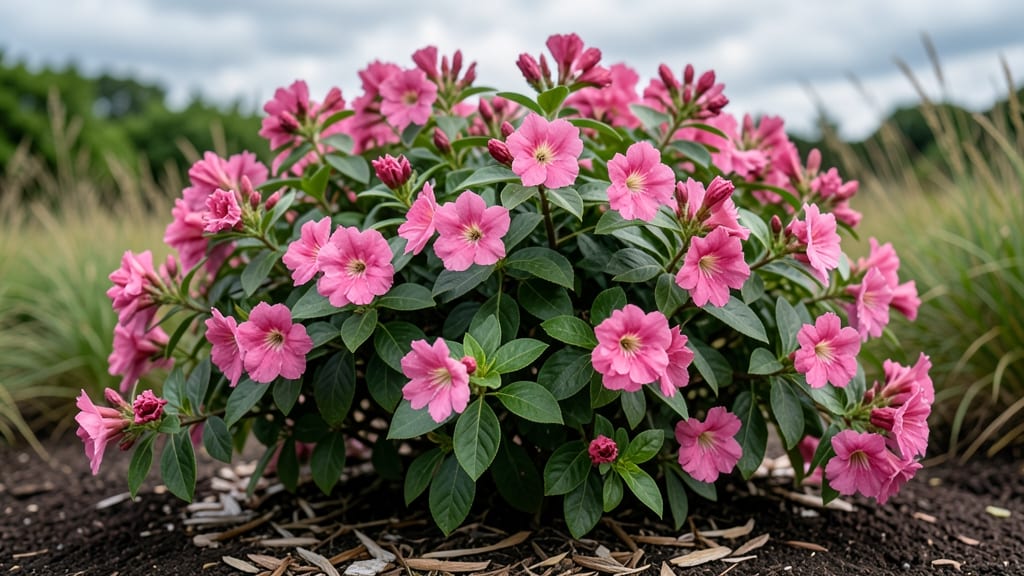
An evergreen shrub with pink flowers like Dwarf Fothergilla and Abelia brings year-round color to sun-drenched gardens. 🌸 Their glossy leaves and delicate blossoms create a fragrant canopy that outshines seasonal annuals, while their evergreen habit ensures winter interest.
These plants thrive where others falter, offering both structure and softness in one package.
Their compact forms make them perfect for borders, while larger varieties anchor garden beds with their vibrant pink hues. Pair them with lavender or Russian sage for a cottage-garden feel, or use them as focal points against dark evergreens like inkberry holly.
The key to their success lies in proper spacing—typically 3-5 feet apart—to allow airflow and prevent overcrowding.
What you get is a garden that stays stunning from spring through winter, with minimal maintenance. The flowers attract pollinators, while the foliage provides texture and contrast. In colder climates, their cold-hardiness ensures they'll be the last plants standing when frost arrives.
For modern gardens, try them as low hedges; for traditional spaces, let them grow naturally as specimen plants. Their versatility makes them the secret weapon of designers who want color without the seasonal upkeep. Now let's explore the best varieties for your space!
📚 In This Guide
- What you need
- Instructions
- Tips and common mistakes
- Wrapping up and next steps
What you need
- ● Evergreen shrub with pink flowers: Choose a healthy, disease-free plant (e.g., Abelia × grandiflora, Daphne odora, or Rhododendron varieties like 'Pink Pearl').
- ● Well-draining potting mix: 5–10 gallons (depending on pot size), or 2–3 cubic feet for in-ground planting. Opt for a blend with peat moss or perlite (e.g., 60% garden soil, 30% compost, 10% sand).
- ● Organic mulch: 2–3 inches of pine bark or shredded leaves to retain moisture and regulate soil temperature.
- ● Slow-release fertilizer: 1–2 tablespoons of balanced 10-10-10 or acidic fertilizer (for Rhododendrons) per plant.
- ● Garden trowel or shovel: For digging holes (1.5x wider and as deep as the root ball).
- ● Gloves: Heavy-duty to protect hands from thorns (e.g., Abelia) or prickly leaves.
- ● Watering can or hose with nozzle: With a gentle spray setting to avoid displacing soil.
- ● Pruning shears: Sharp, sterilized shears for shaping (sanitize with rubbing alcohol between cuts).
- ○ pH testing kit (optional): For Rhododendrons/Daphnes, which prefer acidic soil (pH 4.5–6.0).
- ○ Plant supports (optional): Stakes or cages for young shrubs in windy areas.
- ● Sunlight: A full-sun to partial-shade spot (6+ hours of direct sun for most varieties, but Daphne prefers morning sun).
- ● Climate suitability: Check your USDA Hardiness Zone (e.g., Abelia thrives in Zones 5–9; Daphne in Zones 7–9).
- ● Water source: Ready access to water for the first 2–3 weeks post-planting.
How to select and plant fragrant pink-flowering evergreen shrubs
Here’s how I choose and establish these sun-loving beauties for year-round color and scent.
🌿 Step 1: Choose the Right Shrub for Your Climate and Space
Pink-flowering evergreens like Abelia, Pieris japonica, or Daphne odora thrive in full sun but need well-draining soil. I always check the USDA hardiness zone for my region—most pink-flowering evergreens do best in zones 5-9. For example, Abelia handles heat well, while Pieris prefers cooler summers.
Measure your planting area—most mature 4-6 feet tall and wide, so space them 6-8 feet apart for airflow and light penetration. If your site has heavy clay soil, amend it with 2-3 inches of compost before planting to improve drainage. These shrubs hate soggy roots, so raised beds work beautifully in wet climates.
☀️ Step 2: Plant in Late Fall or Early Spring for Best Establishment
Dig a hole twice as wide as the root ball but only as deep—planting too deep suffocates the roots. Loosen the edges of the root ball with your fingers to encourage outward growth. Place the shrub in the hole so the top of the root ball sits level with the surrounding soil—burying the stem crown leads to rot.
Backfill with native soil mixed with 1 part compost to encourage root spread. Water deeply to settle the soil and eliminate air pockets. I tap the base of the plant gently while watering to ensure full contact between roots and soil. Mulch with 2-3 inches of shredded bark (not wood chips) to retain moisture and suppress weeds—just keep it 6 inches away from the stem to prevent rot.
💧 Step 3: Water Deeply and Adjust for Seasonal Needs
Water newly planted shrubs twice weekly for the first 4-6 weeks, then taper to once weekly once established. Pink-flowering evergreens like Pieris and Abelia need 1-1.5 inches of water per week during dry spells. I check soil moisture by sticking my finger 2 inches deep—if it’s dry, water thoroughly.
In winter, reduce watering unless your region experiences freezing temperatures below 20°F, where extra moisture helps protect roots. Overwatering in winter can lead to root rot, especially in heavy clay soils. Fertilize lightly in early spring with a balanced 10-10-10 formula to encourage blooms.
✂️ Step 4: Prune After Flowering to Encourage New Growth
Prune pink-flowering evergreens right after blooming (late spring for most) to shape the shrub and promote next year’s flowers. I use clean, sharp bypass pruners to make cuts just above a leaf node at a 45-degree angle. Never prune more than one-third of the plant in a single season—this stresses the shrub and reduces flowering.
Remove any dead, diseased, or crossing branches first. Thin out crowded areas to improve airflow, which prevents fungal issues. For Abelia, I lightly trim leggy stems to encourage bushier growth. Avoid heavy pruning in fall—it stimulates tender new growth that won’t harden off before winter.
🌱 Step 5: Monitor for Pests and Adjust Care Seasonally
Watch for aphids, spider mites, or scale on new growth—these pests love tender evergreen foliage. I treat early infestations with a soapy water spray (1 tsp mild dish soap per quart of water) applied in the early morning. For severe cases, use neem oil as a natural deterrent. Pink-flowering shrubs are generally pest-resistant, but stress from overwatering or poor drainage invites problems.
In late summer, reduce nitrogen fertilizer to shift the plant’s energy toward root strengthening instead of leaf growth. This ensures robust blooms next spring. If your shrub’s leaves turn yellow, it’s often a sign of overwatering or iron deficiency—amend soil with chelated iron if needed. With proper care, these fragrant evergreens will reward you with pink blooms for years.
Tips & tricks for perfect evergreen shrubs with pink flowers
These simple strategies will help you cultivate vibrant, fragrant evergreens that thrive year after year.
Climate Matching: Before purchasing, verify your USDA hardiness zone—most pink-flowering evergreens thrive in zones 5-9. For example, Abelia tolerates heat better than Pieris japonica, which prefers cooler summers. Check local nurseries for zone-specific varieties that will flourish with minimal stress in your specific microclimate. This single step prevents years of disappointment with struggling plants.
Soil Preparation: Heavy clay soil? Don't skip the soil amendment step. Mixing 2-3 inches of compost into your planting hole creates ideal drainage while retaining moisture. For wet climates, consider raised beds—these prevent soggy roots that lead to rot. I've seen Daphne odora plants thrive in raised beds where they would have struggled in ground soil. The difference in growth is dramatic within just one season.
Planting Depth: The most common mistake is burying the stem crown too deeply. Place the shrub so the top of the root ball sits level with the surrounding soil—burying it suffocates the plant. Use a reference stick or level to ensure perfect alignment. For container-grown shrubs, gently remove the outer pot to check root ball depth before planting. This simple adjustment prevents rot and encourages robust growth from the start.
Seasonal Watering: During the first 4-6 weeks, water twice weekly to establish roots, then taper to once weekly. The key is checking soil moisture 2 inches deep—if dry, water thoroughly. In winter, reduce watering unless temperatures drop below 20°F, where extra moisture protects roots. I've learned this the hard way after losing two Pieris japonica plants to winter overwatering in heavy clay soil.
Pro Tips for Evergreen Shrub With Pink Flowers
- These simple strategies will help you cultivate vibrant, fragrant evergreens that thrive year after year.
- Climate Matching: Before purchasing, verify your USDA hardiness zone—most pink-flowering evergreens thrive in zones 5-9.
- Soil Preparation: Heavy clay soil?
Frequently asked questions
Got questions about adding an evergreen shrub with pink flowers to your garden? You’re not alone! Here are some of the most common queries—and their practical answers—to help you make the best choice for your sun-soaked landscape.
What’s the best evergreen shrub with pink flowers for full-sun gardens?
Top picks include Abelia x grandiflora (Abelia), Pieris japonica (Japanese andromeda), and Rhododendron varieties like ‘Pink Pearl.’ These thrive in full sun (with afternoon shade in hot climates) and offer year-round greenery plus stunning blooms. Abelia is especially low-maintenance and fragrant!
When is the best time to plant these shrubs?
Plant in early spring or fall when temperatures are mild (50–70°F). Avoid extreme heat or frost, as it stresses roots. Spring planting gives shrubs time to establish before summer, while fall allows them to settle before winter dormancy. Pro tip: Water deeply after planting and mulch to retain moisture!
How do I keep my evergreen shrub with pink flowers healthy in hot climates?
Prioritize morning sun + afternoon shade in scorching areas. Water deeply 1–2 times per week (not daily shallow watering) and mulch with 2–3 inches of organic material to lock in moisture. Prune lightly in late winter to encourage dense growth and remove dead blooms to prolong flowering.
What are some low-maintenance alternatives to high-maintenance pink-flowering evergreens?
If you want easy-care options, try:
- Abelia ‘Kaleidoscope’ – Drought-tolerant, fragrant, and blooms spring to fall.
- Dwarf Gardenia ‘Kleim’s Hardy’ – Pink buds, glossy leaves, and minimal pruning needs.
- Camellia ‘Spring’s Promise’ – Semi-evergreen (loses leaves in cold winters) but thrives in heat with minimal fuss.
Why aren’t my pink-flowering evergreen shrubs blooming?
Common culprits include:
- Over-fertilizing with high-nitrogen (promotes leaves, not flowers). Use a balanced 10-10-10 or bloom-boosting fertilizer in early spring.
- Poor sunlight—most need 6+ hours of sun (even partial shade can reduce blooms).
- Pruning at the wrong time—avoid heavy cuts after mid-summer; prune before new growth in late winter.
- Stress from drought or root bound—check soil moisture and repot if roots are circling.
Wrapping up and next steps
Adding an evergreen shrub with pink flowers to your garden isn’t just about beauty—it’s about creating a fragrant, low-maintenance haven that thrives in full sun. From the delicate blooms of the Abelia to the bold charm of the Weigela, these shrubs bring year-round interest with minimal fuss.
Whether you’re a seasoned gardener or just starting, their resilience and vibrant color make them a perfect choice for any sunny landscape.
Ready to transform your outdoor space? Start small—pick one shrub that excites you, gather your supplies, and enjoy the process! 🌸 Before you know it, your garden will be buzzing with life, color, and that intoxicating floral scent. Happy planting!