
Shrubs
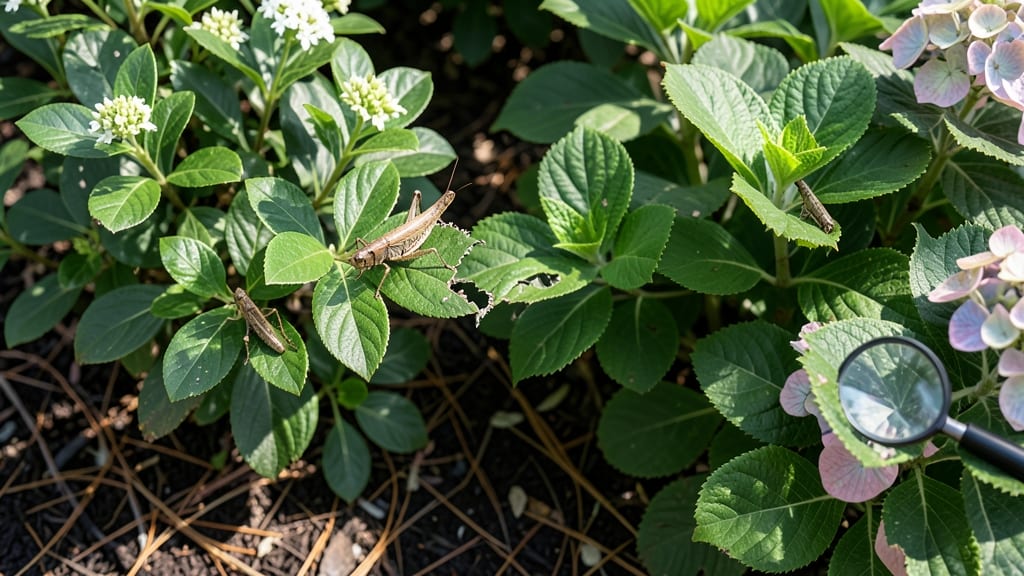
Grasshoppers do eat shrubs as their herbivorous diet includes tender foliage, though they prioritize grasses and broadleaf plants when available. Their feeding focuses on young shoots, leaves, and flowers, making vulnerable plants like roses and azaleas prime targets.
While shrubs aren't their first choice, grasshoppers will happily munch on them when other food sources are scarce. 🌿 Their preference for young, succulent growth explains why gardeners often notice damage on new shoots first.
The key difference from other pests is their chewing pattern—grasshoppers leave ragged edges rather than the smooth cuts of caterpillars or the skeletons of beetles. This visual clue helps identify the culprit quickly.
Understanding their feeding habits is crucial because shrubs like boxwoods and hydrangeas can suffer permanent damage if infestations aren't controlled early. The damage isn't just cosmetic—heavy feeding weakens plants, making them more susceptible to diseases.
That's why gardeners need to monitor both the plants themselves and the surrounding environment, as grasshoppers often move in after a rain when moisture makes foliage more appealing.
💡 In This Article
- Grasshopper Feeding Behavior on Shrubs: What Parts They Target
- Protecting Shrubs from Grasshopper Damage: Organic and Chemical Solutions
Grasshopper feeding behavior on shrubs: what parts they Target
Grasshoppers select shrubs based on three key factors: leaf moisture content, chemical composition, and plant vulnerability.
Their mandibles are perfectly adapted to clip through tender, young shoots—particularly those with high water content. 🌱 Shrubs like roses and azaleas become prime targets because their new growth is both succulent and chemically attractive, containing sugars that grasshoppers detect through specialized sensory pits on their legs.
The damage often starts at the leaf edges, where grasshoppers take small, irregular bites rather than the clean cuts made by caterpillars.
Boxwoods and hydrangeas are especially vulnerable because their dense foliage provides shelter for grasshoppers while offering abundant food. A single adult grasshopper can consume up to 0.15 grams of plant material per day, and during outbreaks, colonies can defoliate entire shrubs within 2-3 weeks.
The key visual clue is the ragged, skeletonized appearance of leaves—grasshoppers rarely eat entire leaves but instead strip them like a lawnmower, leaving only the tougher veins behind.
What makes shrubs particularly appealing is their chemical profile. Many ornamental shrubs produce secondary compounds like tannins that deter other pests, but grasshoppers have evolved to tolerate these defenses. 🌿 Their saliva contains enzymes that break down plant cell walls, allowing them to extract nutrients efficiently.
This is why neem oil—which disrupts their feeding enzymes—works so well as a deterrent. The damage pattern also differs from beetles, which typically create circular holes, or aphids, which leave sticky residue.
Seasonal timing plays a crucial role in shrub vulnerability. Grasshoppers are most active during warm, dry periods when moisture levels in leaves drop, forcing them to seek out more succulent options like young shrub growth. Early summer is peak feeding season, which coincides with the most rapid shrub growth.
This overlap explains why gardeners often notice damage just as their shrubs are putting on new foliage—creating a perfect storm of availability and need.
Interestingly, grasshoppers exhibit what scientists call "preference hierarchies" in their feeding. While they'll eat almost any green plant material, they rank grasses highest, followed by broadleaf plants, and finally shrubs. 🌿 This hierarchy is driven by evolutionary adaptations—grasses provide both food and camouflage for grasshopper nymphs.
When grasses are scarce (like in urban landscapes with limited lawns), shrubs become their secondary food source, which is why gardeners with mixed plantings often see grasshoppers shift targets during drought conditions.
To identify grasshopper damage specifically, look for these three characteristics:
- Chewing patterns: Irregular, jagged edges rather than smooth cuts
- Target areas: New shoots and upper leaves (most tender parts)
- Time of year: Damage peaks in late spring through early fall