
Shrubs
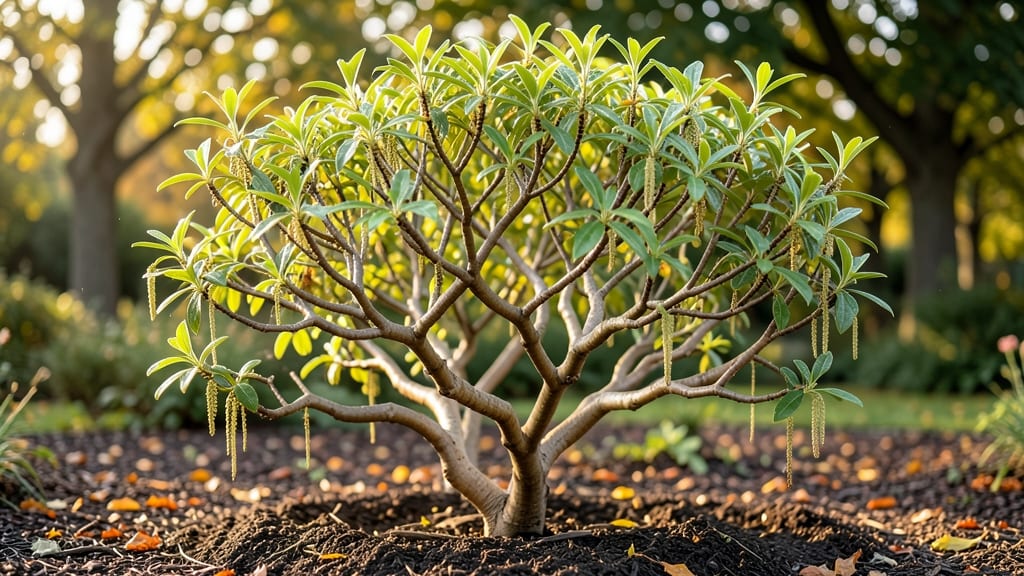
The corkscrew hazel shrub's twisted branches create garden drama you can't ignore. 🌿 I planted mine last spring, and the way its stems spiral like nature's own sculpture has made it the centerpiece of my backyard—even when it's bare in winter.
This isn't just another shrub; it's a living art installation that thrives with minimal fuss. You'll need full sun to partial shade and well-drained soil—it handles clay surprisingly well, which is why it's perfect for urban gardens.
Water it regularly the first year to establish roots, but once settled, it's drought-tolerant enough to handle dry spells. The key is patience; those signature curls develop fully after 3-5 years of growth. By autumn, the branches turn golden-yellow, and in spring, you'll spot tiny catkins that add subtle fragrance.
Prune only to shape or remove dead wood—never cut into the twisted stems, or you'll sacrifice its signature look. The best part? Deer and rabbits leave it alone, making it a low-maintenance star. Works beautifully alongside hostas, ferns, or under birch trees for contrast.
Once established, it's practically indestructible—just give it space to grow (8-10 feet wide) and watch your garden transform into a living masterpiece.
📚 In This Guide
- What you need
- Instructions
- Tips and common mistakes
- Wrapping up and next steps
What you need
- ● Corkscrew hazel shrub: 1 healthy nursery-grown plant (3–5 gallons container, 3–5 ft tall). Choose a Corylus avellana 'Contorta' variety for those signature twisting branches!
- ● Well-draining soil: Mix 2 parts native soil, 1 part compost, and 1 part perlite or coarse sand for optimal aeration.
- ● Mulch: 2–3 inches of organic mulch (e.g., wood chips or shredded bark) to retain moisture and suppress weeds.
- ● Watering can or hose with a gentle spray nozzle: For consistent moisture without disturbing roots.
- ● Fertilizer: Slow-release, balanced granular fertilizer (10-10-10 or 20-20-20) to support growth.
- ● Pruning shears: Sharp, clean shears (sterilized with rubbing alcohol) for shaping and maintenance.
- ● Garden gloves: Protect your hands while handling soil or pruning.
- ● Trowel or spade: For digging the planting hole (12–18 inches deep and wide).
- ○ Stakes and twine (optional): To support young plants in windy areas.
- ○ Soil pH test kit (optional): Ensure your soil is slightly acidic to neutral (pH 6.0–7.0).
- ○ Slow-release fertilizer spikes (optional): For hassle-free feeding.
- ○ Decorative rocks or edging (optional): To highlight the shrub’s unique shape in your landscape.
How to plant and care for corkscrew hazel shrubs
Here's the straightforward method I use to grow these stunning shrubs with fragrant, twisting branches.
🪴 Step 1: Choose the Perfect Planting Location
Corkscrew hazel thrives in partial shade—think 4-6 hours of morning sun with afternoon shade protection. I always plant mine near a northern-facing wall or under tall trees where the roots stay cool but the branches get enough light to maintain their signature spiral shape. The soil should drain well but stay consistently moist, so avoid low-lying areas where water pools.
Dig a hole twice as wide as the root ball but only as deep. The top of the root ball should sit 1 inch above ground level—this prevents water from pooling around the stem. If your soil is heavy clay, mix in 2-3 inches of compost to improve drainage. I test the soil pH first (ideal range is 6.0-7.0) because acidic soil can stunt growth.
🌱 Step 2: Plant and Water Thoroughly
Gently remove the shrub from its container and loosen any circling roots with your fingers. Place it in the hole so the root flare (where roots meet stem) is visible above the soil line. Backfill with native soil, pressing lightly to eliminate air pockets. Water deeply right away—this helps settle the soil and removes any air gaps around the roots.
After planting, create a 2-inch deep watering basin around the base and fill it with water. You’ll need 1-2 gallons total to soak the root zone completely. Mulch with 2-3 inches of shredded bark or wood chips, keeping the mulch 6 inches away from the trunk to prevent rot. This mulch layer helps retain moisture and regulates soil temperature.
☀️ Step 3: Maintain Year-Round Growth and Shape
Water once a week during the first growing season, checking that the soil stays evenly moist but not soggy. Corkscrew hazel is drought-tolerant once established, but young plants need consistent moisture to develop strong roots. I water in the early morning to reduce evaporation and fungal risks. After the first year, you can taper off to every 2-3 weeks unless you're in extreme heat.
Prune lightly in late winter or early spring before new growth appears. Remove any dead, damaged, or crossing branches with clean, sharp pruners. I never cut back more than 1/3 of the plant in a single season—this keeps the distinctive spiral shape intact. Fertilize in early spring with a balanced 10-10-10 formula (about 1/2 cup per shrub) to encourage lush foliage.
⏰ Step 4: Enjoy Year-Round Interest and Fragrance
The real magic happens when the catkins emerge in early spring—those fragrant, dangling flowers are a pollinator magnet. The twisted branches provide winter interest, and the leathery leaves turn golden-yellow in fall. I love planting corkscrew hazel near seating areas so I can enjoy the scent while relaxing outdoors.
Watch for aphids or scale insects on new growth—these pests sometimes target the tender shoots. If you spot them, spray with neem oil or introduce ladybugs for natural control. The shrubs are generally low-maintenance, but I do give them a light trim in midsummer to encourage bushier growth. With proper care, they’ll thrive for decades in your landscape.
Tips & tricks for perfect corkscrew hazel shrubs
These little details make all the difference when growing corkscrew hazel's iconic spiral branches.
Location is Everything: That 4-6 hours of morning sun is non-negotiable for maintaining the signature twist. I've planted mine against a north-facing wall where they get just enough light to develop those dramatic spirals while staying cool enough to prevent leaf scorch. Watch for nearby trees that might cast too much shade—they'll still grow, but the branches may lose their distinctive curl over time.
Root Ball Placement Matters: That 1-inch elevation above ground level isn't just a suggestion—it's crucial for preventing water from pooling around the stem. I've seen too many new gardeners ignore this and end up with rot issues. After planting, I always do a quick "tilt test" to make sure the root ball stays stable without sinking.
Mulching Strategy: The 2-3 inches of mulch should extend out to the dripline (where the branches naturally spread), not just around the trunk. This creates a moisture-retaining zone that mimics the plant's natural habitat. I use shredded bark because it breaks down slowly, adding organic matter to the soil over time—just remember to keep it 6 inches away from the trunk to prevent rot.
Pruning Precision: When you're pruning in late winter, focus on removing branches that cross or grow inward—they'll compete with the spiral shape you want to preserve. I always prune just above a leaf bud or lateral branch to encourage new growth in the right direction. Never cut more than 1/3 of the plant in one season, or you risk losing that signature form.
Pro Tips for Corkscrew Hazel Shrub
- These little details make all the difference when growing corkscrew hazel's iconic spiral branches.
- Location is Everything: That 4-6 hours of morning sun is non-negotiable for maintaining the signature twist.
- Root Ball Placement Matters: That 1-inch elevation above ground level isn't just a suggestion—it's crucial for preventing water from pooling around the stem.
Frequently asked questions
Got questions about growing and caring for your corkscrew hazel shrub? You’re not alone! Here are some of the most common queries—plus quick, practical answers to keep your garden thriving.
How fast does a corkscrew hazel grow?
The corkscrew hazel (Corylus avellana ‘Contorta’) grows at a moderate pace, typically adding 12–24 inches per year under ideal conditions. With patience, it can reach 6–10 feet tall and wide over 10–15 years. Prune lightly in late winter to shape it without stunting growth.
Is corkscrew hazel cold-hardy?
This shrub thrives in USDA Zones 4–8, making it perfect for most U.S. climates. It tolerates down to -30°F (-34°C) and handles snow and wind well. Just ensure it’s planted in well-draining soil to avoid winter rot.
Can I grow corkscrew hazel in a container?
Yes, but it needs space to sprawl. Use a large pot (at least 20 gallons) with drainage holes and repot every 2–3 years. Place it in partial shade and water consistently—containers dry out faster than garden beds. Fertilize lightly in spring for best results.
Why are my corkscrew hazel leaves turning yellow?
Yellowing leaves usually signal overwatering, poor drainage, or nutrient deficiencies. Check the soil—it should be moist but not soggy. If roots are waterlogged, trim affected branches and improve drainage. A balanced fertilizer in early spring can also help revive growth.
What’s a good alternative if corkscrew hazel is too slow-growing?
If you want fast-growing, twisted branches, try:
- ‘Dragon’s Claw’ Red Hawthorn (Crataegus spp.) – Grows 2–3 feet per year with dramatic, thorny twists.
- ‘Sky Pencil’ Holly (Ilex ‘Sky Pencil’) – Narrow, upright form with red berries (Zone 5–9).
- ‘Golden Carousel’ Spirea – Adds color and movement with golden foliage.
Wrapping up and next steps
The corkscrew hazel shrub is a stunning, low-maintenance addition to any garden, offering year-round visual interest with its unique twisting branches and fragrant catkins. Whether you’re drawn to its ornamental appeal or its adaptability to various climates, this shrub delivers drama with minimal effort.
Ready to transform your outdoor space? Start by selecting the perfect spot, gathering your supplies, and planting with confidence—your garden’s next star is just a few steps away! 🌿✨