
Shrubs
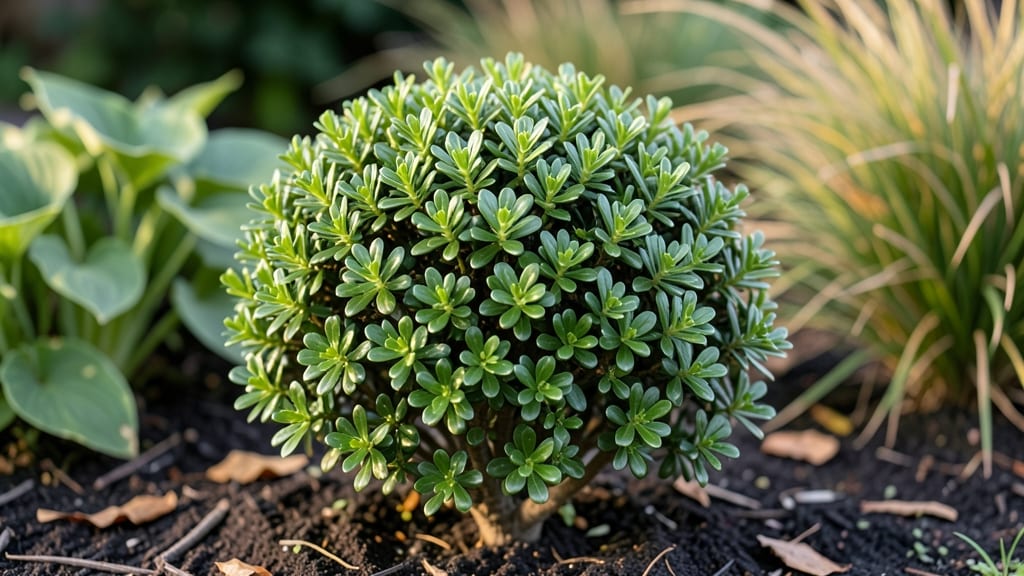
Boxwood shrubs' size determines whether your landscape looks perfectly balanced or like a chaotic mess—so picking the right variety is everything.
Picture this: a 3-foot 'Green Velvet' boxwood crowding a 6-foot 'English Box' hedge, and suddenly your manicured garden looks like a toddler’s block tower. That’s why knowing mature heights by variety isn’t just helpful—it’s the foundation of great design.
From dwarf varieties that top out at 2 feet to towering standards reaching 12 feet, each boxwood plays a role—whether you’re creating a crisp foundation planting, a lush privacy screen, or a topiary masterpiece.
Below, I’ll break down the most popular varieties, their growth habits, and how to space them for flawless results.
You’ll also discover how to prune for size control, pair varieties for visual harmony, and avoid the costly mistakes that turn a dream garden into a headache. Let’s get started.


Boxwood shrub sizes at maturity: height ranges by popular varieties
Boxwood shrubs are the backbone of structured gardens, offering neat foliage and versatile shapes that fit everything from formal hedges to cozy container gardens. But not all boxwoods are created equal—some stay compact enough for window boxes, while others tower like small trees.
Understanding mature height ranges by variety helps you plan spacing, layer designs, and avoid overcrowding. Let’s break down the most popular types and their ideal uses in your landscape.
When selecting boxwoods, think about your garden’s vertical space. Dwarf varieties (1–3 feet) work perfectly for foundation plantings or edging, while semi-dwarf (3–6 feet) creates privacy screens or low hedges.
Standard types (6–15 feet) bring drama to formal gardens or backyard borders. Growth rates also vary—some varieties mature in 3–5 years, while others take a decade to reach full size.
Here’s a quick comparison of compact vs. tall boxwoods to help you visualize their impact. For example, a ‘Green Velvet’ stays under 2 feet, while a ‘American Boxwood’ can hit 12 feet.
Spacing is critical: plant dwarf varieties 18–24 inches apart, semi-dwarf 3–4 feet apart, and standards 6–8 feet apart for optimal airflow and growth.
For container gardening, stick to dwarf or semi-dwarf varieties like ‘Green Velvet’ or ‘Dwarf Korean’. Their compact size makes them ideal for patio pots or window boxes, where space is limited.
Just ensure your container has drainage holes and use a high-quality potting mix to prevent root rot—a common issue with boxwoods in tight spaces.
If you’re designing a formal hedge, taller varieties like ‘English Boxwood’ or ‘Winter Gem’ create elegant, structured lines. Prune them twice yearly—once in late spring and again in early summer—to maintain shape and encourage dense growth.
Avoid heavy pruning in fall, as this can stress the plant before winter dormancy.
Layering boxwood sizes adds depth and texture to your garden. For example, pair ‘Green Velvet’ (1–2 feet) in front of ‘Winter Gem’ (3–4 feet) behind it, with ‘English Box
How to choose boxwood shrub sizes for your landscape design
Selecting the right boxwood shrub sizes transforms your landscape from chaotic to cohesive. Whether you're creating a privacy hedge, framing a foundation, or adding container accents, size matters more than you think. Boxwoods grow at predictable rates, but their mature dimensions vary wildly—from 1-foot dwarfs to 12-foot giants.
The key is matching your design goals to the right variety and spacing them correctly from day one.
Start by measuring your space and visualizing how boxwoods will interact with other plants. For example, a 3-foot tall 'Green Velvet' works beautifully as a foundation border, while a 6-foot 'English Box' creates instant privacy when planted in a row.
Even container gardening benefits from size planning—choose compact varieties like 'Suffruticosa' to avoid outgrowing your pots within a season.
- 📏 For hedges: Space dwarf boxwoods (1-3 ft) 18-24 inches apart; standard varieties (6+ ft) need 3-4 feet between plants for full coverage.
- 🏠 Foundation planting: Use 3-5 ft boxwoods 2-3 feet from house walls to avoid overcrowding and allow airflow.
- 🪴 Containers: Opt for 1-2 ft varieties in 12-15 inch pots; upgrade to 18-inch pots for 3 ft shrubs to prevent root binding.
- 🌿 Layering designs: Combine tall boxwoods (6+ ft) at the back with medium (3-5 ft) and dwarf (1-2 ft) in front for depth and texture.
- ✂️ Pruning tips: Prune dwarf varieties lightly in spring; standard boxwoods need annual shaping to control width and height.
Don't overlook the growth rate when planning. Most boxwoods grow 6-12 inches per year, but slower-growing varieties like 'Winter Gem' reach maturity in 3-5 years, while faster growers like 'Burgundy Beauty' may need pruning within 2 years.
Pro tip: Plant 3-5 inches deeper than the root ball to encourage stronger root systems and faster establishment.
For privacy screens, calculate height first: A 5-foot boxwood hedge requires 3-4 rows for full coverage, while a single row of 6-foot shrubs blocks 80% of light.
Always leave 12-18 inches between rows for airflow and maintenance access. In container setups, use slow-release fertilizer to prevent rapid growth that outpaces your pot size.
Layering boxwood varieties by size creates visual interest and functional zones. Plant tall varieties (6+ ft) along fences or property lines, medium (3-5 ft) near walkways, and dwarfs (1-2 ft) in front of flower beds.
This technique works beautifully in formal gardens or cottage-style landscapes alike. Just remember: prune after flowering (late spring) to avoid sacrificing next year's blooms.
Finally, consider your climate zone. Boxwoods in USDA Zones 4-7 benefit from winter mulch to protect roots, while southern climates (Zones 8-9) may need afternoon shade to prevent leaf scorch. Always check a variety's mature width too—some 6-foot-tall boxwoods spread 8 feet wide, so plan accordingly.