
Shrubs
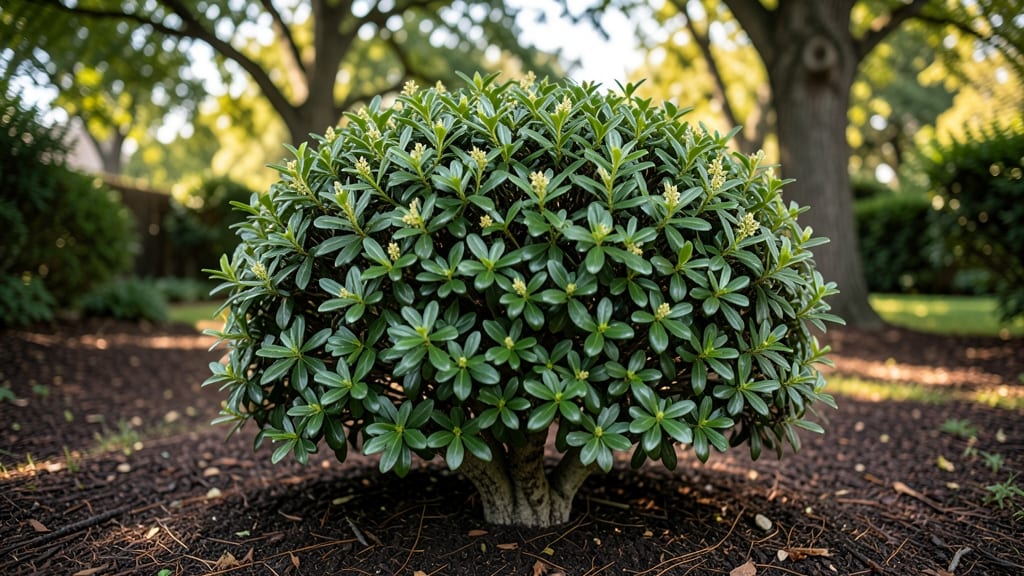
Boxwood shrubs thrive where others fail—deep, dappled shade that would make most plants sigh. 🌿 I've grown them in my wooded backyard for years, and they've never once let me down, staying dense and vibrant when hostas and ferns struggle.
The secret isn't complicated: pick the right variety, prep the soil right, and give them consistent (but not soggy) moisture.
Start with 'Green Velvet' or 'Winter Gem'—both handle shade better than standard boxwoods. Amend your soil with compost to improve drainage, since soggy roots mean decline even in shade. Water deeply once a week (more in extreme heat), and mulch heavily to lock in moisture.
These shrubs reward patience with year-round structure and that classic boxwood scent when you brush against them.
Prune lightly in late winter to shape them, but avoid heavy cuts—boxwoods heal slowly. Watch for boxwood leafminer (tiny white worms) or powdery mildew in humid shade; spray with neem oil if you spot them.
With proper care, your shrubs will grow 3-4 feet tall in 5-7 years, creating that lush, evergreen privacy screen you crave.
They're perfect for foundation plantings, hedges, or even container growing in patios. Just remember: shade-tolerant doesn't mean neglect-tolerant. These shrubs want to be loved—not ignored. Start with the right variety, and they'll repay you for decades.
📚 In This Guide
- What you need
- Instructions
- Tips and common mistakes
- Wrapping up and next steps
What you need
- ● Boxwood shrubs: 3-5 healthy, thornless varieties (e.g., Buxus sempervirens or Buxus microphylla) depending on desired coverage. Choose 1-3 gallon containers for mature plants or smaller pots for younger shrubs.
- ● Shovel or trowel: A 6-inch garden trowel for small holes or a round-point shovel for larger plantings.
- ● Compost or well-aged manure: 2-3 gallons per shrub to enrich the soil.
- ● Mulch: 2-3 inches of pine bark fines or shredded hardwood mulch (avoid dyed mulch).
- ● Watering can or hose with a gentle spray nozzle: For post-planting hydration.
- ○ Gloves (optional but recommended): Heavy-duty gardening gloves to protect against thorns (if using non-thornless varieties) or rough soil.
- ● Soil tester kit: To check pH (ideal range: 6.0–7.0). Adjust with lime or sulfur if needed.
- ● Pruning shears: Sharp, bypass pruners for shaping (sterilize with rubbing alcohol between cuts).
- ● Stakes or plant supports: If planting in windy areas, use 3-foot bamboo stakes with soft ties.
- ● Slow-release fertilizer: 10-10-10 or 12-4-8 formula (apply sparingly, 1 tbsp per shrub annually).
- ○ Drip irrigation system (optional): For consistent moisture in dry climates.
- ● Plant tags: To label varieties and planting dates.
- ● Sunlight assessment: Confirm your spot gets partial shade (2–6 hours of direct sun) or full shade (less than 2 hours)—boxwood thrives in both!
- ● Soil prep: Loosen soil to a depth of 12–18 inches; amend with compost for drainage.
- ● Spacing: Plant shrubs 3–5 feet apart for mature size (check variety tags for specifics).
- ● Weather check: Plant on a cool, overcast day or water deeply before sunset if planting in heat.
Step-by-step instructions for planting and maintaining boxwood shrubs in shade
Here's the straightforward method I've used to keep boxwoods thriving in low-light spots for over a decade.
🌱 Step 1: Choose the Right Location and Planting Time
Boxwoods tolerate shade but need at least 4-6 hours of filtered light daily for best growth. Look for spots with dappled sunlight or morning sun—avoid deep, dark corners where they'll grow leggy and sparse. I always plant in early spring or fall when temperatures are 50-70°F, giving roots time to establish before summer heat or winter cold.
Dig a hole twice as wide as the root ball but only as deep—planting too deep suffocates the roots. Loosen the sides of the hole with your hands or a trowel to prevent compacting when you backfill. This ensures the roots can spread freely into the surrounding soil.
💧 Step 2: Prepare the Soil and Plant Correctly
Boxwoods prefer well-draining, slightly acidic soil (pH 6.0-7.0). Mix the existing soil with 2-3 inches of compost to improve fertility and drainage. If your soil is heavy clay, add 1 part sand to the mix to prevent root rot. I always test soil moisture first—it should feel like a damp sponge, not soggy.
Gently remove the shrub from its container and tease apart any circling roots. Position it so the top of the root ball sits 1 inch above ground level—this prevents water from pooling around the stem. Backfill with the amended soil, pressing lightly to eliminate air pockets but not compacting too firmly.
☀️ Step 3: Water Deeply and Mulch Properly
Water immediately after planting to settle the soil and remove air pockets. Give the shrub 1-2 gallons of water, enough to soak the root zone to a depth of 12-18 inches. You'll know it's right when water runs out the bottom of the hole—this ensures roots make contact with moist soil.
Spread 2-3 inches of mulch around the base, keeping it 3 inches away from the stem to prevent rot. I use shredded bark or pine needles because they break down slowly and improve soil structure over time. Mulch helps retain moisture and regulates soil temperature—critical for shade-grown boxwoods that struggle with temperature swings.
✂️ Step 4: Prune and Maintain for Year-Round Health
Prune boxwoods once a year in late spring after new growth appears. I remove only 1/3 of the oldest growth at a time to maintain shape and encourage fresh, vibrant foliage. Use sharp, clean shears to make cuts just above a leaf bud—this prevents tearing and promotes faster healing.
Fertilize lightly in early spring with a balanced, slow-release fertilizer (10-10-10). Over-fertilizing in shade causes weak, leggy growth. Water deeply after fertilizing to help nutrients reach the roots. Watch for brown tips—this is your cue to reduce watering or check for pests like boxwood leafminers.
🪴 Step 5: Monitor and Adjust for Long-Term Success
Check soil moisture weekly by inserting your finger 2 inches deep. Water when the top layer feels dry, but avoid soggy soil—boxwoods in shade are prone to root rot. I adjust my watering schedule seasonally: more in summer, less in winter when rainfall increases.
If your boxwoods look sparse after a few years, it might need rejuvenation pruning. Cut back 1/3 of the oldest growth in early spring—this stimulates new growth from the base. I've revived many neglected shrubs this way, but it takes patience and consistent care.
Tips & tricks for perfect boxwood shrubs in shade
These little details make all the difference when growing lush, healthy boxwoods that thrive in low-light conditions.
Lighting Strategy: That 4-6 hours of filtered light is non-negotiable—think dappled sunlight through trees rather than dense shade. I've seen boxwoods struggle in north-facing spots with no direct light, so if your yard is particularly shady, consider planting near a light-colored wall that reflects some sunlight. The leaves will tell you if it's working: vibrant green means you're golden, while yellowing means it's time to relocate.
Soil Prep Secret: The 2-3 inches of compost isn't just about nutrients—it's about creating that perfect sponge-like texture. I like to mix in a handful of perlite too (about 1 part to 3 parts soil) for extra drainage, especially if you're working with clay soil. This prevents that dreaded root rot while keeping moisture where it belongs. Test your soil's pH first—boxwoods hate alkaline soil, and a simple pH test kit costs less than $10.
Watering Wisdom: Those 1-2 gallons should go down like a slow drink of water—not a flood. I use a rain gauge to measure exactly how much water I'm giving each plant, and I always water in the morning. This gives roots time to absorb moisture before evening evaporation. The key visual cue? Water should run out the bottom of the hole—this tells me the roots are getting properly hydrated down to 18 inches deep.
Pruning Precision: Cutting back just 1/3 of the oldest growth each year keeps your boxwoods looking full and healthy. I mark the growth with a piece of twine before pruning—this helps me visualize which third to remove. Always cut just above a leaf bud at a 45-degree angle to prevent water from pooling on the cut. And here's a pro move: save your pruned branches! They make excellent cuttings for propagating new plants.
Pro Tips for Boxwood Shrub For Shade
- These little details make all the difference when growing lush, healthy boxwoods that thrive in low-light conditions.
- Lighting Strategy: That 4-6 hours of filtered light is non-negotiable—think dappled sunlight through trees rather tha...
- Soil Prep Secret: The 2-3 inches of compost isn't just about nutrients—it's about creating that perfect sponge-like t...
Frequently asked questions
Got questions about growing boxwood shrubs in shady spots? We’ve got answers!
Whether you’re a first-time gardener or a seasoned green thumb, these common queries will help you cultivate lush, thriving boxwoods—even in low-light conditions.
How much shade can boxwood shrubs tolerate?
Boxwoods thrive in partial shade (3–6 hours of sunlight daily) but can handle full shade (under 3 hours) in cooler climates. Avoid deep, dark shade (like dense tree canopies), as this may cause leggy growth or sparse foliage. If your spot is shady, opt for dwarf varieties like ‘Green Velvet’ or ‘Winter Gem,’ which adapt better.
When is the best time to plant boxwood shrubs for shade?
The ideal times are early spring (after the last frost) or fall (4–6 weeks before the first frost). Planting in spring gives roots time to establish before summer heat, while fall planting allows them to settle before winter dormancy. Avoid planting in extreme heat or cold—both stress young shrubs.
What are the best alternatives to boxwood for full shade?
If boxwoods struggle in your shade, try these hardy alternatives:
- Holly (Ilex) – Evergreen, glossy leaves, and berries (some varieties are thornless).
- Inkberry Holly (Ilex glabra) – Thrives in wet or dry shade; deer-resistant.
- Dwarf Fothergilla – Fragrant spring blooms and vibrant fall foliage.
- Japanese Yew (Taxus) – Slow-growing, dense, and shade-tolerant.
Why are my boxwood leaves turning yellow or brown in shade?
Yellowing or browning leaves in shade are often signs of overwatering, fungal issues, or nutrient deficiency. Check these fixes:
- Watering: Ensure soil drains well—boxwoods hate soggy roots. Water deeply but infrequently (1–1.5 inches per week).
- Fungus: Prune affected leaves immediately and apply neem oil or copper fungicide if powdery mildew or boxwood blight appears.
- Nutrients: Feed with a balanced, slow-release fertilizer (10-10-10) in early spring. Yellowing in spring may also signal winter burn—mulch heavily to protect roots.
How and when should I prune boxwood shrubs in shade?
Prune boxwoods lightly in late spring or early summer (after new growth appears) to maintain shape. Avoid heavy pruning—boxwoods respond best to gradual shaping. In shade, prune sparingly to encourage dense growth. Use clean, sharp shears and sanitize them with rubbing alcohol to prevent disease. Never prune in fall—this can invite pests or winter damage.
Wrapping up and next steps
Incorporating a boxwood shrub for shade into your landscape is a fantastic way to add year-round greenery, texture, and privacy—without sacrificing sunlight needs. These versatile, low-maintenance plants thrive in shaded spots while offering elegant structure and a polished look.
Whether you’re lining a pathway, framing a patio, or creating a lush hedge, boxwoods deliver effortless beauty with minimal fuss.
Ready to transform your space? Start small with a single shrub or plan a full hedge—just pick the perfect variety for your light conditions and enjoy the lush, evergreen results! 🌿✨