
Shrubs
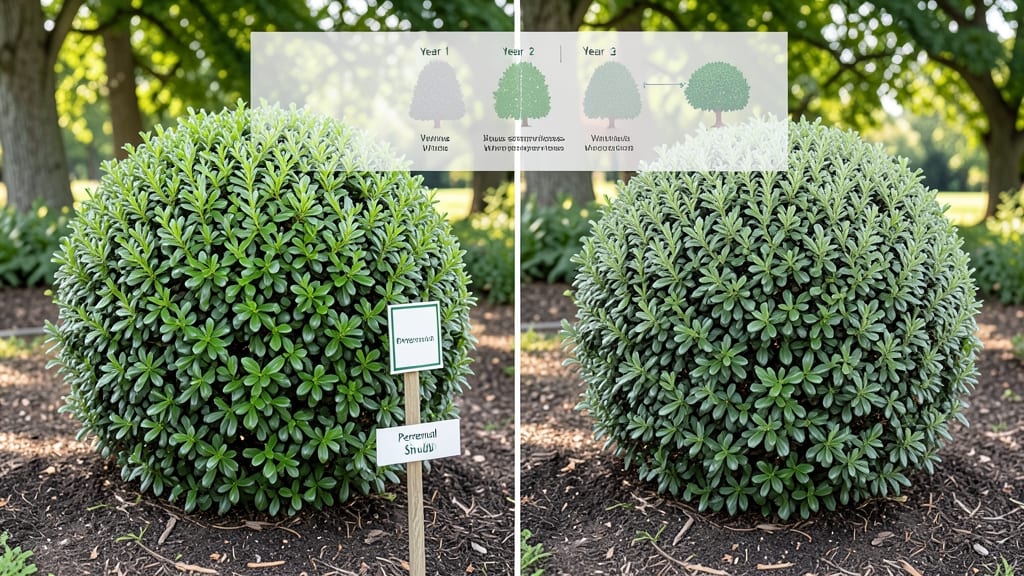
Shrubs are perennials because they regrow annually from woody stems or dormant buds, though some varieties die back seasonally or need pruning to thrive. Their growth patterns vary—evergreens stay green year-round, while deciduous types shed leaves in winter.
This perennial classification comes from shrubs' ability to regenerate from below-ground roots or protected buds, even after above-ground parts die back. 🌿 For example, hydrangeas may lose foliage in winter but burst back with new growth in spring, while boxwoods retain their leaves year-round.
The key difference lies in their hardiness: evergreens like azaleas handle cold better than tender shrubs such as bougainvillea, which need warmer climates to survive winters.
Understanding these growth habits helps gardeners choose the right plants for their climate and maintenance preferences. Evergreens provide year-round interest but may require more frequent pruning, while deciduous shrubs offer seasonal variety and often need less winter care.
The lifespan of a shrub also depends on its type—some live for decades with proper care, while others may only last a few years before needing replacement.
💡 In This Article
- Why Shrubs Are Classified as Perennials
- Types of Shrubs and Their Lifespans
Why shrubs are classified as perennials
The botanical classification of shrubs as perennials stems from their ability to regenerate from woody stems or dormant buds year after year. Unlike annuals that complete their lifecycle in one season, shrubs develop a persistent woody structure that stores nutrients and water, allowing them to survive harsh conditions.
This woody framework contains specialized cells called meristematic tissues that remain protected in buds or root systems, ready to sprout new growth when conditions improve.
Evergreen shrubs like boxwoods or hollies maintain their foliage year-round because their leaves contain high levels of wax coatings and antifreeze proteins that prevent freezing. These adaptations let them photosynthesize even in winter, though growth slows dramatically.
Deciduous shrubs, however, shed leaves annually to conserve energy during cold months, with buds forming at the stem junctions that burst into new leaves when temperatures rise above 50°F.
The key difference lies in their cambium layer—a growth layer between bark and wood that thickens each year, creating visible rings in stems.
This perennial nature means shrubs can live for decades with proper care. For example, a well-established lilac shrub might produce flowers for 30-50 years, while boxwoods can reach 100+ years in ideal conditions.
The trade-off comes in maintenance: evergreens require regular pruning to prevent overgrowth, while deciduous types may need winter protection in colder climates. What most gardeners don't realize is that even "dead" winter branches often contain dormant buds capable of regrowth when pruned back to live tissue.
Seasonal dieback is normal for many shrubs—think of hydrangeas that appear lifeless in winter but regrow from their root crowns each spring. The root system acts as a biological battery, storing starches that fuel new growth.
This resilience explains why shrubs thrive in landscapes: they bounce back from pruning, drought, or frost damage that would kill annuals. The only exception is tender shrubs like bougainvillea, which lack cold hardiness and must be treated as annuals in frost-prone areas.
Consider the science: shrubs' perennial habit comes from their secondary growth—the ability to increase stem diameter yearly through cambium activity. This contrasts with herbaceous perennials (like hostas) that regrow from underground rhizomes but lack woody stems.
The woody structure gives shrubs their signature upright form while providing structural support for leaves, flowers, and fruits. Without this adaptation, they couldn't achieve their characteristic multi-stemmed, bushy appearance.
For gardeners, this means choosing shrubs based on your climate zone. Hardy varieties like serviceberry (zone 4-8) handle -30°F winters, while tropical gardenia (zone 10-11) dies if exposed to frost.
The perennial nature also explains why shrubs form the backbone of perennial borders—they provide year-round structure that annuals can't match. 🌿