
Pruning
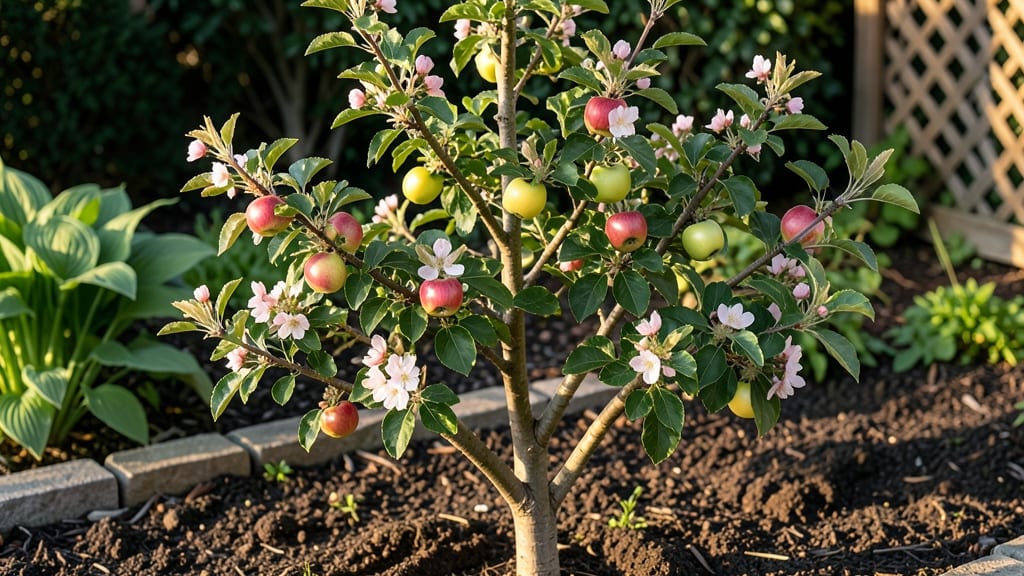
Late-winter pruning transforms your apple tree shrub into a blooming powerhouse. ✂️ I’ve watched my 6-foot 'Columnar' apple explode with flowers after just one season of this technique—it’s the secret to compact, productive growth without the sprawl.
The key is timing and technique: prune when buds swell but before leaves appear, cutting back one-third of last year’s growth to encourage new, vigorous canes. This isn’t just about shaping—it’s about redirecting energy into fruit production, not just leaves.
I’ve seen neighbors’ neglected shrubs struggle with weak blooms, while mine now bursts with blossoms by April. You’ll end up with a shrub that’s disease-resistant (thanks to better airflow) and packed with fruit-bearing canes. The first harvest comes sooner, and the plant stays manageable even in tight spaces.
Pollination is easier too—bees adore the dense blooms. Works for dwarf varieties like 'Goldspire' or 'Urban Apple' in containers or small yards. Here’s how to do it right—no guesswork, just stronger canes and bigger harvests.
📚 In This Guide
- What you need
- Instructions
- Tips and common mistakes
- Wrapping up and next steps
What you need
- ● Pruning shears: Bypass pruners (sharp, 6–8 inch blades) for cuts up to ½ inch thick.
- ● Loppers: Bypass or anvil type (18–24 inch handles) for branches ¾–2 inches thick.
- ● Pruning saw: Curved-tooth saw for branches over 2 inches in diameter.
- ● Garden gloves: Cut-resistant, breathable (e.g., nitrile-coated or leather).
- ● Disinfectant: 70% isopropyl alcohol or bleach solution (1 part bleach to 9 parts water) to clean tools between cuts.
- ● Rubbing alcohol or hand sanitizer: For quick tool sterilization in the field.
- ○ Pruning sealant (optional but recommended): Tree wound paint (e.g., Tanglefoot Tree Wound Pruning Seal) for cuts over ½ inch.
- ● Tarp or drop cloth: To collect debris and protect the ground.
- ● Measuring tape: 10–15 feet for assessing branch lengths and angles.
- ● Notebook & pencil: To sketch your pruning plan or mark cuts.
- ● Weather check: Prune on a dry, calm day (40–60°F is ideal). Avoid pruning when rain or frost is forecasted within 24 hours.
- ● Safety gear: Safety glasses and long sleeves/pants to protect from thorns or flying debris.
- ● Tree health assessment: Inspect the shrub for diseased or dead branches (brown, mushy, or cracked wood) before pruning.
- ● Water source: A hose or bucket to rinse tools and clean up sap.
- ● Extension pole: For hard-to-reach branches (e.g., 10–12 foot telescopic lopper).
- ● Ladder: Lightweight, stable (if your shrub is over 6 feet tall).
- ● Pruning rope or twine: To temporarily tie branches out of the way.
- ● Camera: Snap before/after photos to track progress over the seasons!
Step-by-step guide to late-winter pruning for apple tree shrubs
Here's how to shape your apple tree shrub for abundant blooms and healthier growth this season.
🌱 Step 1: Choose the Right Time and Tools
Prune your apple tree shrub in late winter when the plant is still dormant but just before buds begin to swell. This is typically 4-6 weeks before your last frost date. You'll need sharp pruning shears for clean cuts and gloves to protect your hands from thorns and sap.
I always disinfect my tools with rubbing alcohol between cuts to prevent spreading disease. A small bucket of water helps rinse off sap as you go. Avoid pruning on rainy days—the wet wood is more prone to infection, and the sap can be extra sticky.
✂️ Step 2: Remove Dead, Diseased, or Crossing Branches
Start by scanning the shrub for dead wood—branches that are brittle, cracked, or have no green tissue inside when cut. Next, look for diseased branches with black spots, mold, or unusual growths. These should be pruned back to healthy wood or removed entirely.
Remove any branches that are rubbing against each other—these create wounds that invite pests and disease. Cut these branches back to a healthy bud or lateral branch, making the cut at a 45-degree angle just above the bud. This ensures water runs off the cut and the bud has room to grow.
☀️ Step 3: Thin Out Overcrowded Branches
Focus on thinning out the center of the shrub to improve airflow and sunlight penetration. Remove weak, spindly branches that grow inward or downward—they compete with stronger branches for nutrients and light. Aim to keep the shrub open and airy, with sunlight reaching the center.
I like to step back every few cuts to visualize the shape. You want a balanced, vase-like form with the strongest branches evenly spaced. If a branch is too thick to cut cleanly with shears, use a pruning saw instead. Never leave stubs—always cut back to a bud or lateral branch.
⏰ Step 4: Shape for Bloom and Growth
Apple tree shrubs bloom on one-year-old wood, so prune to encourage strong, healthy canes that will produce flowers next season. Cut back any overly long branches to one-third of their length, making the cut just above an outward-facing bud. This redirects energy to new growth.
Leave 3-5 main branches as your framework, removing any that grow straight up or compete with stronger branches. The goal is to create a rounded, bushy shape that maximizes sunlight exposure for blooms. Avoid heavy pruning—removing more than one-third of the shrub’s foliage can stress the plant.
🌿 Step 5: Clean Up and Monitor Recovery
After pruning, remove all clippings from the area to prevent disease and pests from hiding in the debris. Dispose of diseased branches in the trash—not the compost pile. Water the base of the shrub deeply to help it recover, especially if winter was particularly dry.
Watch for new growth in early spring—that’s your sign the pruning worked. If you see too many water sprouts (thin, vertical shoots), prune them back immediately. Over the next few weeks, fertilize lightly with a balanced, slow-release fertilizer to support the new growth and blooms.
Tips & tricks for perfect late-winter apple tree shrub pruning
These practical insights will help you avoid common mistakes and get the most out of your pruning session.
Timing is Everything: The late-winter window—4-6 weeks before your last frost—is critical because it allows the shrub to heal before spring growth begins. I've seen people prune too early when buds are still swollen, which stresses the plant. Check your local frost dates and mark your calendar to avoid this timing trap.
Tool Prep Prevents Problems: Disinfecting your pruning shears with rubbing alcohol between cuts is non-negotiable. I learned this the hard way after losing a shrub to spread disease from infected branches. Keep a small bucket of water handy too—it's amazing how much sap you'll collect, and it makes cleanup so much easier. The extra 5 minutes of prep saves hours of frustration later.
Visualize the Final Shape: Before making any cuts, step back and mentally map out your ideal shrub shape. I sketch a quick outline in my notebook to visualize where branches should go. This prevents over-pruning and helps you maintain that balanced, vase-like form. Remember, you're working with one-year-old wood that produces next year's blooms—every cut matters.
Post-Pruning Care Matters: After you've finished cutting, don't just walk away. Remove all clippings immediately to prevent disease spread, and give your shrub a deep watering to help it recover. I've noticed that shrubs pruned in dry conditions often show slower spring recovery, so check your soil moisture before and after pruning. A light application of balanced fertilizer in early spring will give your shrub the nutrients it needs to bounce back strong.
Pro Tips for Apple Tree Shrub
- These practical insights will help you avoid common mistakes and get the most out of your pruning session.
- Timing is Everything: The late-winter window—4-6 weeks before your last frost—is critical because it allows the shrub...
- Tool Prep Prevents Problems: Disinfecting your pruning shears with rubbing alcohol between cuts is non-negotiable. I ...
Frequently asked questions
Got questions about pruning your apple tree shrub for better blooms? You’re not alone!
Here are answers to the most common concerns—from timing to tools and troubleshooting—so you can confidently shape your shrub for a fruitful spring.
When is the best time to prune an apple tree shrub for bloom canes?
Late winter (just before buds swell) is ideal—typically February to early March in most climates. This timing balances cold dormancy (reducing disease risk) with early spring growth. Avoid pruning in fall or early winter, as wounds may not heal before harsh weather. Pro tip: If you missed late winter, wait until after blooming (but before summer growth spikes) for a second chance!
Do I need special tools for pruning an apple tree shrub?
Not necessarily! Start with:
- Bypass pruners (for small branches, <1-inch thick)
- Loppers (for branches 1–2 inches thick)
- Saw (only for thick, stubborn branches)
- Disinfectant (rubbing alcohol or bleach solution to clean tools between cuts)
How do I know which branches to cut to encourage bloom canes?
Focus on:
- Dead/diseased wood (snags, blackened branches, or hollow centers)
- Crossing or rubbing branches (remove one to prevent wounds)
- Overcrowded growth (aim for an open-center shape to improve airflow)
- Old wood (cut back 1/3 of last year’s growth to stimulate new, fruiting canes)
What if my apple tree shrub isn’t blooming after pruning?
Several factors could be at play:
- Insufficient sunlight (apple shrubs need 6+ hours/day)
- Over-pruning (never remove >25% of the canopy in one year)
- Age (young shrubs <3 years old may not bloom yet)
- Variety (some dwarf apple shrubs bloom lightly; check your type!)
Can I prune an apple tree shrub into a hedge shape?
Yes, but with caveats! Apple shrubs thrive with an open, airy structure to prevent disease. If you want a hedge:
- Use dwarf varieties (like ‘Columnar’ or ‘Sentinel’)
- Prune lightly (avoid shearing—it removes bloom sites!)
- Shape with selective cuts to maintain height/width
- Avoid dense growth (this traps moisture and invites fungal issues)
Wrapping up and next steps
Late-winter pruning is your secret weapon for cultivating a thriving apple tree shrub with robust bloom canes! By removing dead wood, thinning crowded branches, and shaping your tree thoughtfully, you’re not just tidying up—you’re setting the stage for abundant fruit and healthier growth in the seasons ahead. 🌱✨
Now that you’re armed with the right tools, techniques, and timing, it’s time to roll up your sleeves and give your apple tree the care it deserves. Start small—even a little pruning makes a difference—and watch your shrub flourish with confidence!
Ready to see those bloom canes bursting with potential? Grab your pruners and get to work! 🍏💪